GENEVA: The UN human rights office has updated a list of companies doing business with Israeli settlements, removing 15 companies from the database that were no longer involved, a spokesperson said on Friday.
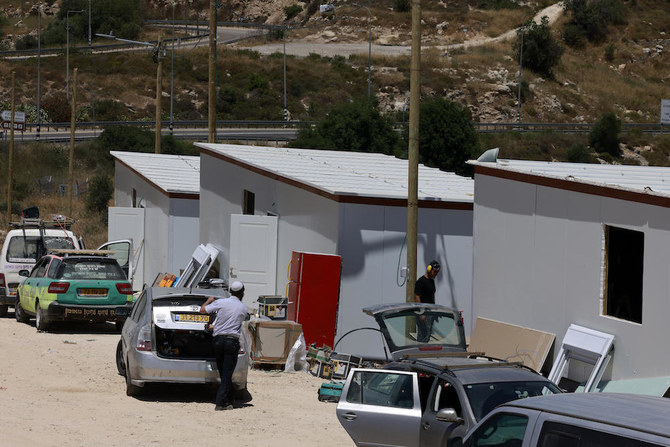
The long-awaited update comes amid surging violence in the West Bank in the past 15 months including deadly clashes during army raids in volatile cities like Jenin, a spate of fatal attacks by Palestinian gunmen against Israeli settlers, and rampages by settler mobs in Palestinian villages.
However, the UN list was limited in scope due to budget restrictions and the rights office was only able to review the original list of 112 companies, spokesperson Ravina Shamdasani told a press briefing.
There was no immediate comment from Israel. Its Prime Minister Benjamin Netanyahu rejected the previous version, as did Washington which has long protested the “disproportionate attention” given to Israel by the Geneva-based council.
The database was mandated by the UN Human Rights Council in 2016 but was not released until 2020. Civil society groups say the database is an important tool to ensure transparency around business activities in the West Bank and to prompt companies to rethink their activities in the occupied territories.
Most of the firms named in the database when it was set up were domiciled in Israel but it also included international firms listed in the United States, Britain and France, among others.
Packaged food maker General Mills was the only international firm removed from the list. Among those that remained were online travel sites Booking.com and Expedia and home-rental company Airbnb.

UN pares down list of firms doing business with Israeli settlements
https://arab.news/y2cmh
UN pares down list of firms doing business with Israeli settlements
- The long-awaited update comes amid surging violence in the West Bank in the past 15 months
- Most of the firms named in the database when it was set up were domiciled in Israel
UN chief condemns Israeli law blocking electricity, water for UNRWA facilities
- The agency provides education, health and aid to millions of Palestinians in Gaza, the West Bank, Jordan, Lebanon and Syria
United Nations Secretary General Antonio Guterres condemned on Wednesday a move by Israel to ban electricity or water to facilities owned by the UN Palestinian refugee agency, a UN spokesperson said.
The spokesperson said the move would “further impede” the agency’s ability to operate and carry out activities.
“The Convention on the Privileges and Immunities of the United Nations remains applicable to UNRWA (United Nations Relief and Works Agency for Palestine Refugees in the Near East), its property and assets, and to its officials and other personnel. Property used by UNRWA is inviolable,” Stephane Dujarric, spokesman for the secretary-general, said while adding that UNRWA is an “integral” part of the world body.
UNRWA Commissioner General Phillipe Lazzarini also condemned the move, saying that it was part of an ongoing “ systematic campaign to discredit UNRWA and thereby obstruct” the role it plays in providing assistance to Palestinian refugees.
In 2024, the Israeli parliament passed a law banning the agency from operating in the country and prohibiting officials from having contact with the agency.
As a result, UNRWA operates in East Jerusalem, which the UN considers territory occupied by Israel. Israel considers all Jerusalem to be part of the country.
The agency provides education, health and aid to millions of Palestinians in Gaza, the West Bank, Jordan, Lebanon and Syria. It has long had tense relations with Israel but ties have deteriorated sharply since the start of the war in Gaza and Israel has called repeatedly for UNRWA to be disbanded, with its responsibilities transferred to other UN agencies.
The prohibition of basic utilities to the UN agency came as Israel also suspended of dozens of international non-governmental organizations working in Gaza due to a failure to meet new rules to vet those groups.
In a joint statement, Canada, Denmark, Finland, France, Iceland, Japan, Norway, Sweden, Switzerland and the United Kingdom said on Tuesday such a move would have a severe impact on the access of essential services, including health care. They said one in three health care facilities in Gaza would close if international NGO operations stopped.


