

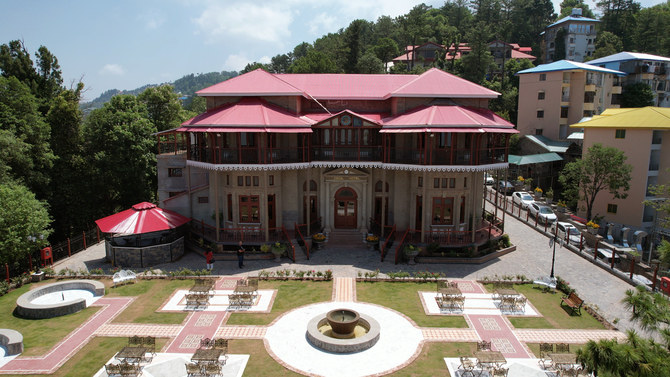

ISLAMABAD: Nestled in the heart of the Pakistani resort town of Murree, the majestic Cecil Hotel building has been standing tall for 172 years, and now, its restored avatar offers guests and visitors a unique opportunity to step back in time and experience the grandeur of a bygone era.
From being a summer retreat for British colonial officers to the residence of the viceroy of India and later hosting top historical and political figures of Pakistan, the walls of the Cecil Hotel seem to have seen it all.
Originally constructed in 1851, little has been written about the building’s initial history until it was purchased by Italian hotelier John Faletti in 1916 and converted into a hotel. Under Faletti’s ownership until 1944, the hotel became one of the most sought-after locations in Murree, a Pakistani hill station dotted with churches, cantonments and schools built by the British.
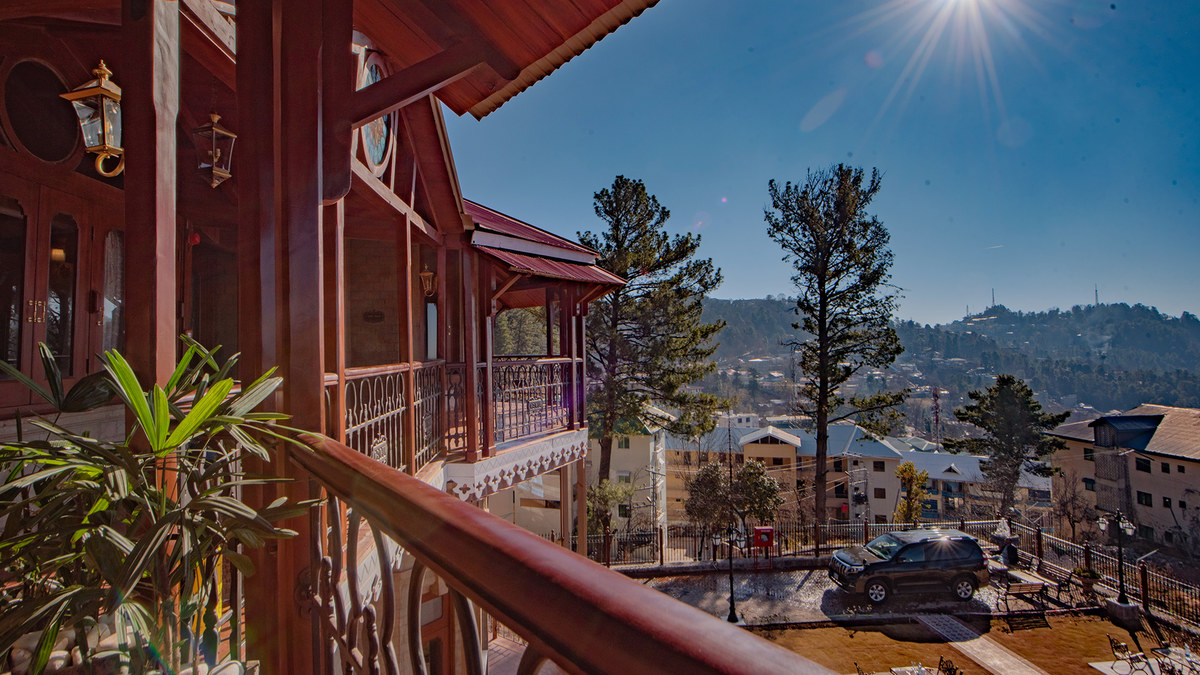
The undated photo shows the view of the Murree hills from the Cecil Hotel in Murree, Pakistan. (Photo courtesy: cecilmurree.com/website)
In 1944, the hotel was bought by Mohan Singh Oberoi, the founder and chairman of Oberoi Hotels and Resorts, India’s second-largest hotel company. Though Oberoi moved to India after the 1947 partition of the sub-continent into two nations, India and Pakistan, he continued to manage the company’s hotels in both nations until the Pakistan Tourism Development Corporation (PTDC) took over The Cecil after the 1965 war.
The Pakistani conglomerate Hashoo Group acquired a majority share in the hotel in the late 1990s and in 2018 decided to restore the building to its former glory and opened its doors to the public with a grand launch this April.
Today, a walkway decorated with paintings chronologically depicting Pakistan’s history greets visitors as they enter the hotel. Hand-designed, multicolored tiles line the floors, ornate chandeliers hang from the ceiling and carefully picked pieces of art and period furniture as well as a sweeping staircase are main attractions.
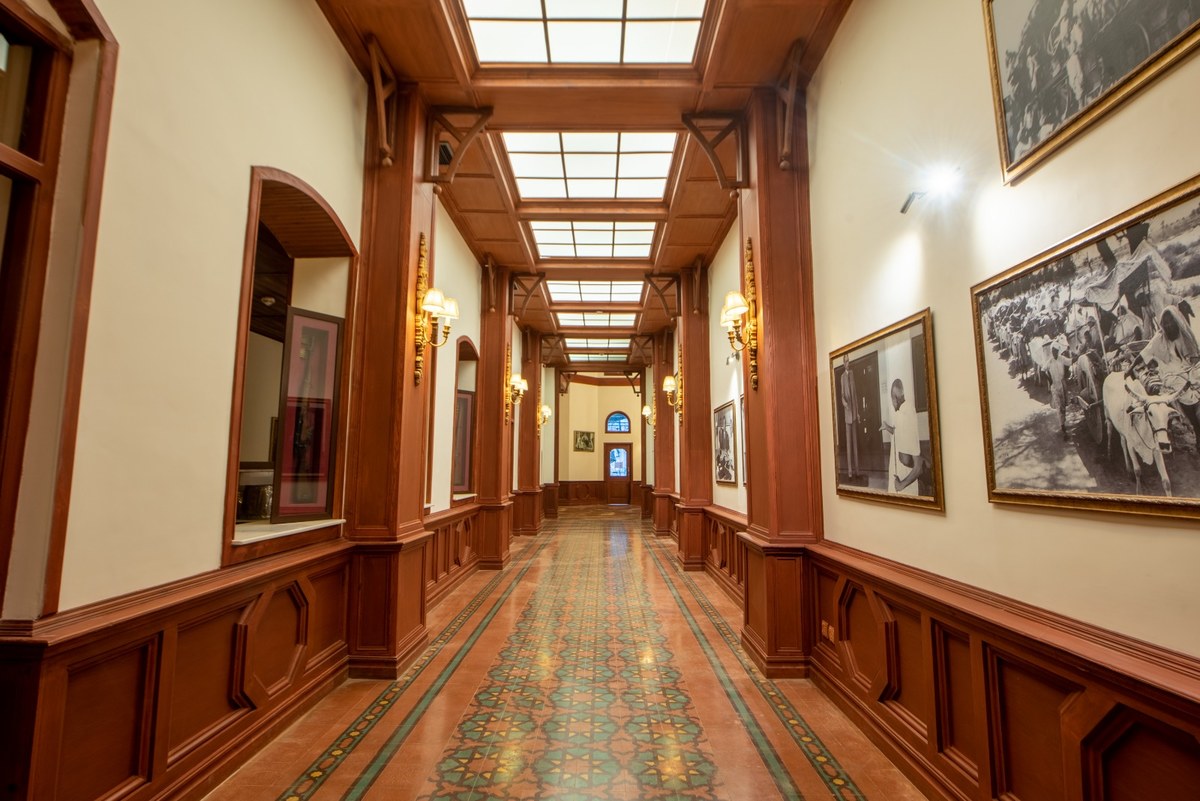
The undated photo shows the walkway showcasing pictures hilighting the establishment's history at the Cecil Hotel in Murree, Pakistan. (Photo courtesy: cecilmurree.com/website)
“This [building] was constructed in 1851 by the Cecil family, which is based in the UK, they have constructed almost 8 to 10 hotels worldwide for British army commanders,” Ali Raza, the hotel’s front office manager who also gives guided tours of the building, told Arab News.
“It has been uplifted but almost 80 percent of things have been kept the same.”
While Raza said the building was initially a residence for Sir Henry Montgomery Lawrence, an English soldier and administrator who helped to consolidate British rule in the Punjab region, many historians, including the writer of the book, “Once upon a time in Murree,” Dr. Omer Mukhtar, said there were no records that Lawrence ever stayed at the establishment.
Indeed, since the history of the building has never been officially recorded, much information about its initial owners remains disputed, including if it was ever the home of the Viceroy of India, Louis Mountbatten.
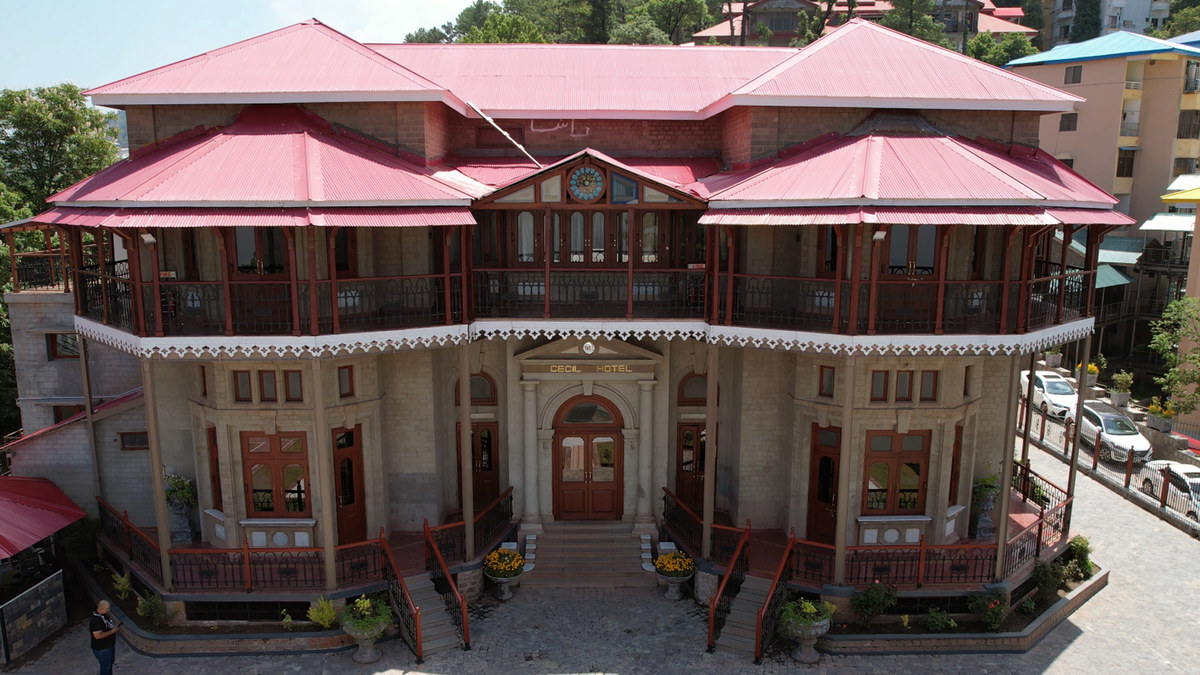
This photo taken on June 18, 2023, shows the grand structure of the Cecil Hotel which was constructed in 1851 in Murree, Pakistan. (AN Photo)
“In the early 19th century, Mountbatten, he used to stay here,” Raza said. “It is said that during the viceroy’s stay, Quaid-e-Azam [Pakistani founder Muhammad Ali Jinnah] would also visit him here.”
Speaking about the building’s more recent history, Raza said it was owned by the Pakistan Tourism Development Authority until 1997:
“During this time, the property’s condition deteriorated, so they auctioned the property … That is how it came to its current owners ... who then decided to restore it to its original condition.”
Lahore-based historian Mukhtar said Murree was known for its colonial buildings and a particular type of architecture of which the restored Cecil was a perfect example: high ceilings, bay windows, beautiful wooden balconies, wooden staircases, elaborate dancing floors and ballrooms.
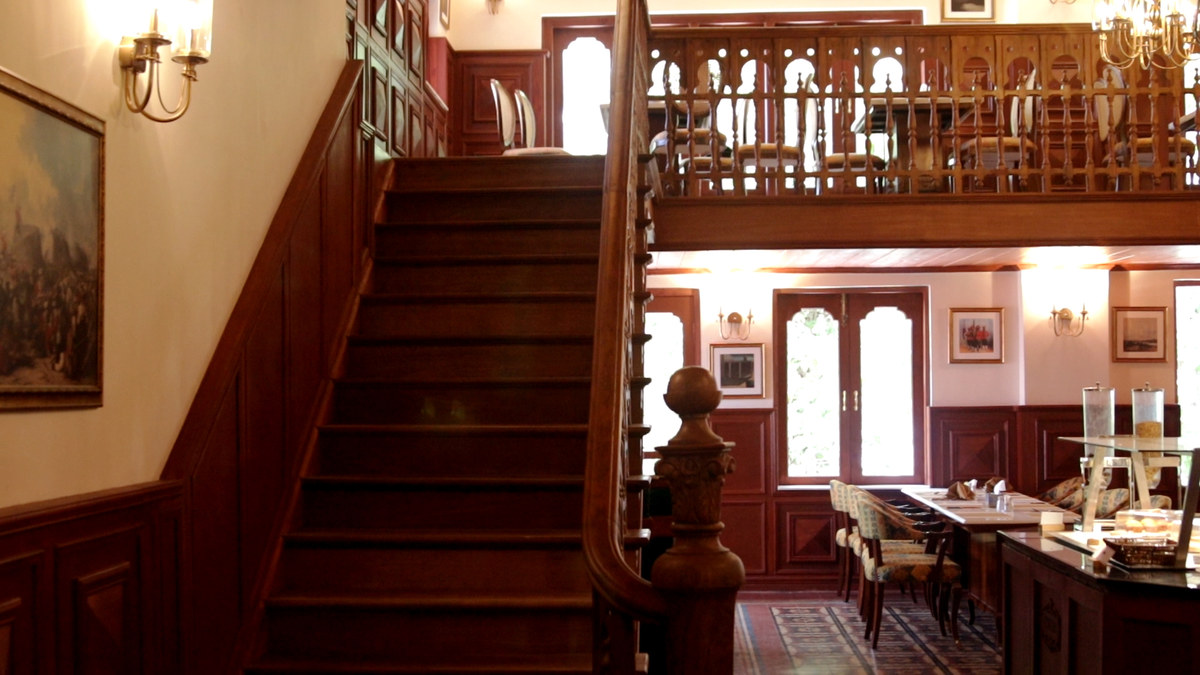
This photo taken on June 18, 2023, shows the grand staircase at the Cecil Hotel Murree, Pakistan. (AN Photo)
“I don’t know of any prior restorative efforts on the Cecil Murree but the one that has recently been done by the PC hotel is truly commendable,” Mukhtar told Arab News.
“They have done it very tastefully, aesthetically. They have not taken the flavor of colonial times away from it, rather they have revived it.”
Visitors agreed.
Obaid Khan, a software engineer who was visiting a friend at the hotel, appreciated the owners for preserving the building and said he would bring his family soon.
“Rest of the hotels in Murree are regular buildings, establishments that you can find anywhere,” he said. “But here you actually get to experience the heritage.”
Muniba Khan, a hairstylist from Lahore, said she was visiting the nearby town of Bhurban with friends and had come to the Cecil Hotel for a cup of tea and fallen in love with the property.
“And when I liked the hotel, I refused to go back,” Khan told Arab News. “The way they have done, I mean, the whole thing, the tiles, the walls, everything is so beautiful. You can just keep on looking at it. I really think it’s a treat for Pakistan.”


