

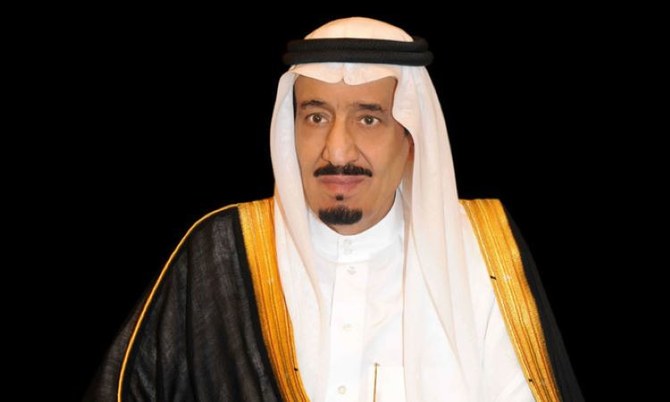
King Salman offers free Hady for nearly 5,000 pilgrims

As part of the Custodian of the Two Holy Mosques’ Guests Program for Hajj and Umrah, King Salman provided sponsorship for Hady to 4,951 beneficiaries. (SPA)
Short Url
Updated 28 June 2023
Follow

King Salman offers free Hady for nearly 5,000 pilgrims

  • Program ensures selected pilgrims receive comprehensive support for all aspects of their sacred pilgrimage
  • 4,951 beneficiaries have reached Mina to observe the days of Tashreeq

JEDDAH: King Salman has provided sponsorship for animal sacrifice, known as Hady, for 4,951 pilgrims from 92 countries who have come to Saudi Arabia to perform Hajj as part of the Custodian of the Two Holy Mosques’ Guests Program for Hajj and Umrah, administered by the Ministry of Islamic Affairs, Dawa and Guidance.

This program ensures that the selected pilgrims receive comprehensive support for all aspects of their sacred pilgrimage.

Sheikh Abdullatif bin Abdulaziz Al-Sheikh, the Saudi minister of Islamic affairs, call and guidance and the general supervisor of the program, announced that this year’s beneficiaries were a diverse group of pilgrims. Royal approval was granted to host 1,300 pilgrims from more than 90 countries worldwide, along with 1,000 Palestinian pilgrims who are family members of martyrs, injured individuals or captives.

Furthermore, the program accommodated 1,000 pilgrims from the families of Saudi martyrs and injured individuals who participated in Operation Decisive Storm, 1,000 pilgrims from the families of Yemeni forces, and the families of those who lost their lives during Operation Decisive Storm.

Additionally, 280 pilgrims from Syria are being hosted, along with 130 from the Arab League Educational, Cultural and Scientific Organization and 150 Yemeni scholars.

Meanwhile, the 4,951 beneficiaries have reached Mina to observe the days of Tashreeq.

According to the Saudi Press Agency, the process of moving the beneficiaries to Mina was executed seamlessly and with the active participation of all relevant sectors.

Al-Sheikh expressed his satisfaction with the outcome of the process, stating that it was highly successful and executed as planned.

He commended the collaborative endeavors of all the committees involved in the program and acknowledged the support and cooperation of the security authorities.

Al-Sheikh also emphasized that the committees within the program are diligently striving to offer top-quality services to ensure the utmost comfort for the pilgrims.



Pakistan finance chief calls for change to population-based revenue-sharing formula

Updated 14 February 2026
Follow

Pakistan finance chief calls for change to population-based revenue-sharing formula

  • Muhammad Aurangzeb criticizes current NFC formula, says it is holding back development
  • Minister says Pakistan to repay $1.3 billion debt in April as economic indicators improve

ISLAMABAD: Pakistan’s Finance Minister Muhammad Aurangzeb said on Saturday the country’s revenue-sharing formula between the federal and provincial governments “has to change,” arguing that allocating the bulk of funds on the basis of population was holding back long-term development.

The revenue-sharing is done under the National Finance Commission (NFC) Award that determines how federally collected taxes are divided between the center and the provinces. Under the current formula, much of the distribution weight is based on population, with smaller weightages assigned to factors such as poverty, revenue generation and inverse population density.

“Under the NFC award, 82 percent allocation is done on the basis of population,” Aurangzeb said while addressing the Federation of Pakistan Chambers of Commerce & Industry’s regional office in Lahore. “This has to change. This is one area which is going to hold us back from realizing the full potential of this country.”

Economists and policy analysts have long suggested broadening the NFC criteria to give greater weight to tax effort, human development indicators and environmental risk, though any change would require political consensus among provinces, making reform politically sensitive.

Aurangzeb also highlighted the economic achievements of the country in recent years, saying Pakistan’s import cover had improved from roughly two weeks just a few years ago to about 2.5 months currently, adding that the government had repaid a $500 million Eurobond last year.

“The next repayment is of $1.3 billion in April,” he continued, adding that “we will pay these obligations, which are the obligations of Pakistan, as we go forward.”

The minister also noted that unlike in 2022, when devastating floods forced Pakistan to seek international pledges at a Geneva conference, the government did not issue an international appeal during more recent flooding, arguing that fiscal buffers had strengthened.

“This time, the prime minister and the cabinet decided that we do not need to go for international appeal because we have the means,” he said.

He reiterated the government was pursuing export-led growth to avoid repeating past boom-and-bust cycles driven by import-led expansion that quickly depleted foreign exchange reserves and pushed Pakistan back into International Monetary Fund programs.