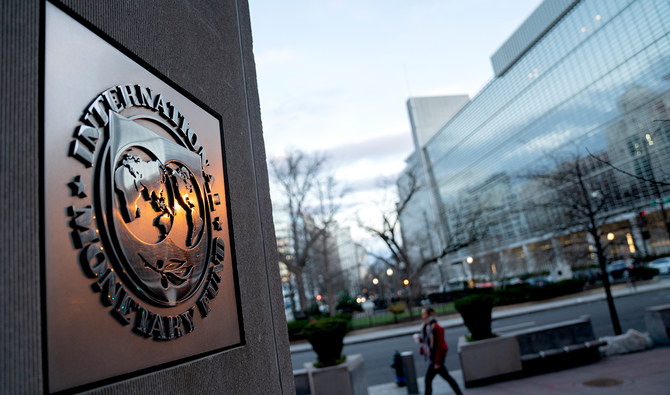

KARACHI: Pakistani Prime Minister Shehbaz Sharif said on Tuesday he hoped a bailout decision from the International Monetary Fund would come in a day or two, capping off protracted negotiations as the country faces an acute balance-of-payments crisis.
Islamabad is racing against time to unlock $1.1 billion under the lender’s ninth review of a $6.5-billion Extended Fund Facility agreed in 2019. The program expires on June 30.
Here are some facts about the importance of unlocking the funds for the cash-strapped South Asian country of 230 million people and the challenges it has faced:
DELAYED TRANCHE
-Pakistan has cleared eight of the 11 listed program reviews, with the ninth review pending since November last year. The delay is already the longest since at least 2008.
-The ninth review is to release a tranche of $1.1 billion, leaving about $1.4 billion on the table in unlocked funds. It is unclear if an IMF agreement would release the entire amount.
-The ninth review had been stalled due to differences between the fund and Islamabad over policy actions, including external financing needs and a budget that meets program goals.
HOLE IN FINANCES
-The government has earmarked $2.5 billion in external receipts from the IMF in its federal budget for FY24, which means the government is budgeting for the 10th and 11th reviews too, or a new IMF program after the current one expires.
-Pakistan needs upwards of $22 billion to service external debt, make interest payments, and finance its current account for FY24. Reserves, at $3.5 billion, are at a critical level, enough to cover barely one month of controlled imports.
-Pakistan’s credit rating has suffered due to macroeconomic uncertainty: Three key rating agencies recently cut Pakistan’s ratings — Standard & Poor’s rating for Pakistan stands at CCC+, Moody’s at Caa3 and Fitch at CCC-.
SECONDARY BENEFITS
-A successful review would not only release much-needed funds, but also unlock credit from other financiers who are looking for a clean bill of health from the IMF for the ailing $350 billion economy. This includes raising money from the private market.
-The country has received financing commitments from friendly countries Saudi Arabia and the United Arab Emirates of $3 billion, while China has granted rollovers on its debt payments due.
-National elections are due by November this year and the government has said the decision to enter a new IMF program will be a decision for the incoming administration.
TOUGH CONDITIONS
-The initial draft of the budget presented in parliament earlier this month failed to meet IMF expectations but was hurriedly revised to introduce new taxes and expenditure cuts.
-The country’s central bank also hiked the key rate by 100 basis points in an emergency meeting on Monday barely two weeks after keeping the rate unchanged in a scheduled meeting.
-Hopes of a last-minute bailout rose following meetings between Sharif and IMF Managing Director Kristalina Georgieva in Paris this month, followed by marathon meetings between IMF staff and finance ministry officials.