

Revision of Pakistan budget rekindles hopes of getting stalled IMF bailout funds

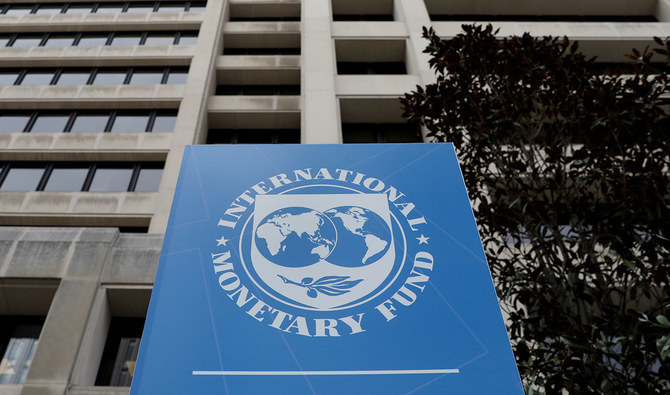
In this file photo, the International Monetary Fund (IMF) headquarters building is seen ahead of the IMF/World Bank spring meetings in Washington, US, on April 8, 2019. (REUTERS)
Short Url
Updated 26 June 2023
Follow

Revision of Pakistan budget rekindles hopes of getting stalled IMF bailout funds

  • Pakistan’s 2023-24 budget revised to meet IMF conditions in last-ditch effort to secure release of bailout funds
  • IMF had expressed dissatisfaction with the initial budget, saying it was a missed opportunity to broaden tax base

KARACHI: Hopes that Pakistan may get stalled bailout funds from the International Monetary Fund (IMF) before the program expires at the end of June have been revived, experts said on Monday, after Pakistan announced last week it had changed its budget for the financial year starting on July 1.

Pakistan’s parliament on Sunday approved the government’s 2023-24 budget which was revised to meet IMF conditions in a last-ditch effort to secure the release of more bailout funds. A day earlier Finance Minister Ishaq Dar also introduced new taxes and expenditure cuts.

The IMF in mid-June expressed dissatisfaction with the country’s initial budget, saying it was a missed opportunity to broaden the tax base in a more progressive way.

With currency reserves barely enough to cover one month’s imports, Pakistan is facing an acute balance of payment crisis, which analysts fear could spiral into a debt default if the IMF funds do not come through.

There are four days to go before the $6.5 billion Extended Fund Facility (EFF) agreed in 2019 expires on June 30. The IMF has to review whether to release some of the $2.5 billion still pending to Pakistan before then. The tranche has been stalled since November.

“The revision of the budget has rekindled the hope that Pakistan’s case would come up in the agenda of the IMF executive board,” Dr. Vaqar Ahmed, Joint Executive Director at the Sustainable Development Policy Institute (SDPI), told Arab News on Monday.

“Now people like me are raising the question that if this [IMF bailout] comes up in the agenda, then what would be the ‘forward modality’ of the program, would the program get an extension or will Pakistan get permission to present the case for a new program.” 

In the changed budget, Dar revised the revenue collection target to Rs9.415 trillion ($33 billion) and put total spending at Rs14.480 trillion ($51 billion), increasing the petroleum levy from Rs50 to Rs60 per liter. 

To boost revenue generation, authorities took Rs215 billion ($752 million) additional tax measures, cut Rs85 billion expenditures, hiked allocations under the social safety Benazir Income Support Program (BISP) by Rs16 billion, and withdrew the amnesty on foreign exchange inflows.

Experts believe the targets set in the revised budget would be hard to achieve as a caretaker government will take over in less than two months before the country goes into a general election in October. The fiscal measures taken in the revised budget are also expected to have an inflationary impact. 

“Budgetary adjustments were required,” Farhan Mahmood, Head of Research at Sherman Securities, told Arab News. “These measures would be inflationary as there are talks of imposing sales tax and excise tax on the fertilizers etcetera.” 

On Friday, Pakistan’s central bank also removed restrictions imposed on imports, which according to analysts was a key sticking point in talks with the IMF. 

“IMF wanted to withdraw the restriction imposed on imports,” Tahir Abbas, Director research at Arif Habib Limited- a brokerage firm, said, adding that lifting the ban would not make much difference due to the low foreign exchange reserves position of the country at $3.54 billion. Around 6,000 containers are currently stuck at the Karachi port, according to the maritime ministry.

Mahmood said the country would continue to give import priority to the oil, food and pharma sectors unless the IMF deal was revived and the country received an around $1.1 billion disbursement.

The country’s share market closed bullish on Monday on the hopes of the revival of the IMF program and the withdrawal of restrictions on imports, which is expected to support industrial activities. 

The benchmark KSE100 index closed at 41,437 points after gaining 1,371 points on Monday, according to the Pakistan Stock Exchange data. The Pakistani rupee also closed a little higher in the interbank market, appreciating 0.01 percent to Rs286.71 against the United States dollar. 


Thousands evacuate homes in Pakistan’s northwest ahead of security operation

Updated 5 sec ago
Follow

Thousands evacuate homes in Pakistan’s northwest ahead of security operation

  • Families in the restive Tirah Valley will receive cash grants, monthly stipends during relocation
  • The planned military offensive aims to clear militants from the volatile region near Afghan border

ISLAMABAD: Thousands of families have started evacuating the restive Tirah Valley in Pakistan’s northwestern Khyber district, an official and a tribal leader said on Saturday, as the country’s security forces prepare for a targeted offensive against militants in the area.

Situated in Khyber Pakhtunkhwa province, the Tirah Valley has long served as a sanctuary for militant groups affiliated with the banned Tehreek-e-Taliban Pakistan (TTP), despite major operations in the mid-2010s.

Sporadic violence and militant entrenchment have nevertheless persisted, with security forces conducting intelligence-based operations in recent years to counter resurging elements.

A senior government official, speaking on condition of anonymity, told Arab News that “evacuation from the Maidan area of Tirah Valley started five days ago in anticipation of a possible operation against terrorists.”

He added that the relocation process will continue until Jan. 25, affecting an estimated 15,000 to 20,000 families.

“Each displaced family is being provided with Rs250,000 [$893] in one-time financial assistance, along with a monthly stipend of Rs50,000 [$179] until they return home,” the official said, adding that the government will also provide Rs3 million ($10,714) for damage to houses and Rs1 million ($3,571) for commercial damages.

He said authorities are also supplying food items and arranging free transportation for the relocation of the area’s population.

The decision to move comes amid residents’ complaints of a volatile security environment.

Kamaluddin Khan, a member of a local tribal committee representing elders from the region, described the migration as “the last resort” under the circumstances.

“The people of Tirah have decided to relocate under compulsion and that too only once the government and administration accepted their demands,” he told Arab News over the phone, mainly referring to financial assistance and facilitation.

“The situation in Tirah has deteriorated to such an extent that not only humans, but even animals find it difficult to live here. We held several jirgas [tribal councils of elders], but they proved futile,” he added.

Khan described the situation in the area as “highly volatile.”

“The registration process for migration has begun, and people have started leaving the area,” he added. “According to our estimates, around 30,000 people will be affected by this displacement.”

The move follows a bloody year for Pakistan. Combat-related deaths surged by 73 percent in 2025, reaching 3,387 fatalities, according to data from the Pakistan Institute for Conflict and Security Studies, a local think tank.

The organization said in its annual report that security forces suffered 664 deaths — the highest toll since 2011 — while 2,115 militants were killed during the same period.

Pakistan has grappled with a surge in militant attacks in its western provinces of Khyber Pakhtunkhwa and Balochistan, both bordering Afghanistan.

Islamabad blames the Afghan authorities for providing sanctuaries to militants it says use Afghan soil to carry out attacks against Pakistan. Kabul denies the charges.

According to security analysts in the area, the upcoming operation will be more targeted than the previous ones.

Peshawar-based Mehmood Jan Babar maintained that local sentiment has shifted against the militants.

“People are willing to leave their homes themselves,” he told Arab News. “The families with links to militants are also facing public criticism, as the people of Tirah are exhausted by a prolonged law and order situation.”

“The upcoming operation is not likely to result in large-scale displacement,” he continued. “Based on information available to us, it will be a targeted operation.”

Officials said that the operation against militants is expected to conclude within two months, after which the rehabilitation and return process may begin in April.