

At Pakistan Military Academy, cadets transform into officers with discipline, purpose, love of country

Cadets march in formation at the Pakistan Military Academy in Kakul, Pakistan on June 13, 2023. (AN photo)
Short Url
Updated 19 June 2023
Follow

At Pakistan Military Academy, cadets transform into officers with discipline, purpose, love of country

  • Established in 1947, the academy has produced many revered military leaders who laid down their lives for the country
  • PMA commanding officers say they try to instill a higher sense of purpose and nationalism among aspiring army officers

ABBOTTABAD: As the sun breaks over the horizon, Pakistan’s foremost training and induction establishment for aspiring army officers springs to life amidst the captivating emerald hills of Khyber Pakhtunkhwa province. 

Located near the village of Kakul in Abbottabad, the Pakistan Military Academy (PMA) is home to approximately 2,000 impeccably dressed cadets who emerge from the barracks each morning in graceful formations, preparing to undertake their demanding daily drill. 

Established shortly after the country achieved independence from British rule in August 1947, the training facility was created to subject potential officers to rigorous academic and physical training programs, instilling in them the necessary qualities for a successful army career. 

“The Pakistan Military Academy is the cradle of military leadership and a renowned military institute with a remarkable 76-year history,” Major Alamgir Pervez Khan, a commanding officer, told Arab News during a visit to the academy arranged by the army this week. 


The aerial view shows Pakistan Military Academy (PMA) located near the village of Kakul in Abbottabad, Pakistan, on June 13, 2023. (AN photo)

He emphasized that the transformation of a gentleman cadet revolves around developing a sense of purpose and nationalism. 

“These two aspects clearly define the reasons for their presence in the academy and fuel their desire to learn and optimize their potential,” he said. “However, the focus remains on instilling core values and competencies to develop their leadership skills.” 
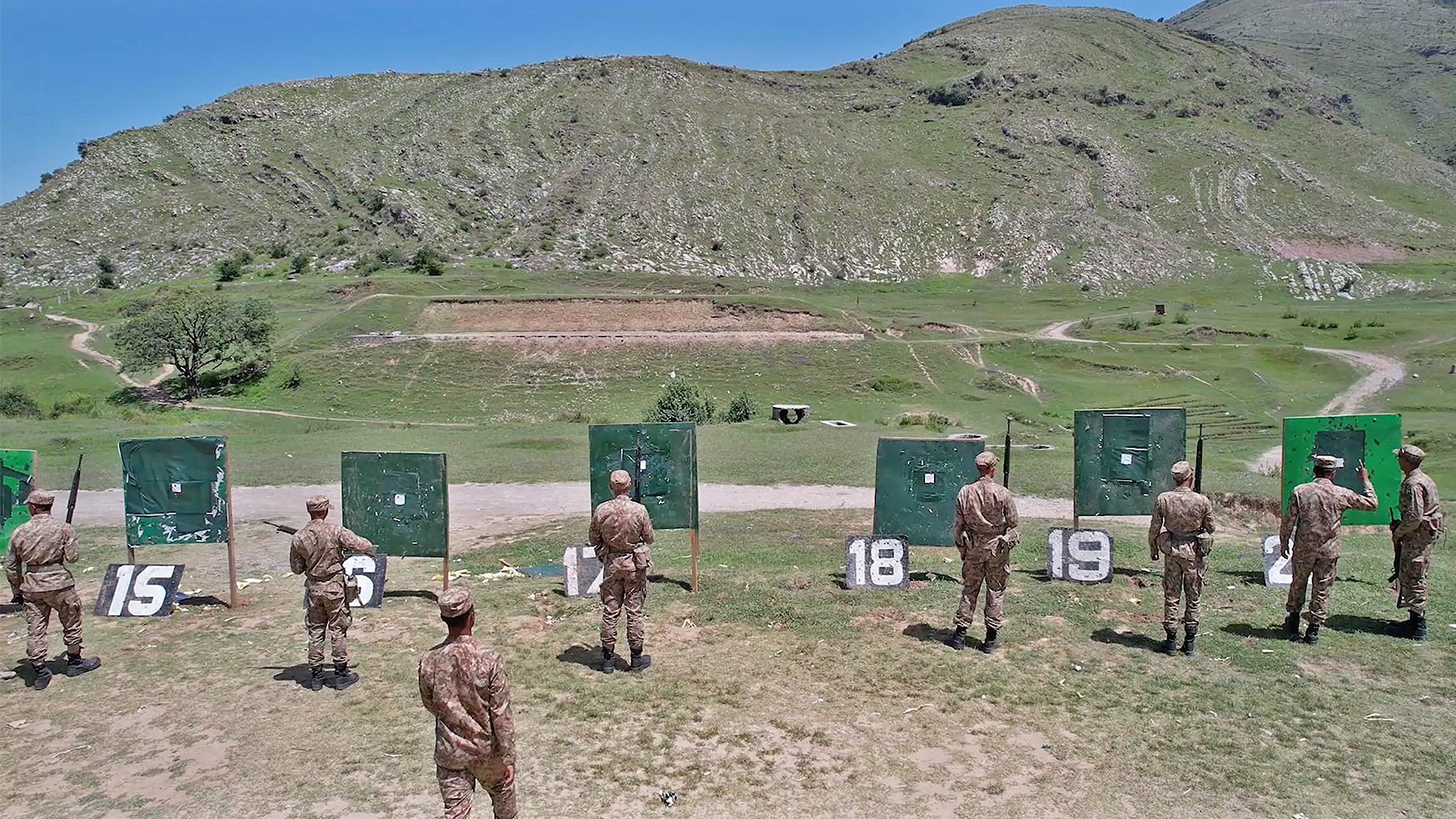


Cadets engage in target practice at the Pakistan Military Academy in Kakul, Pakistan on June 13, 2023. (AN photo)

PMA offers six different courses to meet a variety of the country’s defense needs, including the PMA Long Course, Technical Graduate Course, Integrated Course, Lady Cadet Course, Basic Military Training Course, and Mujahid Course. 

Since its inception, the academy has produced highly revered military leaders, with hundreds of its graduates sacrificing their lives for the country and earning top gallantry awards in recognition of their courage. 
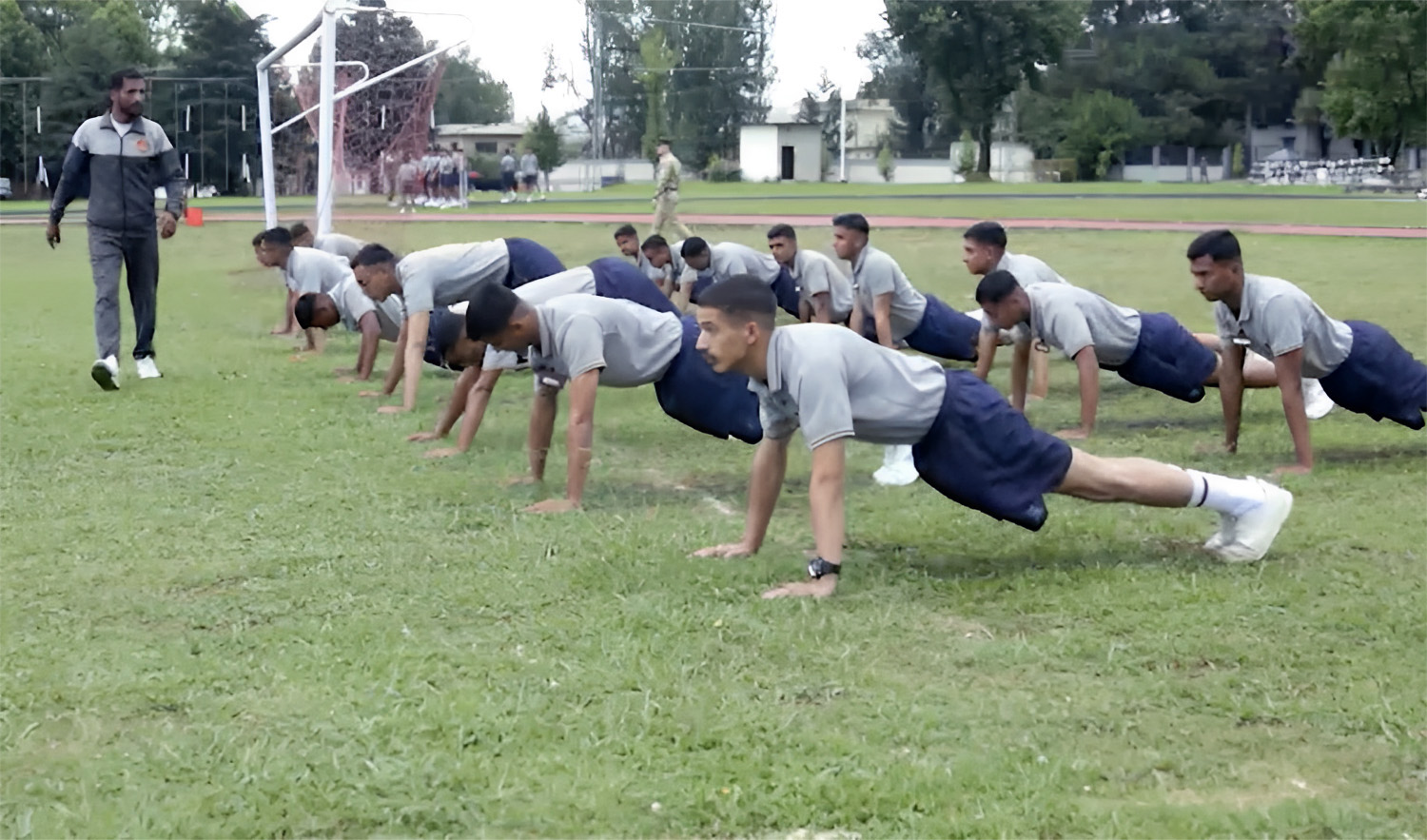


Pakistani cadets engage in exercises under the supervision of their instructor at Pakistan Military Academy in Abbottabad, Pakistan, on June 13, 2023. (AN photo)

Major Khan stated that the academy follows a structured curriculum, combining theoretical knowledge with practical exercises and field training. 

“PMA provides comprehensive training in various aspects, such as character development, leadership skills, intellectual enhancement, physical fitness, and combat readiness,” he said, highlighting that the training facility fosters a sense of comradeship and teamwork, which are both fundamental to military existence. 


Pakistan engages Saudi Arabia, China in bid to ease surging Middle East tensions 

Updated 8 sec ago
Follow

Pakistan engages Saudi Arabia, China in bid to ease surging Middle East tensions 

  • Pakistan’s foreign minister stresses need for de-escalation in conversations with Chinese, Saudi counterparts
  • Tensions in the Middle East continue to remain high as conflict between US, Israel and Iran intensifies

ISLAMABAD: Pakistan’s Deputy Prime Minister Ishaq Dar spoke to the foreign ministers of Saudi Arabia and China on Tuesday, stressing the importance of diplomatic engagement to de-escalate tensions in the Middle East as the Iran war intensifies. 

Pakistan has constantly engaged regional countries in efforts to broker a ceasefire in the Middle East, after the US and Isreal launched coordinated strikes against Iran on Feb. 28. 

Iran launched fresh attacks on Gulf countries on Tuesday morning, where it has targeted US military bases in recent weeks. In addition to firing missiles and drones at Israel and American bases in the region, Iran has also been targeting energy infrastructure which, combined with its stranglehold on the Strait of Hormuz, has sent oil prices soaring worldwide. 

Dar spoke to Saudi Foreign Minister Prince Faisal bin Farhan to discuss developments in the Middle East and ongoing deliberations at the UN Security Council, Pakistan’s foreign office said in a statement. 

“DPM/FM shared Pakistan’s perspective, underscoring the importance of continued coordination and diplomatic engagement to support de-escalation and promote peace and stability across the region and beyond,” the statement said. 

Dar, who also serves as Pakistan’s foreign minister, spoke to Chinese foreign minister Wang Yi over the telephone separately. The two discussed the evolving regional situation and broader global developments.

Dar underscored the need to ease tensions in the Middle East and the wider region during the conversation, the foreign office said. 

Yi appreciated Pakistan’s constructive efforts aimed at promoting de-escalation and stability in the region, it added. 

“The two leaders stressed the importance of de-escalation and emphasized the need to pursue dialogue and diplomacy in accordance with the principles of the UN Charter,” the foreign office’s statement said. 

The conflict in the Middle East has hit Pakistan hard as well, forcing Islamabad to hike petrol and diesel prices by Rs55 per liter last Friday. 

Pakistan’s government has also announced a set of austerity measures, which include closing schools and cutting down on government expenditures, as it evaluates petrol stocks and looks for alternative supply routes.