

SAP senior VP for Middle East says Pakistan could become top technology producer internationally

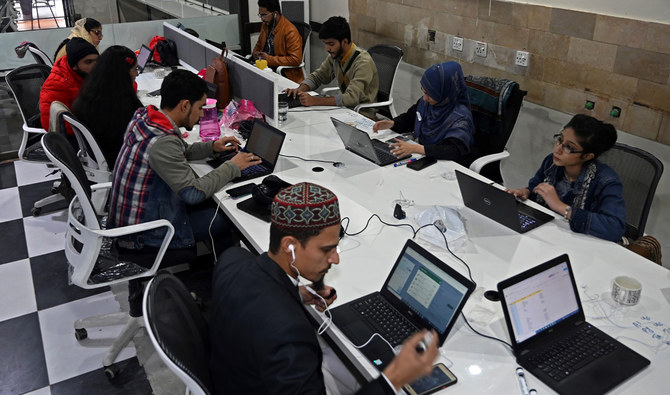
In this picture taken on January 8, 2022, employees of Taza Transforming Agriculture talk with customers at a call centre in Lahore, Pakistan. (AFP/File)
Short Url
Updated 16 June 2023
Follow

SAP senior VP for Middle East says Pakistan could become top technology producer internationally

  • Ahmed Al-Faifi says Pakistani technology companies can benefit from opportunities under Saudi Arabia’s Vision 2030
  • He says his firm is facing challenges while trying to repatriate profits from Pakistan, though it is still providing services

KARACHI: A Saudi businessman, who oversees a global software firm in the Middle East and North Africa (MENA), believes Pakistan can position itself among the top countries known for technology production and usage due to its young population with an innovative mindset, similar to his own country.

Saudi Arabia is among the most advanced technology markets, where nearly every government service is available online as the kingdom seeks to diversify its economy by reducing its reliance on the thriving oil sector.

“We are one of the fastest-growing international markets in terms of technology adoption, and I believe our government ranks among the top five countries utilizing technology,” said Ahmed Al-Faifi, the senior vice president in the MENA region at SAP, a German software giant, during an interview with Arab News at a technology conference in Karachi on Thursday.
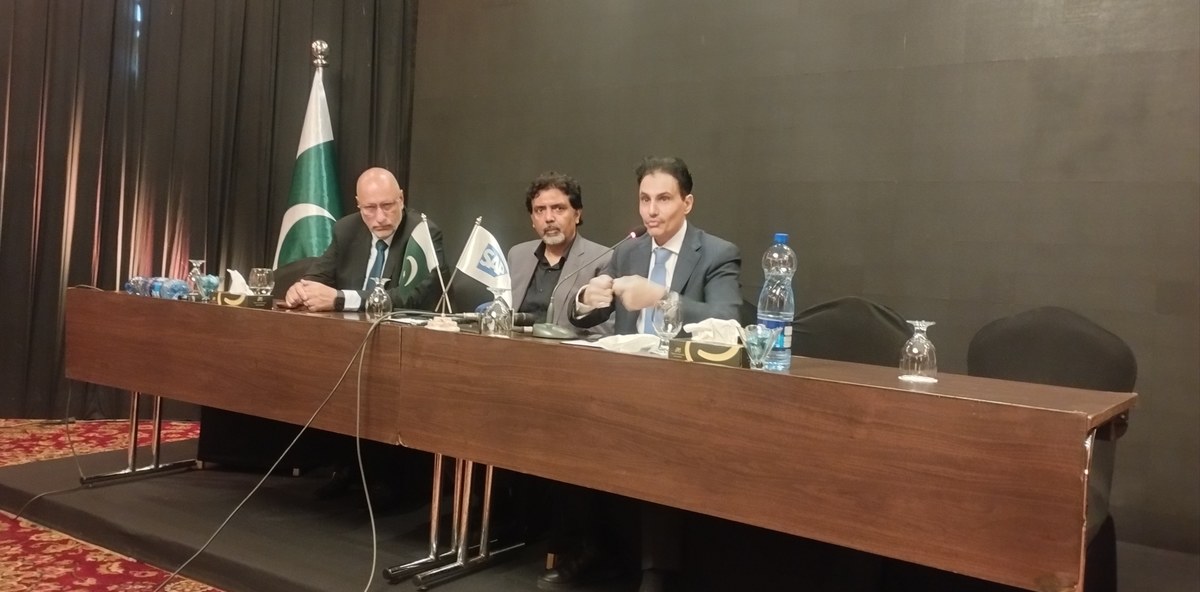


Ahmed Al-Faifi (first from right), the senior vice president in the MENA region at SAP, a German software giant, speaks at an event in Karachi, Pakistan, on June 15, 2023. (AN photo)  

Al-Faifi continued, “This has happened because of two reasons. First, we have a young population. Second, the government, regulators, and technology vendors have joined hands to ensure the availability and ease of use of these technologies so that young people can adopt them.”

Al-Faifi, who runs the regional operations of the software firm from Riyadh, stated that Pakistan also possessed these advantages.

“I think we share these two commonalities,” he added. “Pakistan has a young population and good education, which helps students quickly grasp technology, and this is crucial. The second point is that when it comes to technology adoption and expansion, we are witnessing a lot of trust in technology investment in Pakistan.”

He maintained that Pakistan fulfilled the prerequisites of becoming a top technology producer in the world.

Al-Faifi mentioned that his organization was assisting Pakistan through technology sharing and helping its teams serve customers in the MENA region.

“We are bringing partners operating in Pakistan with know-how and experience to work in the Gulf and the GCC countries,” he continued. “This is how we are able to share knowledge and experience, but there are also many imports.”

Regarding the impact of Pakistan’s measures to slow down or stop repatriation of profits on his company’s operations, he stated that it posed challenges but his firm was managing to keep the operations afloat.

“Of course, it is impacting us, like other companies, because we have a significant business in Pakistan,” he said. “We face many challenges when trying to take cash out of the country. However, we have continued to provide our services and extend them to our customers and partners.”

SAP currently serves over 800 entities in both the public and private sectors of Pakistan, offering technology-based solutions across various industries, ranging from aviation to healthcare.

Saquib Ahmad, the company’s country manager, said the adoption of technology largely depended on Pakistan’s leadership since the general population was willing to embrace a more innovative lifestyle.


Pakistan says Indian minister initiated handshake in Dhaka, first contact since May conflict

Updated 5 sec ago
Follow

Pakistan says Indian minister initiated handshake in Dhaka, first contact since May conflict

  • Pakistan’s Ayaz Sadiq and India’s Subrahmanyam Jaishankar met on the sidelines of Khaleda Zia’s funeral
  • The National Assembly of Pakistan says Islamabad has consistently emphasized dialogue with New Delhi

ISLAMABAD: Pakistan said on Wednesday Indian External Affairs Minister Subrahmanyam Jaishankar initiated a brief handshake with Speaker of the National Assembly Sardar Ayaz Sadiq in Dhaka, marking the first high-level contact between the two nuclear-armed rivals since their military conflict in May.

The encounter took place on the sidelines of the funeral of former Bangladeshi prime minister Khaleda Zia, attended by senior officials and diplomats from multiple countries.

Ties between India and Pakistan have remained frozen since a four-day military confrontation in May, during which both sides exchanged missile, drone and air strikes before a ceasefire brokered by Washington.

“During Speaker NA Sardar Ayaz Sadiq’s visit to the Parliament of Bangladesh ... the Indian External Minister Dr. S. Jaishankar approached the Speaker National Assembly and [shook] hands,” Pakistan’s National Assembly said in a post on social media platform X.

It added that Jaishankar introduced himself to Sadiq during the brief interaction. India has not commented publicly on the exchange.

“It is noteworthy that Pakistan has consistently emphasized dialogue, restraint, and cooperative measures, including proposals for peace talks,” the post continued.

Tensions between the two neighbors escalated in April after a militant attack in Indian-administered Kashmir killed more than 20 tourists. New Delhi blamed Pakistan for supporting the attack, an allegation Islamabad denied, calling instead for an independent and transparent investigation.

Officials from both countries have largely avoided public interactions since the conflict, with senior figures refraining from handshakes or exchanges at international gatherings.

Sadiq was in Dhaka to attend Zia’s funeral and to convey condolences from Pakistan’s leadership and people. He also met Zia’s son Tarique Rahman, the acting chairman of the Bangladesh Nationalist Party, according to Pakistan’s high commission in Bangladesh.

Speaking to Pakistan’s Geo TV, Sadiq confirmed that Jaishankar approached him in full media glare and exchanged pleasantries.

Responding to a question about being photographed with the Indian minister, he said: “Cameras arrived with them. Our people took the photographs later.”