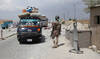
Drug smuggling attempts foiled in Jazan region

(SPA/File)
Short Url
Updated 15 June 2023
Follow

Drug smuggling attempts foiled in Jazan region

JAZAN: Security officials in Jazan have arrested two people for attempting to smuggle qat.

The drugs were found hidden in a vehicle in Al-Ardah governorate. Legal action is now being taken against the two citizens held.

In a separate operation, officers in the region’s Al-Harth governorate seized 150 kilograms of qat.

Anyone wishing to report information on suspected drug-smuggling, or the selling of narcotics can call 911 in Makkah, Riyadh, and the Eastern Province, and 999 in the rest of the Kingdom. The General Directorate of Narcotics Control can be contacted on 995 or via email. Saudi Arabia has lately intensified its crackdown on drug smuggling operations.

Last year, Saudi authorities seized narcotics with a street value of up to $1 billion and arrested eight expats in what is believed to be one of the biggest drug busts the Kingdom has witnessed.Authorities discovered the 47 million amphetamine pills during a raid on a warehouse in Riyadh, the Saudi Press Agency reported.
The drugs have a street value of between $470 million and more than $1 billion, based on figures cited in the International Addiction Review journal.


Ramadan is a time to train smarter, not harder

Updated 7 sec ago
Follow

Ramadan is a time to train smarter, not harder

  • Experts advise between six and eight hours of rest and steady fluid intake between sunset and dawn

RIYADH: Whether you’re a newcomer to the gym or a veteran, Ramadan is a time when everyone needs to reassess their workout regime: from calorie intake to the intensity of your exercise, from rep range to cardio zones, everything is up for alteration during the holy month.

One of the main priorities when it comes to maximizing training in general is to allow for muscle recovery through rest and sleep, which is why Calo, a Bahraini food and health startup, recommends prioritizing sahoor and sufficient rest; both of which will aid in physical recovery for the following day.

Cycling tracks in AlUla have witnessed increased turnout from various age groups seeking to engage in physical activity at suitable times during the blessed month. (SPA/Supplied)

Gym hours also differ during Ramadan. A GymTech representative told Arab News: “The highest attendance is usually in the late evening hours, mostly starting from 9 p.m.”

A representative from The Pilates Studio also spoke to Arab News and said its members are both “calmer and fitter” during Ramadan.

HIGHLIGHTS

• One of the main priorities when it comes to maximizing training in general is to allow for muscle recovery through rest and sleep. • Calo, a Bahraini food and health startup, recommends prioritizing sahoor and sufficient rest; both of which will aid in physical recovery for the following day. • Both GymTech and The Pilates Studio recommend cardio exercise during Ramadan.

Both GymTech and The Pilates Studio recommend cardio exercise during Ramadan. The Pilates Studio rep said: “Cardio pre-iftar and strength training after iftar.” 

Coach Jap in Riyadh explained why workout routines need to change during the holy month.

“The role of hydration and sleep is essential. Hydration is a must so your body will function properly and cleanse; and you should sleep at least six-to-eight hours, depending on your age. It’s essential, because this is when the body recovers and repairs,” he said.

He also discussed the necessary adjustments for those looking to maintain their energy and physical activity levels, as well as how those adjustments are altered for those looking to gain or lose weight throughout their fasting.

“If your goal is losing weight, it’s better to train before iftar, because your body is in the healing process wherein you’re able to burn the fats and lose some weight,” he said, adding that there are “some precautions” to take, such as only undertaking “light to moderate” exercise.

“You may need to have an average heart rate of 120-140 so you’ll be able to burn more calories and fats. Take note: there will be muscle wastage during this time as well,” he said. “For gaining weight, the best time to work out is after iftar, two-to-three hours after a good meal.”

When it comes to the link between dieting and muscle recovery or fat loss, Coach Jap had a warning. “The biggest mistake I see from people training in Ramadan is their food consumption. They fast and then binge eat during iftar,” he said. “Discipline is key; eat a medium meal and then, after a few hours, you can eat small frequent meals again, so your body will not be overloaded with food.” 

He added that a diet high in protein and carbohydrates (around 100-200 grams of the latter) is necessary, and added that, in the second half of Ramadan, the intensity of a person’s workouts usually decreases as their energy levels drop.