Kuch Ankahi star Mira Sethi says drama getting ‘amazing’ response from India

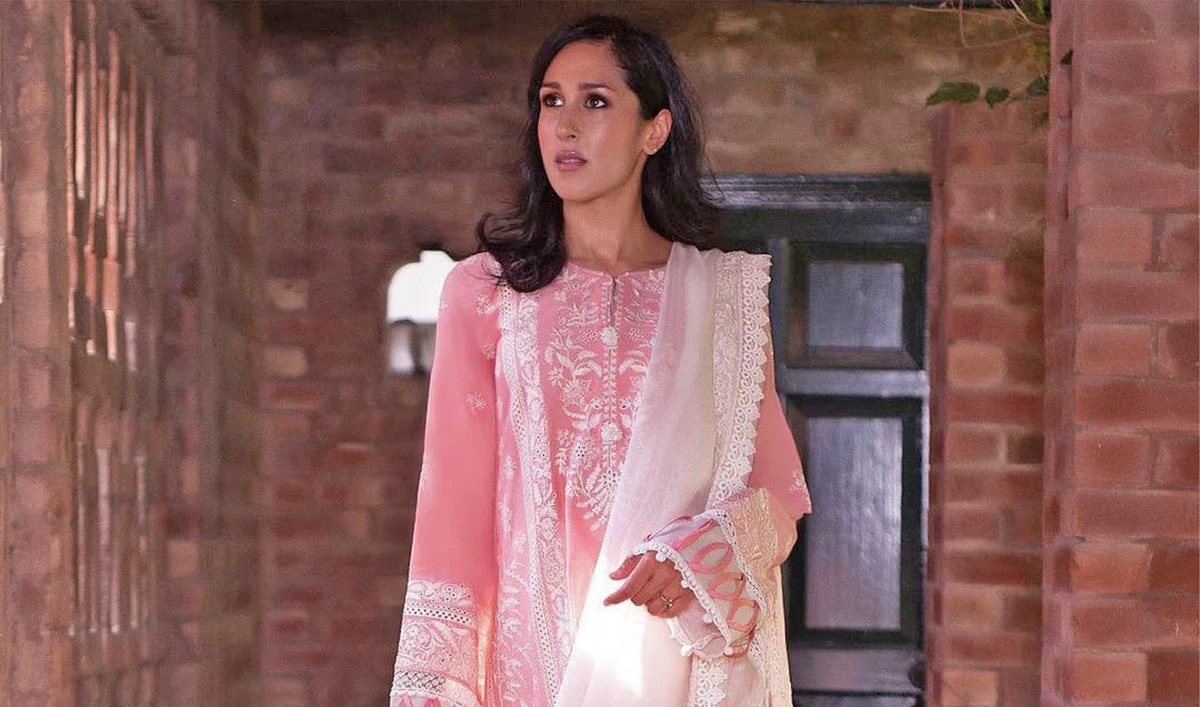
Pakistani actress Mira Sethi poses for a picture in Lahore, Pakistan, on September 16, 2021. (mira.sethi/Instagram)
Short Url
Updated 12 June 2023
Follow

Kuch Ankahi star Mira Sethi says drama getting ‘amazing’ response from India

  • ‘Kuch Ankahi’ has generated debate over exploration of topics like minority and women rights, mental health
  • Sethi plays the role of Samiya, elder of three daughters, who is calm and quiet but always has a plan

KARACHI: Pakistani actor Mira Sethi, currently starring in the drama serial Kuch Ankahi which has gotten widespread praise for its exploration of ‘progressive’ themes, said on Sunday the show was also receiving an “amazing” response from neighboring India.

Kuch Ankahi went on air in January this year and, twenty-two episodes in, has been making waves not just in Pakistan but also in India over its portrayal of issues like minority rights, women empowerment, mental health and gender stereotypes.

“The response from India has really been amazing, I actually get a lot of messages from people in India saying that they love watching something so progressive coming from Pakistan,” Sethi told Arab News in a live session on Instagram.

In fact, the boom in social and video-sharing media, particularly YouTube, could help Pakistani dramas cater to audiences all over the world, said the actress, who has also authored a collection of original stories that upend traditional notions of identity and family, titled ‘Are You Enjoying?’

“The small screen is so powerful. For every one person who has read my book, 10,000 people have watched my shows. We genuinely are living in the golden age of TV,” she said.

“We have audiences in India, Bangladesh, America and UK. With social media and YouTube, you can bypass that formula ... you can cater to people in all of South Asia.”

Sethi said rather than looking at entirely weak or strong women characters in Pakistani dramas, there was “a dire need to convey fully formed human beings.”

“We are told audiences do not want to watch dramas like Kuch Ankahi. It’s crap, frankly,” Sethi added. “If you make something good, people do watch it. It [Kuch Ankahi] was a slow burner but it eventually found its audience.”

Kuch Ankahi revolves around a middle-class family with three daughters, each trying to break away from the social conditioning of their mother. Sethi plays the role of the elder daughter, Samiya, who is calm and quiet but always has a plan.

In real life, Sethi said, she wasn’t very “quiet” like Samiya but she did identify with the character for her “foresight.”

She also hinted that a transition in Samiya’s character would surprise audiences at the end of Kuch Ankahi, which has only three episodes left, and credited the writer of the drama, Syed Mohammad Ahmed, who also plays the father of the three sisters, for adding “nuance” to the narrative.

Pakistan terms climate change, demographic pressures as ‘pressing existential risks’

Updated 06 December 2025
Follow

Pakistan terms climate change, demographic pressures as ‘pressing existential risks’

  • Pakistan has suffered frequent climate change-induced disasters, including floods this year that killed over 1,000
  • Pakistan finmin highlights stabilization measures at Doha Forum, discusses economic cooperation with Qatar 

ISLAMABAD: Pakistan’s Finance Minister Muhammad Aurangzeb on Saturday described climate change and demographic pressures as “pressing existential risks” facing the country, calling for urgent climate financing. 

The finance minister was speaking as a member of a high-level panel at the 23rd edition of the Doha Forum, which is being held from Dec. 6–7 in the Qatari capital. Aurangzeb was invited as a speaker on the discussion titled: ‘Global Trade Tensions: Economic Impact and Policy Responses in MENA.’

“He reaffirmed that while Pakistan remained vigilant in the face of geopolitical uncertainty, the more pressing existential risks were climate change and demographic pressures,” the Finance Division said. 

Pakistan has suffered repeated climate disasters in recent years, most notably the 2022 super-floods that submerged one-third of the country, displaced millions and caused an estimated $30 billion in losses. 

This year’s floods killed over 1,000 people and caused at least $2.9 billion in damages to agriculture and infrastructure. Scientists say Pakistan remains among the world’s most climate-vulnerable nations despite contributing less than 1 percent of global greenhouse-gas emissions.

Aurangzeb has previously said climate change and Pakistan’s fast-rising population are the only two factors that can hinder the South Asian country’s efforts to become a $3 trillion economy in the future. 

The finance minister noted that this year’s floods in Pakistan had shaved at least 0.5 percent off GDP growth, calling for urgent climate financing and investment in resilient infrastructure. 

When asked about Pakistan’s fiscal resilience and capability to absorb external shocks, Aurangzeb said Islamabad had rebuilt fiscal buffers. He pointed out that both the primary fiscal balance and current account had returned to surplus, supported significantly by strong remittance inflows of $18–20 billion annually from the Middle East and North Africa (MENA) and Gulf Cooperation Council (GCC) regions. 

Separately, Aurangzeb met his Qatari counterpart Ali Bin Ahmed Al Kuwari to discuss bilateral cooperation. 

“Both sides reaffirmed their commitment to strengthening economic ties, particularly by maximizing opportunities created through the newly concluded GCC–Pakistan Free Trade Agreement, expanding trade flows, and deepening energy cooperation, including long-term LNG collaboration,” the finance ministry said. 

The two also discussed collaboration on digital infrastructure, skills development and regulatory reform. They agreed to establish structured mechanisms to continue joint work in trade diversification, technology, climate resilience, and investment facilitation, the finance ministry said.