- The drama attempts to challenge gender roles and send out progressive messages
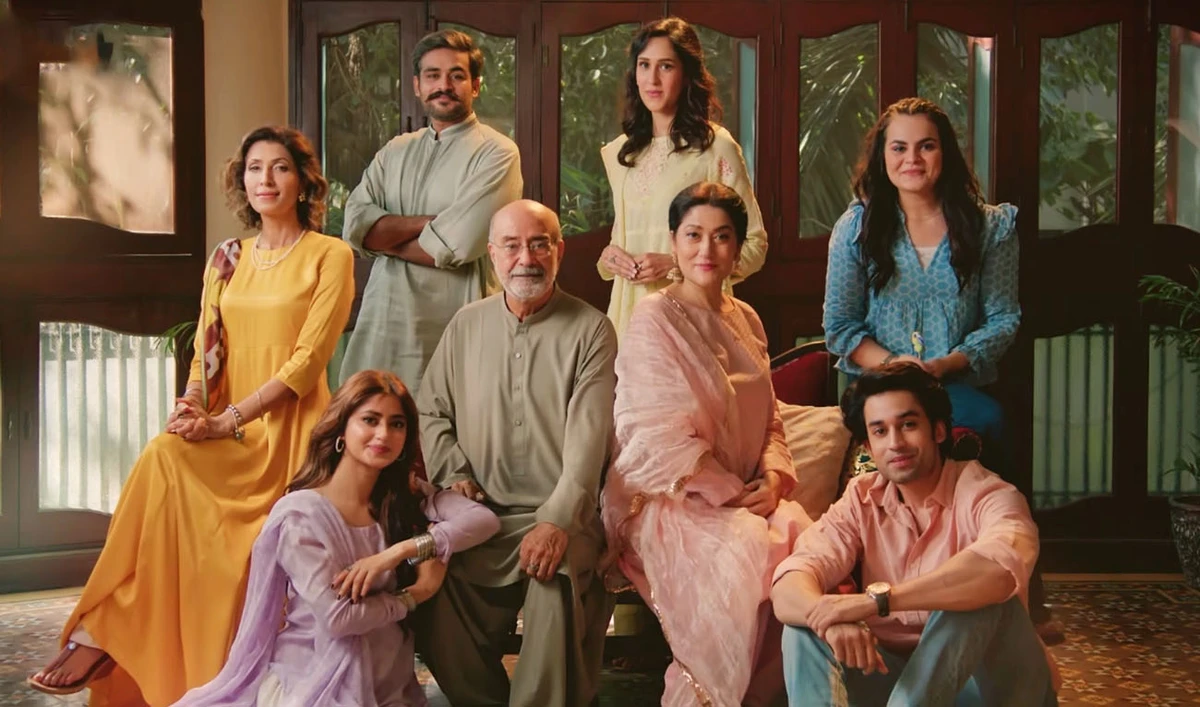
- The TV show stars an ensemble cast, including Sajal Aly, Bilal Abbas and Mira Sethi
KARACHI: As Pakistani drama ‘Kuch Ankahi’ gains popularity among the masses, its director says the television show conveys a message with light-heartedness and brings hope for local TV through its “old PTV feel.”
For decades, Pakistani dramas fascinated viewers beyond borders, particularly in India, with their realistic storytelling approach. However, recent years have seen a decline as more regressive narratives dominate the small screen, with abuse, violence and infidelity as popular themes.
Formulaic plots and characters rule the world of television in Pakistan, generating huge ratings for production houses and channels airing the dramas. A series of socially-relevant storylines started hitting television almost a decade ago but that too became redundant after a point and love triangles, extra marital affairs and family politics are currently trending on the small screen in Pakistan.
But four episodes into the story, Kuch Ankahi has broken away from these clichéd plots and conventional gender roles, according to director Nadeem Baig.
“We have tried to break stereotypes slightly in this one,” Baig told Arab News on Friday. “I grew up watching Haseena Moin’s plays such as ‘Tanhaiyaan,’ ‘Ankahi’ and all of that. We just thought to give the old PTV feel to this drama.”
Kuch Ankahi features a Hindu maid who brings her story to the table and is accepted by the family she works for. The drama features an ensemble cast, including Sajal Aly, Bilal Abbas, Mira Sethi, Qudsia Ali, Irsa Ghazal and Vaneeza.
There is a lot of chatter around the drama as it attempts to challenge conventional gender roles and send out progressive messages.
“The biggest issue is girls are doing unconventional jobs, but we don’t identify them and just show them confined in four walls of the house. You will be surprised to see so many girls riding bikes in Lahore, but you would hardly show it in dramas,” Baig said.
“We just need to normalize it and show it in reality. It [the drama] doesn’t intend to let anyone down.”
If a son is helping her mother out in home chores, it isn’t something to be amazed at, according to Mohammed Ahmed, the writer of Kuch Ankahi.
“In our part of the world, duties were divided with chores specified for men and women,” Ahmed told Arab News.
“I have tried to show that guys help their mothers in cooking, cleaning and other home chores.”
In addition to the script, Ahmed is essaying the role Agha Jaan, the head of the family that includes his wife and three daughters, in the drama.
“If you don’t show these things, audiences won’t know life has another side too. They have gotten addicted to those [clichéd] dramas,” Ahmed said.
“They need to hear Urdu that isn’t inspired from Hindi and understand that humor does not necessarily have to be vulgar.”
Baig said minorities in Pakistan have the same issues as others and, in Kuch Ankahi, the Hindu maid isn’t discriminated on the basis of her religion.
“Light-hearted dramas like Kuch Ankahi have their own audience. It is getting good feedback, viewership and rating. When you break away from usual plots and show something new, it takes audiences some time to get used to it,” the director said.
The drama is a joint collaboration of Kashf Foundation, a non-banking micro finance company, and Six Sigma Plus Production. The former is known for its association with hard-hitting narratives, such as drama serial ‘Udaari’ (2016) and ‘Dil Na Umeed Tou Nahi’ (2021).
“The number of viewers liking a unique project will expand if we continue feeding fresh narratives to them,” said Ahmed, who doesn’t believe in writing black and white characters.
“Looking at ratings and comments [of Kuch Ankahi], I noticed that audiences are addicted to watching women cry onscreen as well as mention of divorce, slap and/or abuse after every few sequences,” he said.
“Even if 40 percent of the audience is appreciating our efforts, it is enough for me as we aren’t in the race of ratings. It [the feedback] reflects that there is still hope in Pakistan.”