

Kuch Ankahi star Mira Sethi says drama getting ‘amazing’ response from India

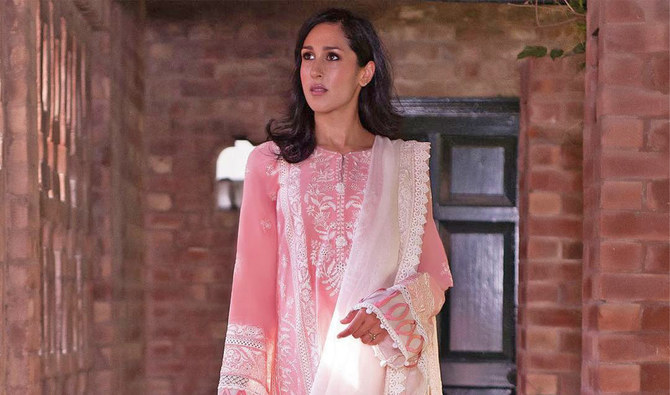
Pakistani actress Mira Sethi poses for a picture in Lahore, Pakistan, on September 16, 2021. (mira.sethi/Instagram)
Short Url
Updated 12 June 2023
Follow

Kuch Ankahi star Mira Sethi says drama getting ‘amazing’ response from India

  • ‘Kuch Ankahi’ has generated debate over exploration of topics like minority and women rights, mental health
  • Sethi plays the role of Samiya, elder of three daughters, who is calm and quiet but always has a plan

KARACHI: Pakistani actor Mira Sethi, currently starring in the drama serial Kuch Ankahi which has gotten widespread praise for its exploration of ‘progressive’ themes, said on Sunday the show was also receiving an “amazing” response from neighboring India.

Kuch Ankahi went on air in January this year and, twenty-two episodes in, has been making waves not just in Pakistan but also in India over its portrayal of issues like minority rights, women empowerment, mental health and gender stereotypes.

“The response from India has really been amazing, I actually get a lot of messages from people in India saying that they love watching something so progressive coming from Pakistan,” Sethi told Arab News in a live session on Instagram.

In fact, the boom in social and video-sharing media, particularly YouTube, could help Pakistani dramas cater to audiences all over the world, said the actress, who has also authored a collection of original stories that upend traditional notions of identity and family, titled ‘Are You Enjoying?’

“The small screen is so powerful. For every one person who has read my book, 10,000 people have watched my shows. We genuinely are living in the golden age of TV,” she said.

“We have audiences in India, Bangladesh, America and UK. With social media and YouTube, you can bypass that formula ... you can cater to people in all of South Asia.”

Sethi said rather than looking at entirely weak or strong women characters in Pakistani dramas, there was “a dire need to convey fully formed human beings.”

“We are told audiences do not want to watch dramas like Kuch Ankahi. It’s crap, frankly,” Sethi added. “If you make something good, people do watch it. It [Kuch Ankahi] was a slow burner but it eventually found its audience.”

Kuch Ankahi revolves around a middle-class family with three daughters, each trying to break away from the social conditioning of their mother. Sethi plays the role of the elder daughter, Samiya, who is calm and quiet but always has a plan.

In real life, Sethi said, she wasn’t very “quiet” like Samiya but she did identify with the character for her “foresight.”

She also hinted that a transition in Samiya’s character would surprise audiences at the end of Kuch Ankahi, which has only three episodes left, and credited the writer of the drama, Syed Mohammad Ahmed, who also plays the father of the three sisters, for adding “nuance” to the narrative.


Curfew extended in Gilgit-Baltistan, probe ordered after deadly Khamenei protests

Updated 03 March 2026
Follow

Curfew extended in Gilgit-Baltistan, probe ordered after deadly Khamenei protests

  • At least 15 people were killed in clashes with law enforcement agencies over the weekend in Gilgit-Baltistan
  • Government also announces a de-weaponization campaign, crackdown on hate speech and cybercrime in region

ISLAMABAD: The government in Pakistan’s Gilgit-Baltistan (GB) region on Tuesday extended a curfew in Gilgit district and ordered a judicial probe into violent protests over the killing of Iranian Supreme Leader Ali Khamenei in US-Israeli strikes last week, an official said.

At least 15 people were killed in clashes with law enforcement agencies over the weekend in GB, where protesters torched and vandalized several buildings, including United Nations regional offices, an army-run school, software technology park and a local charity building.

The violence prompted regional authorities to impose curfew in Gilgit and Skardu districts on March 2-4 as officials urged people to stay indoors and cooperate with law enforcers, amid widespread anger in Pakistan, particularly among members of the Shiite minority, over Khamenei’s killing.

On Tuesday, the GB government convened to review the situation and announced the extension of curfew in Gilgit among a number of security measures as well as ordered the establishment of a judicial commission to investigate the weekend violence in the region.

“The government has made it clear that the law will strictly take its course against elements involved in vandalism at government institutions, private properties and incidents of vandalism in Gilgit and Skardu and no kind of mischief will be tolerated,” Shabbir Mir, a GB government spokesperson, said in a statement.

“In view of the security situation, curfew will remain in force in Gilgit, while the decision to extend the curfew in Skardu will be taken keeping the ground realities and the changing situation in view.”

The statement did not specify how long the curfew will remain in place in Gilgit.

Besides the formation of the judicial commission to investigate the violent clashes, the government also decided to launch a large-scale de-weaponization campaign in the entire Gilgit district, for which relevant institutions have been directed to immediately complete all necessary arrangements, according to Mir.

In addition, a crackdown has been ordered on hate speech, spread of fake news and cybercrime.

“The aim of these decisions is to ensure the rule of law, protect the lives and property of citizens and crack down on miscreants,” he said. “Approval has also been given to immediately survey the affected infrastructure and start their restoration work on priority basis.”

Demonstrators in Pakistan’s southern port city of Karachi also stormed the US Consulate on Sunday, smashing windows and attempting to burn the building. Police responded with batons, tear gas, and gunfire, leaving 10 people dead and more than 50 injured.

Pakistani authorities have since beefed up security at US diplomatic missions across the country, including around the US consulate building in Peshawar, to avoid any further violence.