


ISLAMABAD: Pakistan’s medical mission in Saudi Arabia has established two main hospitals and 12 dispensaries in Makkah and Madinah to provide services to the country’s pilgrims during Hajj, said the top official supervising the operation on Sunday.
The kingdom reinstated Pakistan’s pre-pandemic Hajj quota in January, allowing 179,210 people to participate in this year’s pilgrimage while removing the upper age limit of 65. Around 80,000 of these individuals will perform Hajj under the government scheme, while the rest will be facilitated by private tour operators.
According to the religious affairs ministry in Islamabad, over 50,000 Pakistani pilgrims have arrived in Saudi Arabia to perform Hajj since the government launched its special flight operation on May 21.
“The Pakistan Hajj medical mission has established nine dispensaries in Makkah, as well as one main hospital, while three dispensaries and one main hospital have been set up in Madinah,” Shahamad Ali, director of the Hajj medical mission, told Arab News over the phone from Makkah.
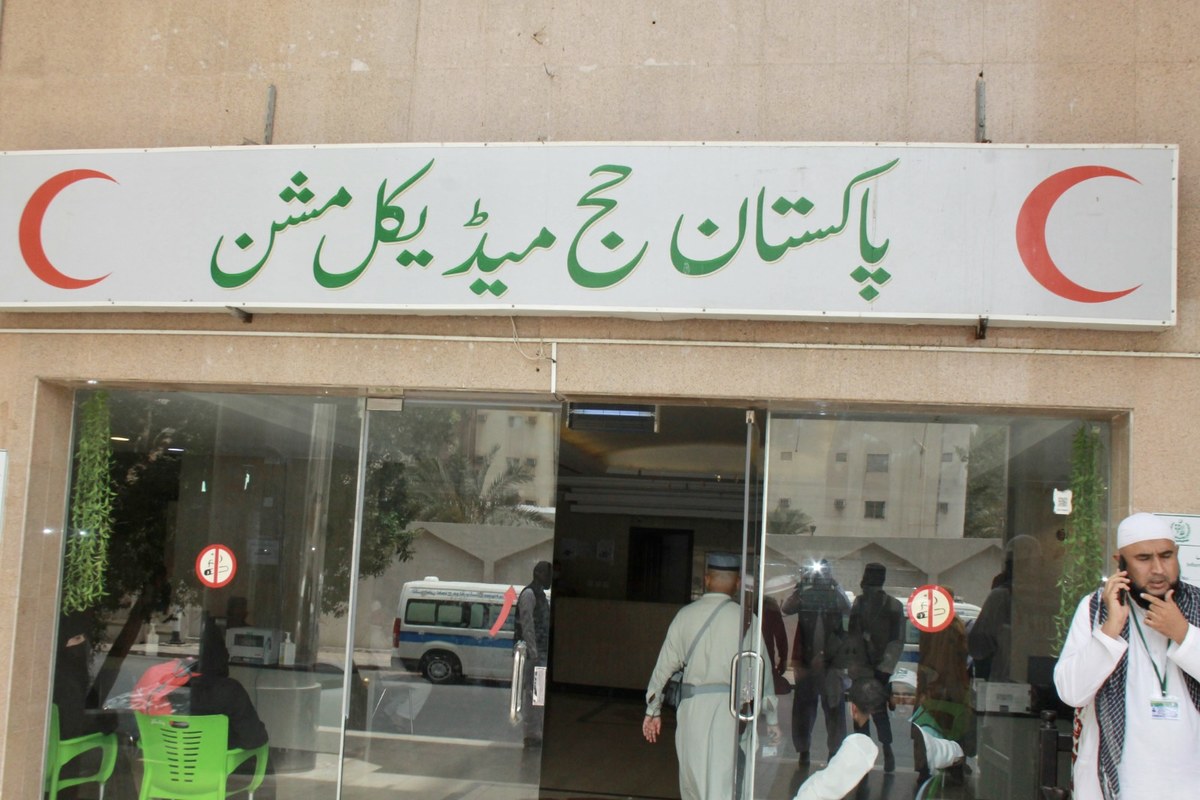
This picture gives the exterior view of a hospital established by Pakistan’s Hajj medical mission in Makkah, Saudi Arabia, on June 6, 2023. (Courtesy: Pakistan’s Hajj medical mission)
The main hospital in Makkah, located in Al-Azizia, is equipped with a number of facilities and has been operating round the clock, he continued.
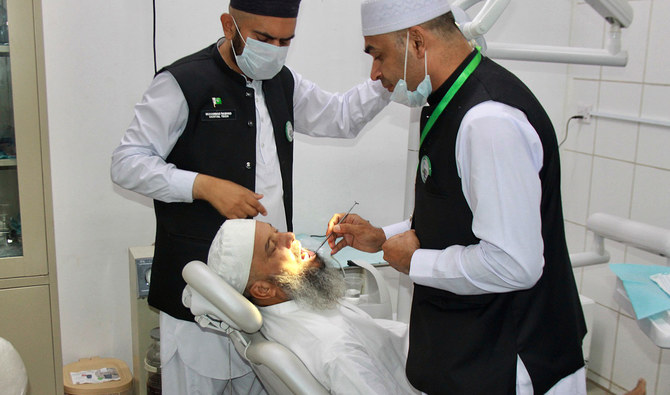
“The hospital has specialist doctors such as cardiologists, medical specialists, gynecologists, radiologists, dental surgeons, and others,” he said, adding that similar arrangements were made in Madinah, with dispensaries located in each sector.
Ali informed that both hospitals had separate outpatient departments (OPDs) for male and female pilgrims along with retention wards.

Pakistani pilgrims await their turn on June 11, 2023, at a hospital established by Pakistan’s Hajj medical mission in Makkah, Saudi Arabia. (Courtesy: Pakistan’s Hajj medical mission)
He said out of the total 500 medical staff assigned to the Hajj medical mission, approximately 60 percent had already arrived Saudi Arabia, while the rest would join as the number of pilgrims continued to surge.
“Currently, there are over 100 doctors and 200 paramedics from Pakistan in the kingdom,” he added.
The Pakistani official said the medical mission was providing services and medicines free of cost to pilgrims.
“We have ample supply of medicines along with continuous shipments arriving from Pakistan,” he informed.

A doctor examines patients at a hospital established by Pakistan’s Hajj medical mission in Makkah, Saudi Arabia, on June 11, 2023. (Courtesy: Pakistan’s Hajj medical mission)
The director said all Pakistani Hajj pilgrims, whether they were utilizing the government scheme or were facilitated by private tour operators, would be treated by the medical mission.
“To ensure efficient patient transportation, we have deployed ambulances, and a diagnostic lab has been established as well,” he continued.
In the event of a serious case requiring Intensive Care Unit treatment, the mission would be coordinating with the Saudi authorities to refer the patient to local hospitals.
“In addition to medical services, we also organize awareness sessions for pilgrims to improve their hygiene practices and ensure their overall health while maintaining a balance with their religious obligations,” the director said.
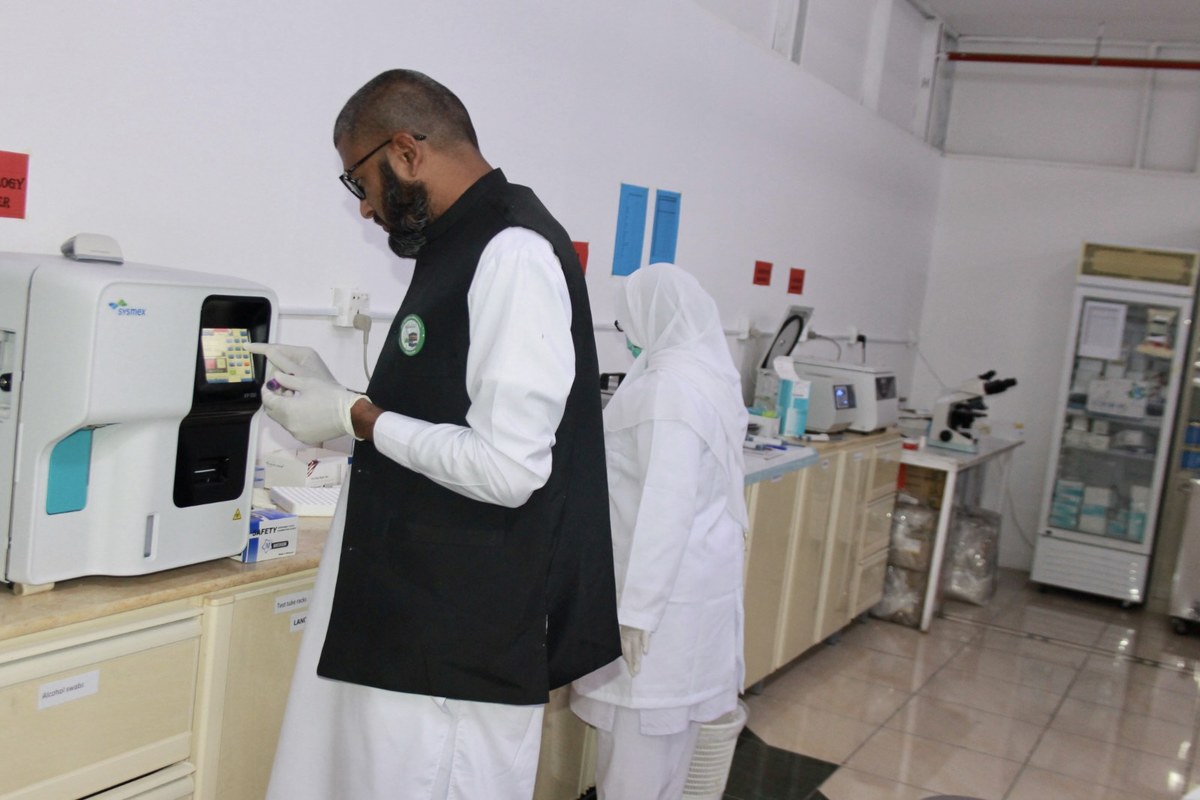
Medical staff work in a lab at the hospital established by Pakistani Hajj medical mission in Makkah, Saudi Arabia on June 11, 2023. (Courtesy: Pakistan Hajj medical mission)


