- The program will take place in the picturesque Shigar Valley located in Pakistan’s Gilgit-Baltistan region
- The artists will receive mentorship to pursue their dreams and get a chance to work in a shared studio
KARACHI: Four artists from Pakistan and the United States have been selected for an international artist residency program launched by Oscar-winning director Sharmeen Obaid-Chinoy which is due to begin today, Sunday, in the country’s northern areas, raising hopes that its participants will bring “diverse perspectives” to the table.
The residency program, called Neela Asmaan (Blue Sky), was announced in February 2023 by Obaid-Chinoy’s film company. Its aim is to offer artists an opportunity to draw inspiration from the picturesque Shigar Valley in Pakistan’s Gilgit-Baltistan region.
Writers, photographers, philosophers, architects, and design practitioners, among others, were invited to apply to the program, which promised to provide private accommodations and shared studio spaces. Additionally, mentorship and a stipend of up to Rs100,000 ($348) were offered to cover travel expenses.
“Neela Asmaan is thrilled to announce the talented individuals selected for our prestigious Artist Residency Program! Join us in congratulating Amber Eswani, Ayesha Husain, Javaria Waseem, and Sania Maskatiya,” the program announced on its Instagram page on Friday.
“Over the next few months, these exceptional artists will immerse themselves in our creative haven, fostering inspiration and artistic growth. Stay tuned as we witness their journeys unfold and the magic they create.”
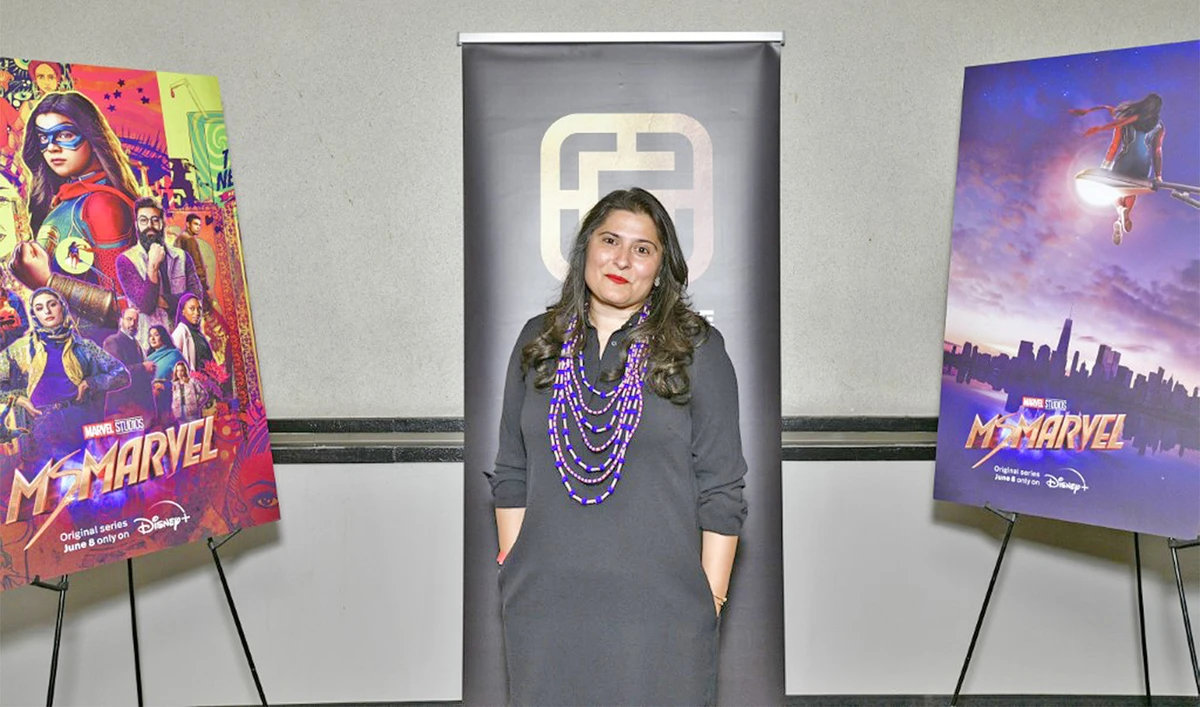
During a press conference on June 8, Obaid-Chinoy expressed her excitement about the diverse perspectives of the artists and their overall talents, stating they would undoubtedly make the experience dynamic and enriching for everyone involved.
“We can’t wait to witness the awe-inspiring journeys and incredible artworks that will emerge from this residency,” she said.
Each resident artist will be paired with a mentor who will provide meaningful feedback and help them hone their creative skills.
Among the creatives, Husain has a background in English literature and educational leadership. She recently published her first novel, “What More Could She Possibly Want?,” and applied for the program on her daughter’s suggestion to continue working on her writing and put together another work of fiction.
“My aim is to be able to put at least a plot and some characters, and the first chapter for my second novel during the residency program,” she told Arab News on Saturday.
Husain plans to set the novel in the 1800s, based on her mother’s ancestors who owned much of the fabled Qissa Khwani Bazaar (Storytellers’ Market) in Peshawar.
“This space to be away and cut off from society is just what I need to focus while reading, writing, and planning,” she added. “I will be paired with a writer [mentor] who will guide me. A platform like this is encouraging for artists because we tend to forget how important the arts are.”
Waseem, on the other hand, is a director and screenwriter who recently completed her postgraduate studies in filmmaking from École Internationale de Création Audiovisuelle et de Réalization (EICAR), an international television and film school in Paris. Although she made multiple documentaries during her undergraduate program, the script she plans to work on during the residency will be her first fiction film.
“I applied for the residency as a filmmaker to work on a project that is more focused on the screenwriting part, so I hope to develop the script by the end of the residency,” she told Arab News.
It’s a short film based on a “personal story,” she said, adding it would revolve around Pakistan’s social and cultural values and their impact on women.
“After spending two years abroad, I saw a lot of these opportunities for people in Europe and all around the world, but there was a void in Pakistan,” Waseem said. “We need more initiatives like these in Pakistan where we not just explore diverse cultures and voices from different creative mediums but also support them. Because, as an artist, it is not easy to kick off your career in Pakistan.”
Asked about the application process, she said it was very “easy” and led to an interview.
Waseem said she had not applied for anything like this in Pakistan before, making her a bit hesitant at first, though she added that she would like to recommend the program to others for future residency cycles.
Eswani, another selected artist, has found expression in creating content that delicately fuses Eastern and Western cultures. She plans to develop a web series that blends storytelling and cultural influences during the residency program.
Maskatiya, an acclaimed fashion designer in Pakistan, will be venturing into a new medium of expression by delving into the realm of painting during the residency.