UBS, Swiss government agree on Credit Suisse loss guarantee

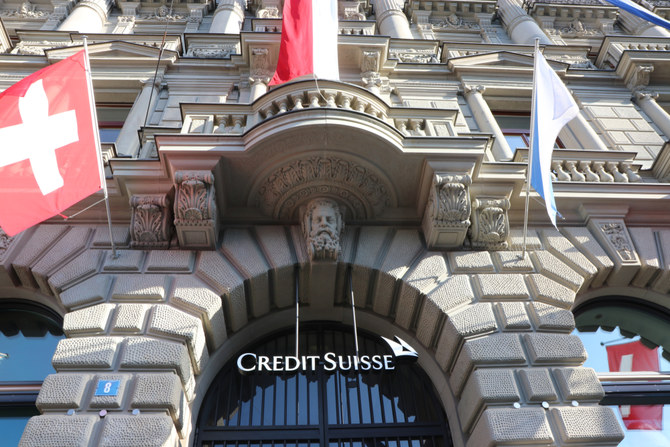
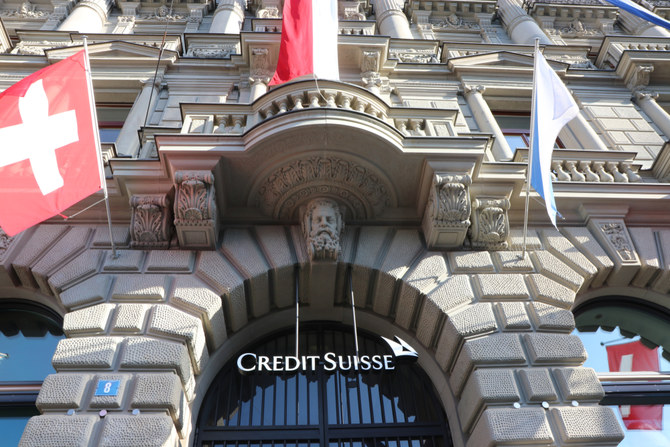
The agreement will cover a portfolio of Credit Suisse assets that were difficult to assess in the few days the banks had to hash out a deal (Shutterstock)
Short Url
Updated 09 June 2023
Follow

UBS, Swiss government agree on Credit Suisse loss guarantee

ZURICH: UBS and the Swiss government signed on Friday an agreement to cover up to 9 billion Swiss francs ($10 billion) in losses from its emergency takeover of Credit Suisse, the country’s largest bank, Reuters reported.

The deal comes with various conditions, including a requirement that UBS keeps its headquarters in Switzerland, the government said in a statement.

The loss protection agreement will become effective with the completion of the Credit Suisse takeover, expected as early as June 12, UBS said in a separate statement.

The guarantees will kick in if UBS incurs losses from the sale of Credit Suisse assets beyond 5 billion francs that the lender is due to cover itself.

The state money will not come for free however, with UBS having to pay various set-up and maintenance fees, as well as premiums on any money drawn.

The money was made available by the government to ease the emergency takeover of Credit Suisse, whose collapse risked triggering a global financial crisis.

“To make the takeover possible, the government granted UBS a guarantee for any losses incurred in the liquidation of Credit Suisse assets,” the government said in a statement.

“The guarantee will only come into effect if the losses from the liquidation of these assets exceed 5 billion Swiss francs and is limited to a total of 9 billion francs,” it added.

The agreement will cover a portfolio of Credit Suisse assets that were difficult to assess in the few days the banks had to hash out a deal and which are not needed as part of the future core business of UBS.

The government said the guarantee covered assets with a volume of around 44 billion Swiss francs, an equivalent of about 3 percent of the combined assets of the merged group, mainly made of derivatives, loans, legacy assets and structured products. 

Valuations of the losses are expected to be made available during the third quarter of 2023, the government said, while their scale is “highly dependent on the actual wind-down of the assets concerned and market developments” it said.

“Consequently, it is not yet possible to estimate the probability of the guarantee being drawn and the amount involved,” the government said.

The government said its and UBS’s priority was to minimize potential losses and risks to avoid making use of the backstop “to the greatest extent possible.”

UBS said it would manage the assets in a “prudent and diligent manner and intends to minimize any losses and maximize value realization on these assets.”

The government said the agreement did not mention any federal participation in losses above the total agreed 14 billion francs because such a commitment would require “a legal basis as well as parliamentary approval of a corresponding guarantee credit.”

The agreement will remain in place until the final realization of the Credit Suisse assets.

Saudi National Bank’s almost 10 percent shareholding in Credit Suisse will convert to approximately 0.5 percent of UBS following the merger of the two Swiss lenders, a bourse statement said in May. 

SNB, Credit Suisse’s top shareholder, said the carrying value of its investment in the troubled Swiss lender was SR1.3 billion ($346.63 million) on March 31, a decline of almost 70 percent during the first quarter. 

Both the authorities and UBS are keen to assure the Swiss public that the takeover, orchestrated with the use of emergency laws and backed by public funds, will not become a burden for the taxpayers.

Concerns that the combined bank — with a balance sheet roughly double the size of the Swiss economy — would be too big for Switzerland, led the country’s Social Democrats to propose shrinking UBS assets.

There have also been calls for UBS to keep Credit Suisse’s Swiss operation as a separate entity, to ensure competition and preserve the legacy of the 167-year-old lender.

The loss protection agreement is among the final hurdles UBS needed to clear before it can officially finalize the biggest banking deal since the global financial crisis, possibly next week.

While the emergency takeover was hammered out over one weekend, talks about the exact scope and details of that loss protection had continued for several weeks.


Global Markets: Asian stocks fall as Iran war keeps oil at $100, upends rate outlook

Updated 10 sec ago
Follow

Global Markets: Asian stocks fall as Iran war keeps oil at $100, upends rate outlook

  • Asian stocks set for consecutive weeks in the red
  • Traders rapidly cut Fed rate cut ‌wagers for the year
  • Investors focus on oil prices, inflation risks

SINGAPORE: Asian stocks slumped on Friday, poised for a second straight weekly decline as fast-dwindling hopes of a resolution to the US ​and Israel’s war with Iran kept oil prices aloft, casting a shadow over global markets and spurring inflation fears.

The US dollar has become the safe-haven of choice during the tumult, putting most other currencies under pressure. The dollar was set for a second consecutive week of gains and is up 2 percent since the war broke out at the end of February.

The yen hit its weakest level since July 2024 at 159.69 per US dollar on Friday as Japan warned that it was ready to take action to protect against yen declines. It was last at 159.41.

Analysts said the bar for intervention is higher this time around as any intervention now could prove futile in the face of the relentless dollar buying.

In ‌Asia, MSCI’s broadest ‌index of Asia-Pacific shares slipped 1 percent, on course for a 2.2 percent decline for ​the week. ‌Japan’s ⁠Nikkei fell ​1.4 percent, ⁠while tech-heavy South Korean stocks slid nearly 2 percent.

European futures point to a slightly higher open but may struggle to hold those gains on weak sentiment.

Oil prices remained close to $100 per barrel level, although they eased a bit on Friday after US issued a 30-day license for countries to buy Russian oil and petroleum products currently stranded at sea.

Brent futures were at $100.70 a barrel at 9:47 a.m. Saudi time, while West Texas Intermediate crude was at $95.59. They were both hovering around $60 levels at the start of 2026.

“Headlines are coming at the market like water from a fire hose, which is impacting the price of oil, and consequently, financial markets,” said Mitch ⁠Reznick, group head of fixed income at Federated Hermes.

“The question remains to what extent ‌we are caught in the $80-plus range even as the headlines become ‌banal with their frequency and contradictions.”

With Iran stepping up attacks across the Middle ​East as its new Supreme Leader Mojtaba Khamenei vowed to ‌keep the Strait of Hormuz shipping lane closed, investors are bracing for a prolonged conflict and higher oil prices.

The ‌spectre of rising inflation has led markets to rapidly reprice what they expect from central banks this year, with traders now anticipating just 20 basis points of easing from the Federal Reserve compared to 50 bps of cuts priced in last month.

The selloff in global stocks and bonds shows no signs of easing. US stocks fell sharply overnight and the two-year Treasury yields, which typically move in ‌step with Fed interest rate expectations, scaled a six-month high on Thursday.

“With the possibility of higher oil prices still elevated, investors should be prepared for continued volatility and potentially further ⁠downside in the near ⁠term,” said Vasu Menon, managing director of investment strategy at OCBC in Singapore.

Shifting rates outlook

Jose Torres, senior economist at Interactive Brokers, said the impact of rising oil prices on corporate margins, inflation expectations, rate-cut prospects and yields is sparking volatility, leaving participants with few places to hide.

“Indeed, sinking optimism about Fed rate reductions amid strengthening cost pressures is weighing on traditional safe havens such as silver, gold, and government debt.”

The two-year note yield eased 3 bps to 3.730 percent after hitting its highest level since August 22 on Thursday. The yield has gained 35 bps in the two weeks since the war started.

The yield on the longer-dated 30-year bond has risen 24 bps this month.

Investor focus will switch to a slate of policy meetings next week with the Fed, the Bank of Japan, the European Central Bank and the Bank of England all due to meet, with most expected to keep rates unchanged. The Reserve Bank of Australia is broadly expected to hike ​rates next week.

In currencies, the euro was steady ​at $1.15035, on course for a weekly decline of nearly 1 percent. The dollar index was at 99.816, set for about a 1 percent weekly advance.
Gold was 0.4 percent higher at $5,101 per ounce on Friday but set for a 1 percent drop for the week.