


KARACHI: As Pakistan gears up in these challenging times to present the fiscal budget for the next year, the country’s industrialists hope to receive maximum relief, though economists dismiss the possibility of significant incentives under the evolving political circumstances.
Pakistan’s finance minister Ishaq Dar is all set to present the fiscal budget for the year 2023-24 on June 9 in the National Assembly, amid an inconclusive deal with the International Monetary Fund (IMF) under a bailout program signed back in 2019.
Prime Minister Shehbaz Sharif has expressed hope the budget would bring economic prosperity, business-friendly policies, and public welfare to the country. He has also promised to increase Public Sector Development Program (PSDP) from Rs700 billion to Rs950 billion to boost growth and create jobs.
Unlike the past few years, Dar interacted with a number of industrialist groups and representatives from various trade bodies to get their input and discuss budget proposals.
“He was receptive and listened to our proposals and assured to consider,” Abdul Aleem, general secretary of the Overseas Investors Chamber of Commerce and Industry (OICCI), a representative body of multinational companies operating in Pakistan, told Arab News.
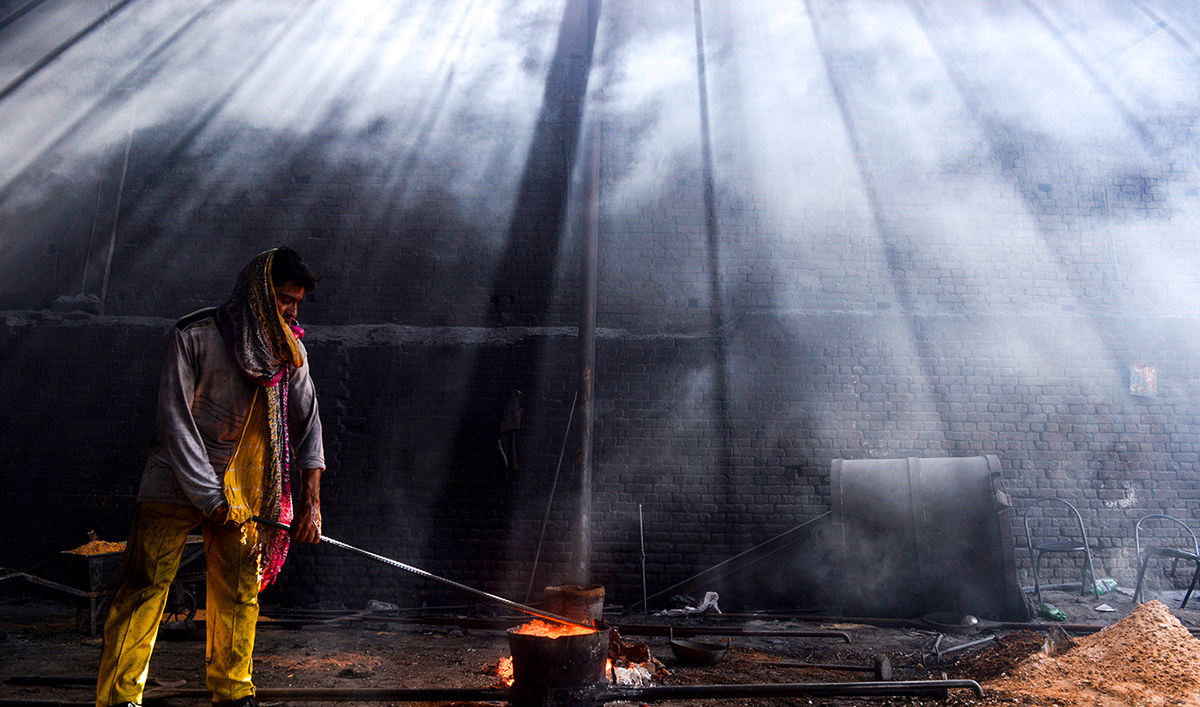
A Pakistani labourer works at an iron factory in Lahore on April 30, 2019, on the eve of the International Labour Day celebrated on May 1.(AFP/File)
“We proposed to broaden the tax net to boost revenue collection and not burden people with more taxes as they are already reeling under super inflation and high taxes. We also proposed to enhance the annual income tax threshold from Rs600,000 to Rs1.2 million,” he continued, hoping the OICCI recommendations would be considered by the government.
In another meeting with the Karachi Chamber of Commerce and Industry (KCCI) delegation, the finance minister assured that “the most difficult reforms have been done and the bleeding is over,” according to a statement issued after the meeting.
As the South Asian nation faces dire dollar liquidity crunch, the KCCI suggests that importers be allowed to arrange payments of foreign exchange through their own sources amid declining forex reserves.
Tariq Yousuf, KCCI president, said the chamber has called for “introducing a tax-friendly environment so that the maximum number of individuals could be encouraged to get into the tax net.”
The KCCI has also proposed to reduce the rates of customs duty to two percent, sales tax to 12 percent, and waive the value addition sales tax of three percent on commercial importers.
The Federation of Pakistan Chambers of Commerce & Industry (FPCCI) in its proposals strongly suggested an “agriculture emergency” and recommended the formation of a Real Estate Investment Trust (REIT) for the agriculture sector.
“Agri REIT has the potential to significantly transform the Pakistani agricultural landscape,” Irfan Iqbal Sheikh, FPCCI president, said.
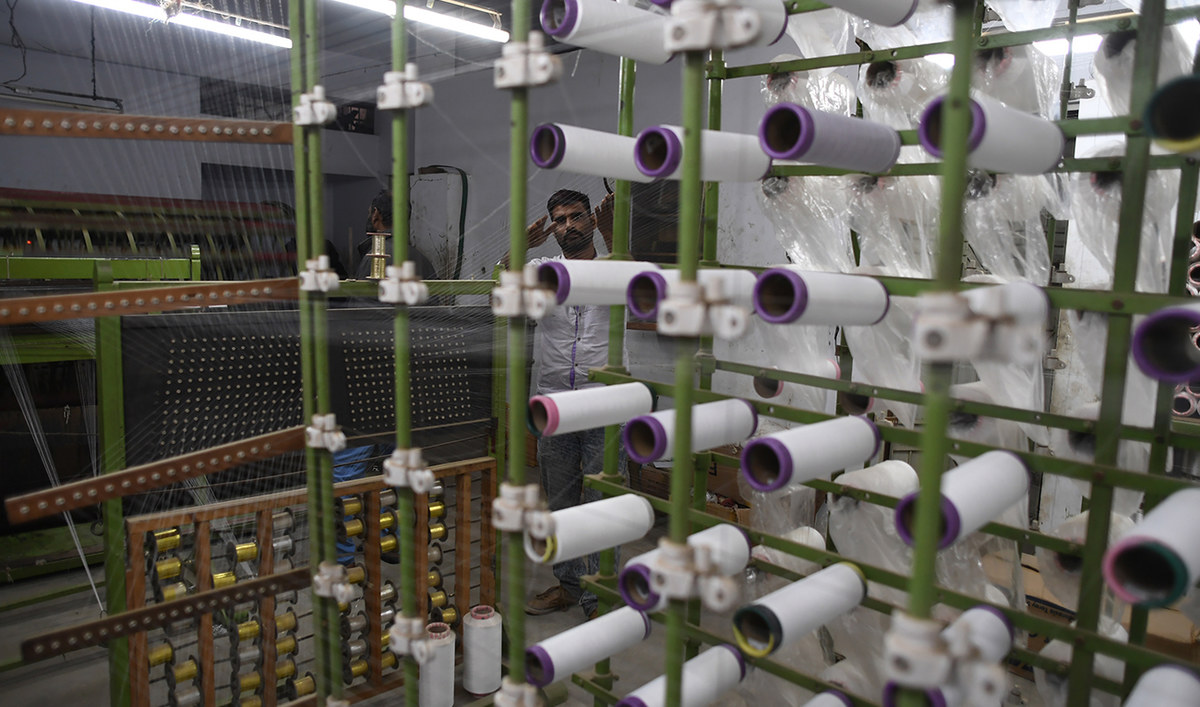
A Pakistan textile labourer checks the quality of the yarn at a power loom in Karachi, on January 25, 2019, the financial capital and the largest industrial city of Pakistan. (AFP/File)
According to an estimate, Pakistan’s agriculture sector has the potential to overcome the current account deficit and balance-of-payments crisis within six years if the agriculture sector grows at six percent to achieve the necessary economic growth and job creation, he said.
The FPCCI called for budgetary measures for the growth of micro-, small-, and medium-sized enterprises, the industrial and commercial segment, and tax policies and reforms.
To end the uncertainty, chaos and rumors in the market, the FPCCI suggested the government should launch an incentive scheme to channel dollar holdings from lockers and personal safes into bank accounts, exempting such deposits from any taxes.
Upon withdrawal of the Pakistani rupee, a one or two percent profit should be offered as an incentive.
The government will be presenting the budget for FY24 amid stagflation and a lot of uncertainties related to the upcoming elections and the fate of inflows from the IMF and other lenders, according to Topline Securities.
Amid these circumstances, Pakistani economists rule out any significant incentives under the evolving political situation after recent actions taken by the state against former prime minister Imran Khan’s Pakistan Tahreek-e-Insaf (PTI) party.
“I don’t think the government will dole out any significant incentives,” Dr. Abid Qaiyum Suleri, executive director of the Sustainable Development Policy Institute (SDPI), told Arab News.
“It was thought the government would give a pre-election budget, even if it would be unrealistic, to raise public expectations. But after the political developments that led to the disintegration of a major opposition party [PTI], it is most likely the next government will be formed by parties from the [ruling] PDM [Pakistan Democratic Movement alliance].”
Suleri said after the next elections, the new government would have to negotiate an IMF program, adding that the budget would therefore not have too many “adventurist measures.”
“I think the budget will have a net-zero impact, giving from one hand and taking from the other,” he added.
The budget outlay for FY24 is estimated at Rs13-15 trillion, against Rs9.6 trillion proposed for FY23, assuming a record-high markup cost due to the high-interest rate.
The government is likely to set a tax revenue collection target of Rs9-9.2 trillion for FY24, 8.6 percent of GDP, which is up 21 percent from the target of Rs7.5 trillion set for the current fiscal year and 29 percent higher than expected tax collection, according to Topline Securities.


