DADU: Noor Bibi lost her mother, her daughter and the roof over her head in the catastrophic floods that drowned Pakistan last summer.
One year later she remains homeless, living with the remnants of her family in spartan tents marking where the village of Sohbat Khosa was gutted by the deluge in southern Sindh province.
Noor, a farm worker approaching her 60s, prays for “someone with righteous thoughts that will help us build some good houses in an elevated place.”
“If it flooded again, we would not bear such big losses,” she told AFP.
But government pledges to rebuild flood-ravaged swathes of Pakistan so they are resilient to future extreme weather have largely failed to materialize.
The monsoon deluges of last summer submerged a third of the country, killing 1,700 people and displacing eight million more.
Climate change is making those seasonal rains heavier and more unpredictable, scientists say, raising the urgency of flood-proofing the country.
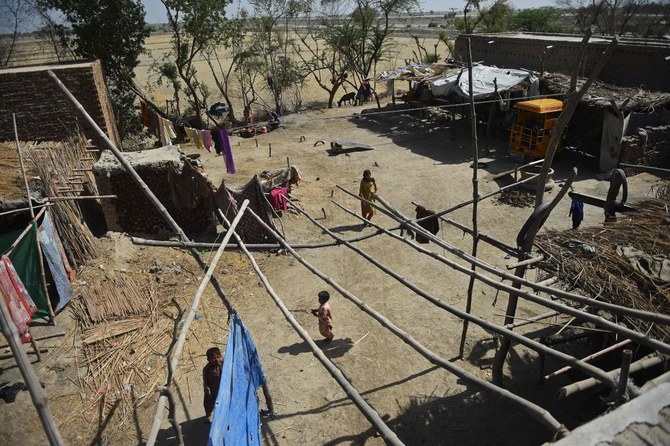
In this photograph taken on May 9, 2023, flood-affected victims walk through the compound of their damaged house in Dadu district of Pakistan.(AFP)
A failure to do so will be most acutely felt by the poor, who tend to live in the most vulnerable areas.
Here in Dadu district, which was heavily flooded, no rehabilitation is visible. Rare pieces of public infrastructure remain in disrepair and housing reconstruction is left to locals or NGOs.
In January, Islamabad announced a “Resilient Recovery, Rehabilitation and Reconstruction Framework” valued at $16.3 billion, but it remains confined to paper.
International donors have also pledged $9 billion, but most of the cash will come in the form of loans.
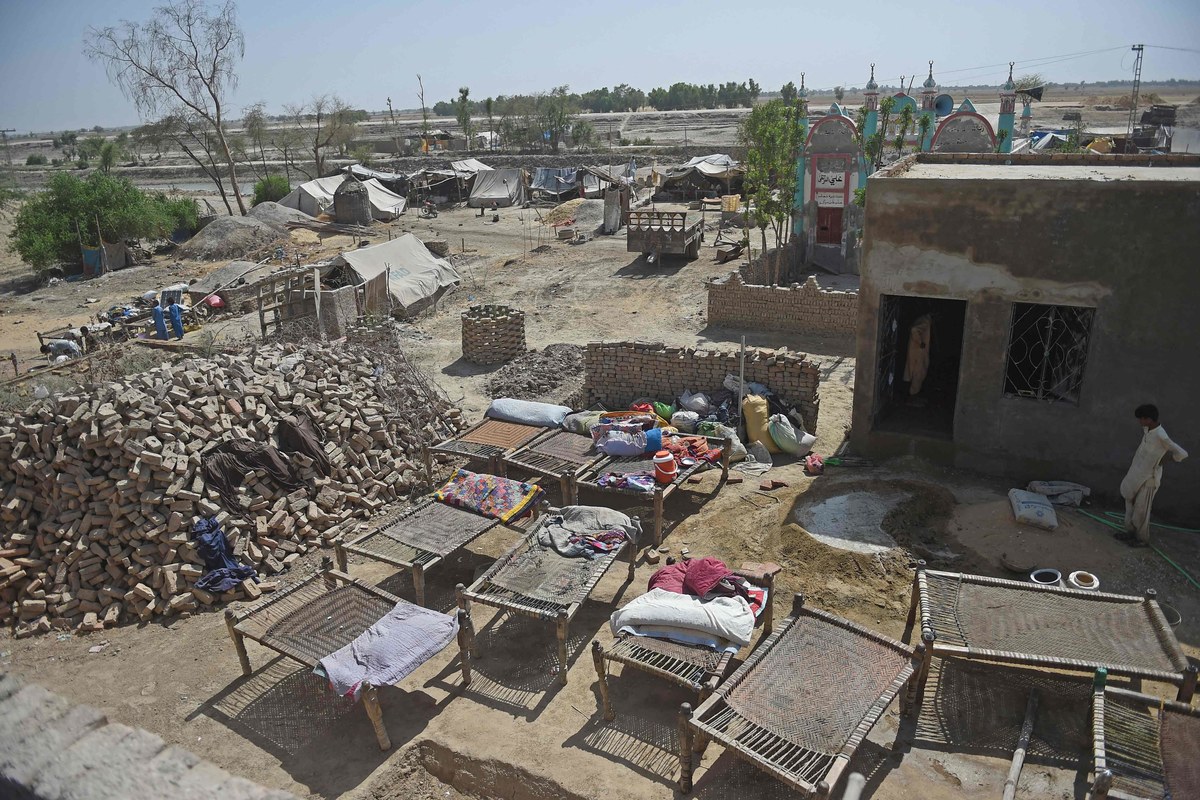
In this photograph taken on May 9, 2023, a flood-affected village lies in ruins in Dadu district of Pakistan. (AFP)
Villagers’ crops were swept away in the floods, depriving them of livelihoods that might have allowed them to pave their own way to recovery.
With pooled funds, the residents of Sohbat Khosa only raised enough for a toilet and water tank.
Their best hope is the Alkhidmat Foundation, a Pakistani NGO, which plans to build around 30 new homes.
“The government seems to not exist here, and if anything is done by the government, that is only corruption,” said Ali Muhammad, a coordinator for Alkhidmat in Dadu.
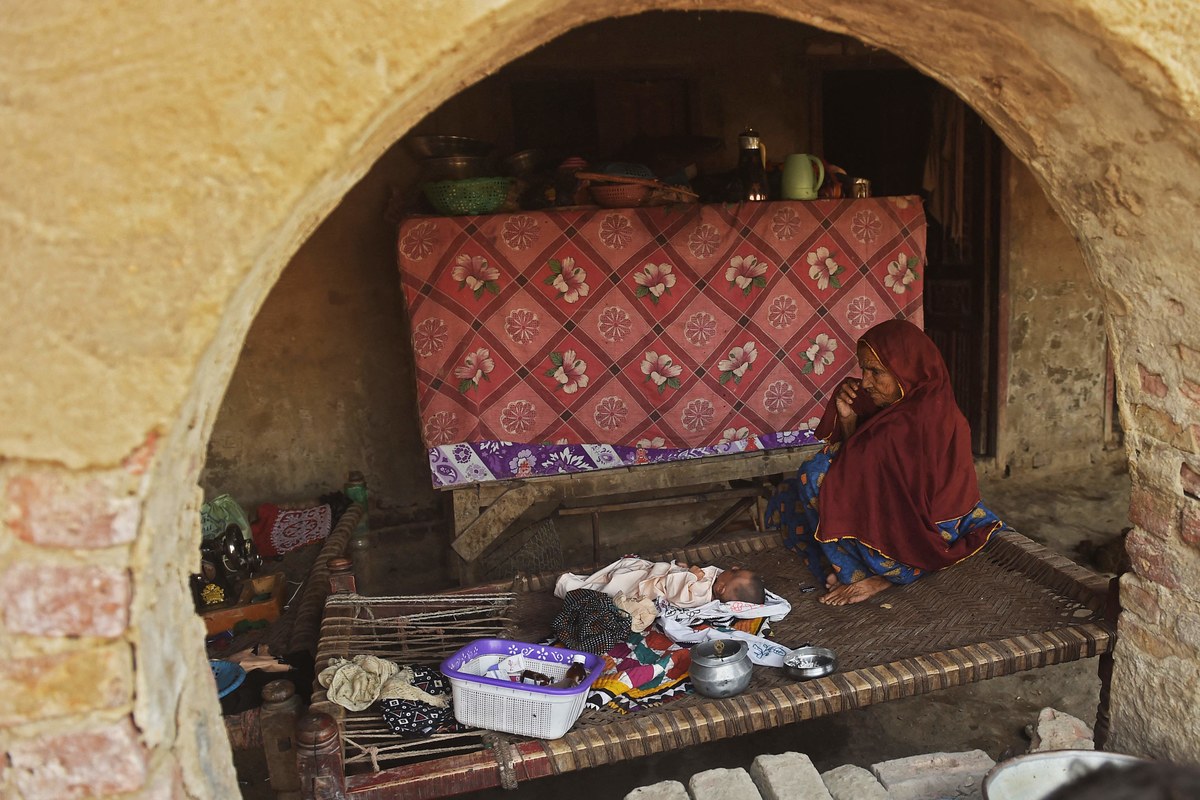
In this photograph taken on May 9, 2023, a flood-affected village lies in ruins in Dadu district of Pakistan. (AFP)
Pakistan is currently mired in dual political and economic crises that have brought all public initiatives to a standstill.
But decades of entrenched corruption and mismanagement are also to blame.
“Building back better is expensive, and the amount of damage is colossal,” Foreign Minister Bilawal Bhutto Zardari told AFP.
He said he “can’t speak to what the federal government has done,” but in Sindh province, controlled by his party, “we’ve started a couple of initiatives.”
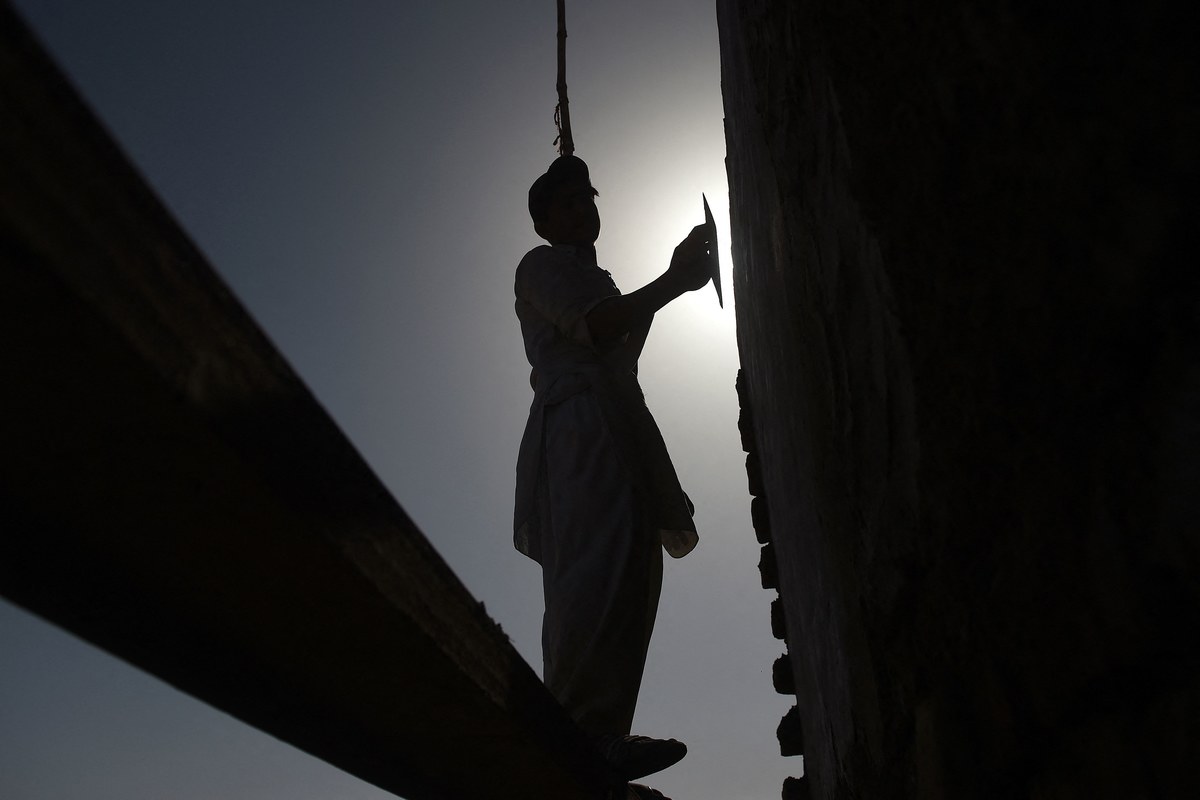
In this photograph taken on May 9, 2023, a flood-affected victim rebuilds his house in Dadu district of Pakistan. (AFP)
“One is the financing of the reconstruction of houses, through NGOs and charity organizations,” he said.
However, Alkhidmat, like two other NGOs interviewed by AFP, has not received any public money and relies entirely on private funds.
Thanks to Alkhidmat’s efforts, a few dozen homes have been built in the district, but it’s nowhere near the two million damaged or destroyed in the floods.
The village of Bari Baital, submerged until November, is expected to eventually host 80 houses built by the foundation — far too few for its thousands of inhabitants.
To resist future rains they are raised on brick pillars, and built with reinforced roofs and water-resistant cement.
“People are completely unaware of climate change,” said village teacher Imtiaz Ali Chandio.
All they know is that their village has been a “passage for floods for centuries,” he said.
But moving is not an option, meaning the scenario will likely soon be repeated.
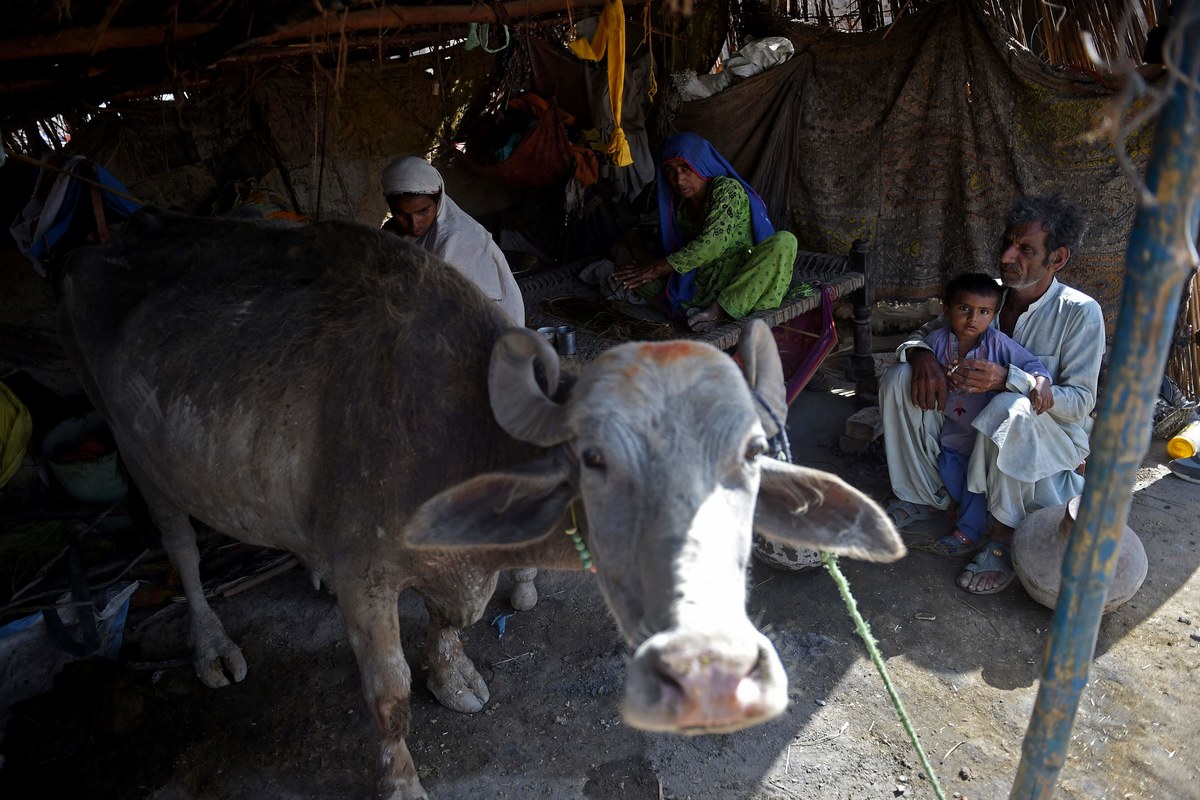
In this photograph taken on May 9, 2023, flood-affected victims rest inside a temporary shelter in Dadu district of Pakistan. (AFP)
“Where else could we go?” asked Abdulrahim Brohi, who already weathered catastrophic floods in 2010. “Everything of ours is here.”
“Somewhere else people won’t accept us,” added Brohi, who estimates his age to be between 50 and 60. “We don’t have resources to rebuild our houses here, so how can we afford land somewhere else?”
Prized by tourists for its scenic mountain vistas, the Swat Valley in northwest Pakistan was also hit hard by last year’s floods.
Hundreds of hotels, restaurants, businesses and homes perched on the banks of the Swat river were swept away as ferocious waters were funnelled down the ravine.
To prevent a repeat of the disaster, authorities have “imposed a complete ban on the construction of any sort of building on the river,” said Irfanullah Khan Wazir, Swat’s deputy commissioner.
Nonetheless, in Bahrain, a small resort town once half underwater, the government’s writ is so weak that builders are riding roughshod over the ban.
A number of shops, restaurants and hotels have been renovated or rebuilt just meters from the coursing water. Even the mosque has been rebuilt on the same spot where it was heavily damaged.
“People are doing illegal construction on weekend nights, but [authorities] are not paying any heed — their silence is baffling,” said hotel manager Zafar Ali.
His own property is under construction 20 meters (65 feet) from the river, in a zone he says is authorized.
It is now protected by a flood wall twice the height of the previous one. Economic considerations also prevented them from relocating away from their waterfront vantage.
“Tourists want to be able to open their windows and see the river outside,” Ali said. “Those built further away struggle to cover their expenses.”
Locals in Swat also condemned the inaction of authorities. The main road following the river has been reopened, but whole sections of tarmac remain torn away.
Compensation schemes have been limited to certain people who lost their homes. They are granted 400,000 rupees ($1,400), nowhere near enough to rebuild.
Muhammad Ishaq, a tailor in Bahrain, built his house near the river for easy access to the water. He watched as his home was swallowed by the floods, and has since been forced to move in with his father further up the mountainside.
Life there is harsher, he told AFP, but even if he manages to rebuild, he knows he “will have to stay away from the river.”