

Ancient inscription curse found on Tabuk mountain

1 / 2
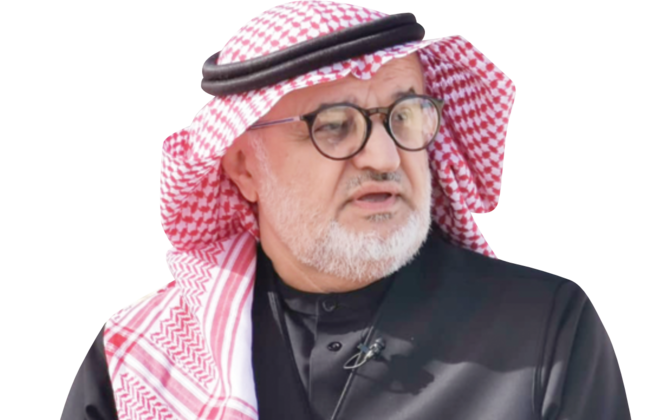
Dr. Suleiman Al-Theeb, Professor of ancient Arabic writings
2 / 2
Photo/Supplied
Short Url
Updated 04 June 2023
Follow

Ancient inscription curse found on Tabuk mountain

  • An interesting fact that Al-Theeb revealed was that people from all walks of life living in the Arabian Peninsula had the freedom to engrave their thoughts, feelings, poetry, or curses on rocks

MAKKAH: Many monuments in the Arabian Peninsula have been found bearing inscriptions in the Thamudic, Nabataean and Safaitic languages invoking evil upon those who try to tamper with or obliterate them.

One such Thamudic inscription, dating between the end of the first century AD to the fourth century AD, was found by a Saudi citizen named Khalid Al-Fraih in the Tabhar area northwest of Tabuk, which is dotted with many ancient inscriptions and monuments.

FASTFACT

People from all walks of life living in the Arabian Peninsula had the freedom to engrave their thoughts, feelings, poetry, or curses, on rocks contrary to those who lived in Mesopotamia, Syria and Egypt, where inscriptions were exclusively written by the leaders or those who with a high status.

Professor of ancient Arabic writings, Dr. Suleiman Al-Theeb, told Arab News that this Thamudic inscription is written on the facade of one of the mountains of Wadi Tabhar. “What is interesting is that they used curses so that evil befalls … those who distort and sabotage … it. This type of curse is well known in the Thamudic, Nabataean, Palmyrian and Safaitic inscriptions.”

People who inhabited the area centuries ago were pagans who indulged in idol worship.

“This curse was written, most likely, to intimidate and scare away those who want to destroy their god … and the purpose of intimidation by cursing is to maintain and keep what has been written,” he said.

In order to prevent others from attacking their rocks, they used to write on them words of threat, curse and intimidation of the wrath of the gods. The fear was real and people would then refrain from destroying the rocks.

Dr. Suleiman Al-Theeb, Professor of ancient Arabic writings

Al-Theeb also revealed that the writings and inscriptions on rocks were similar to published material that we see today. “If two people disagree or a problem occurred between them, they would usually attack the rock of others. In order to prevent others from attacking their rocks, they used to write on them words of threat, curse and intimidation of the wrath of the gods. The fear was real and people would then refrain from destroying the rocks.”

An interesting fact that Al-Theeb revealed was that people from all walks of life living in the Arabian Peninsula had the freedom to engrave their thoughts, feelings, poetry, or curses on rocks, contrary to those who lived in Mesopotamia, Syria and Egypt, where inscriptions were exclusively written by leaders or those who with high status.

The professor stressed that these inscriptions are very important as they depict the history of previous civilizations, and should be monitored and documented by specialists to preserve them.



KSrelief helps Gaza patients access lifesaving healthcare

Updated 11 sec ago
Follow

KSrelief helps Gaza patients access lifesaving healthcare

  • Yazan Sami Nasman, 9, receives urgent treatment for lymphatic tumor at Amman’s King Hussein Cancer Center

RIYADH: The Saudi aid agency KSrelief is continuing to support patients from the most vulnerable groups, reflecting the Kingdom’s values of compassion and generosity.

KSrelief funded the treatment of Yazan Sami Nasman, a nine-year-old Palestinian child from the Gaza Strip who was suffering with a tumor in the lymphatic system, the Saudi Press Agency reported.

The intervention followed a deterioration in his health, with medical reports indicating the need for advanced treatment and specialized intensive care unavailable in Gaza due to challenges in its healthcare system.

After coordination through official channels, the child was transferred to Jordan for treatment at the King Hussein Cancer Center in Amman, the SPA added.

He now undergoes periodic examinations to assess his response to treatment. These are carried out by a specialized pediatric lymphatic tumor team and they help to control his condition and minimize potential complications.

KSrelief signed a cooperation agreement with the King Hussein Cancer Center in 2024 to treat cancer patients from Gaza, aiming to save those deprived of treatment due to difficult healthcare conditions.

This effort is part of Saudi Arabia’s humanitarian and medical initiatives through KSrelief, providing essential healthcare to people in need worldwide.

KSrelief last year funded treatment for seven-year-old Eileen Rami Al-Kilani from Gaza at the King Hussein Cancer Center, addressing her colon cancer.

The agency also facilitated surgery for Palestinian child Mira Suhaib Aqqad — who had a congenital heart defect — at King Abdulaziz Medical City.

KSrelief supported six-year-old Mohammed Abdullah Al-Kutnan, who was suffering from neuroblastoma, by urgently transferring him from Gaza to Jordan for treatment.

In addition, KSrelief provided emergency care for three-year-old Seleen Shadi Abdul Salam from Gaza, who is battling acute leukemia.

KSrelief is currently running a specialized project with the King Hussein Cancer Center to treat 150 Palestinian cancer patients from Gaza, at a cost exceeding $3.6 million.