

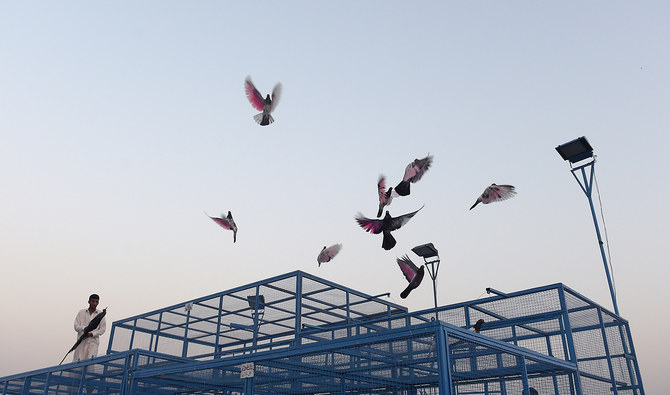

KARACHI: Whether it’s summer or winter, after 4pm on most days, even when he is unwell, Muhammad Shafiq Chando can be found on the roof of the six-story residential building in which he lives in the Ranchore Line neighborhood of Karachi.
The unwavering commitment owes to his passion for his pet pigeons, which he trains and prepares for a unique race organized biennially in May and October in Ranchore, turning the whole neighborhood into a festival of colors and noise. Many in the area maintain flocks of hundreds of pigeons but with over six decades of experience in the sport, Chando is considered a maestro of pigeon racing.
“Even when I am sick, if people come [to check on me] after 4pm, my family tells them that they have come in vain because I have gone to the rooftop,” Chando told Arab News as he signaled to his pigeons to fly.
“My hobby has reached a level of obsession. I am a 72-year-old father of four children, a maternal grandfather, and also a paternal grandfather, but this is my true passion.”

The still image taken from a video recorded on May 25, 2023 shows a pigeon racing enthusiast watching his birds feed from a rooftop in Karachi Pakistan. (AN Photo)
For each type of pigeon flying tournament, the finish line is their home, which pigeons find using some combination of the sun, magnetic fields and an olfactory map of familiar smells. And what makes them return home is how kindly they are treated, how well they are fed and how clean their accommodations are.
Humans have been capitalizing on pigeons’ homing abilities for centuries. Genghis Khan used pigeons to relay commands across Asia and Eastern Europe. These days, the fastest fliers tend to be highly bred and pedigreed, like racehorses. In May 2012, a pigeon named Usain Bolt — for the Olympic sprinting champion from Jamaica — was sold to a Chinese businessman for about $430,000. In 2020, a female racing pigeon named New Kim sold for around $1.9 million at an auction in Belgium.
The origins of the sport in Karachi can be traced back to India, particularly New Delhi, where there are still entire neighborhoods dedicated to the sport.
Chando’s own involvement in pigeon flying started when he met Nawab Maqsood, a migrant from India, from whom he learnt about the types of racing and the many tricks of the trade.
There are three types of pigeon tournaments held in Pakistan, said Shamroz Chando, who shares his father’s enthusiasm for the sport.
“One is high pigeon flying, which we call Kabuli,” he said. “The second is low pigeon flying, and the third type is Golay Bazi [roller flying].”
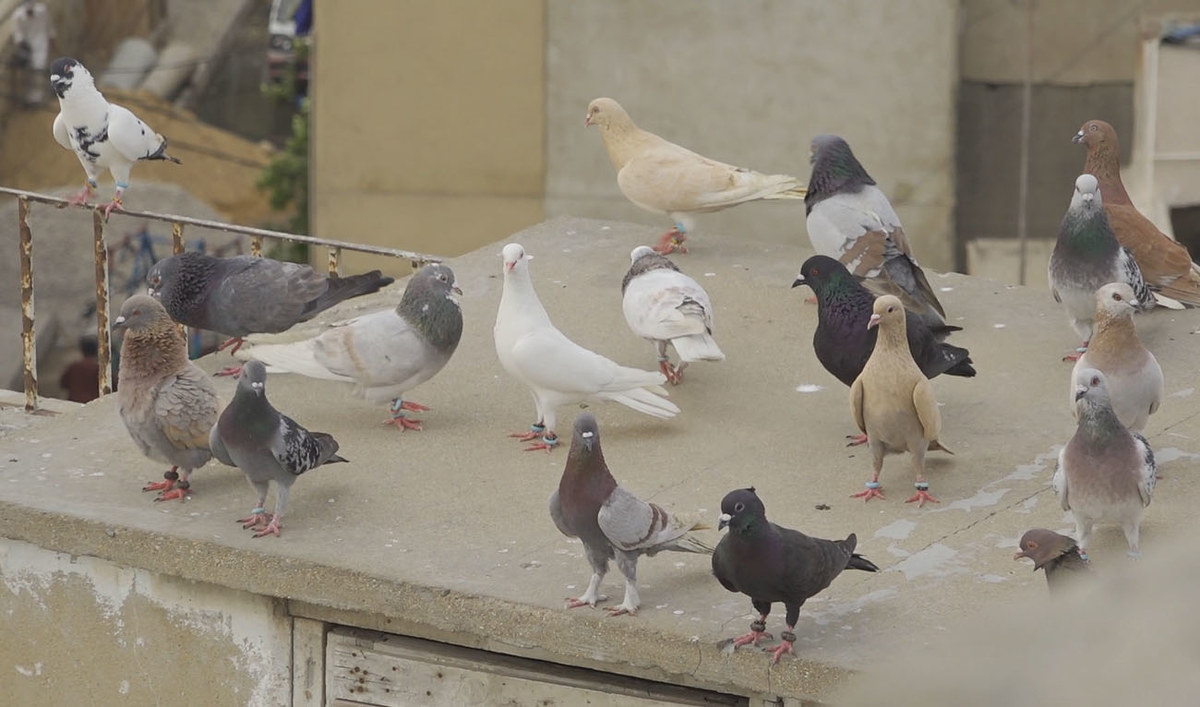
The still image taken from a video recorded on May 25, 2023 shows pigeons gathered on a rooftop in Karachi Pakistan. (AN Photo)
In the high-flying tournament, each team can fly eight pigeons who must remain in the air from 7am until 5pm. A pigeon has to return home by 5pm or else is disqualified from the tournament. Similar to the low-flying pigeon contest, in the high-flying contest, mostly held in winter, a pigeon’s duration in the air is counted, not the height the bird is able to reach.
In the low-flying tournament, being held this month in Chando’s neighborhood with 100 participating teams, the pigeons are tied with bands or ribbons. Again, each team can fly eight pigeons, but the score of a team is determined by the flying hours of the seven pigeons who flew for the longest duration. The top ten teams are declared winners, with one team receiving a prize, often something like a small car. In the low-flying tournament, the pigeon has to remain in sight. If the bird goes missing for more than 45 minutes, it is considered out of the tournament.
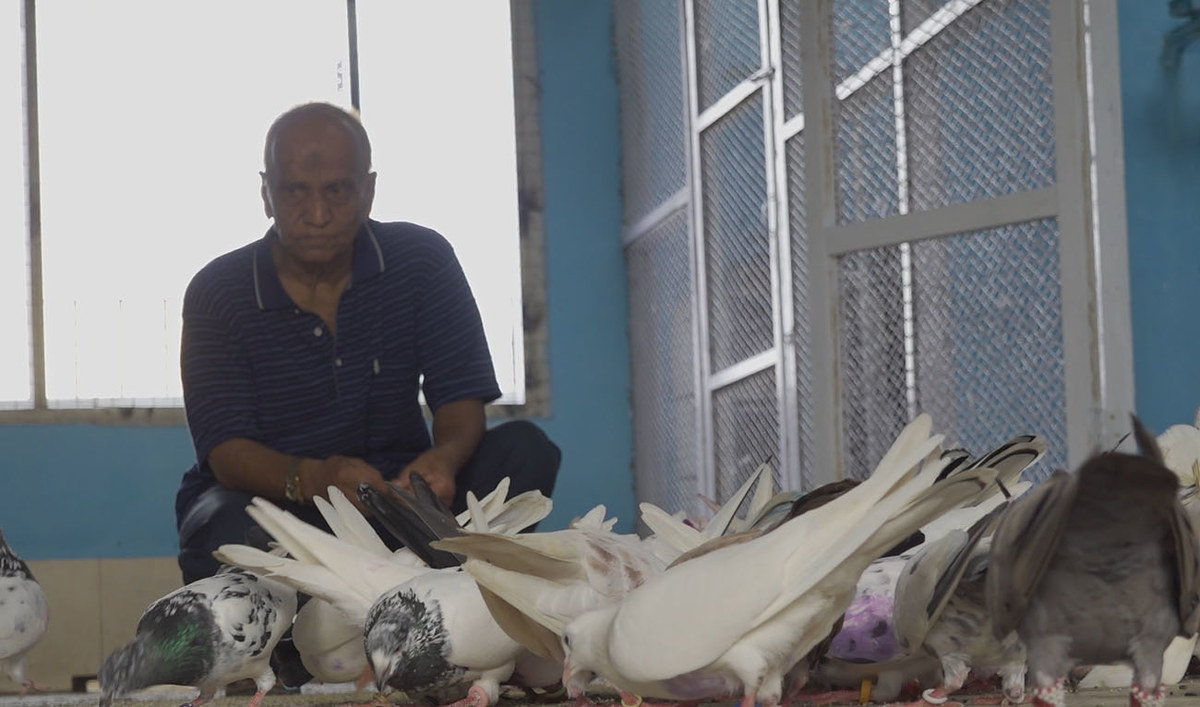
The still image taken from a video recorded on May 25, 2023 shows Muhammad Shafiq Chando, a pigeon racing enthusiast watching his birds feed at a rooftop in Karachi Pakistan. (AN Photo)
In Golay Bazi, also called Tukri, 50 to 500 pigeons from two teams fly, and when both teams mix, which is called a battle, the team that captures the largest number of pigeons from the opponent’s team is declared the winner .
Tahmoor Chohan, a tournament participant, said people in Karachi had made modifications to the rules of the sport introduced by migrants from India.
“Unlike in India, where they allow the wings [of these birds] to grow naturally, in Karachi, the birds’ wings are first clipped, and then they are prepared for racing,” he explained.
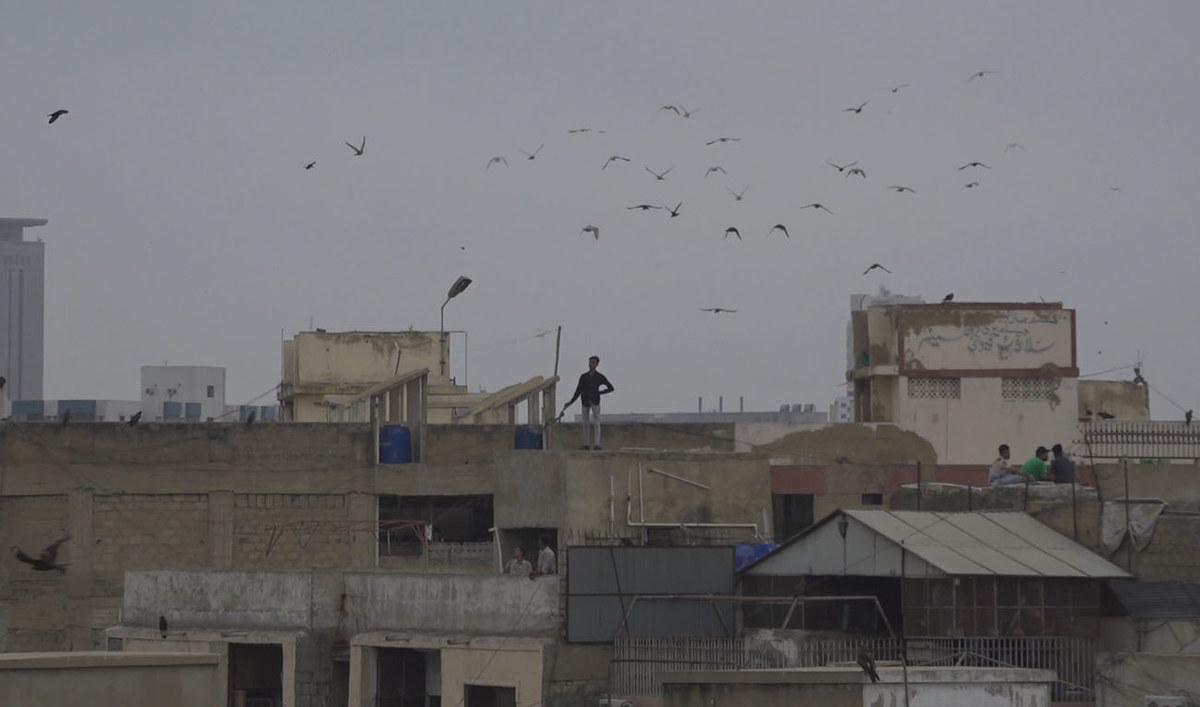
The still image taken from a video recorded on May 25, 2023 shows a pigeon racing enthusiast watching his birds from a rooftop in Karachi Pakistan. (AN Photo)
And the hobby isn’t cheap, with Chando saying he spent Rs50,000 ($170) a month on keeping the birds.
Chando’s 400 pigeons live on a diet of around 10 kilograms of millet daily, which he described as the “secret” to their success. They also eat food supplements and a special pudding called “chiknao,” which resembles halwa, or locally made pudding, and is costly to prepare.
“We have to ensure that [the birds] are fit and active in every way,” he said. “So, for that, we provide them with a special food called chiknao … It contains almonds, desi ghee, spices, and dough. We feed them things that we ourselves cannot afford to eat.”
When asked if he ever felt the urge to give up on pigeon racing, Chando said his victories brought him “tremendous joy,” but the close bond with his pigeons led to “immense pain” if a bird was lost, especially during tournaments, making him sometimes wish to abandon the sport.
“The pain is intense,” he said, “because it takes three years to raise a squab.”
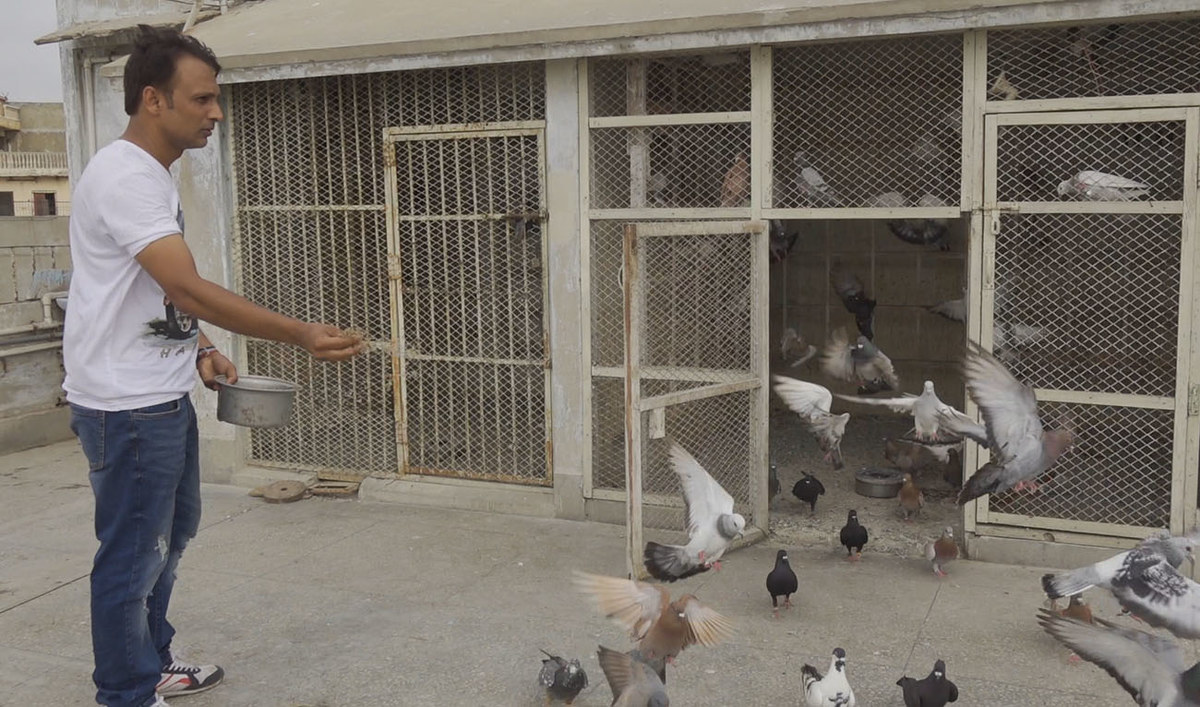
The still image taken from a video recorded on May 25, 2023 shows a pigeon racing enthusiast feeding his birds on a rooftop in Karachi, Pakistan. (AN Photo)
When asked if he believed it was humane to raise pigeons for racing tournaments, Chando rebuffed the question, saying: “We feed them the things that we ourselves cannot afford to eat.”
The pigeons, being pigeons, were unavailable for comment.


