

Pakistani woman scientist eyes Saudi Arabia investment to propel groundbreaking jet engine invention

Pakistani aerospace engineer Dr. Sarah Qureshi is posing for a picture before her flying practice in Lahore, Pakistan, on October 20, 2019. (Photo courtesy: Dr. Sarah Qureshi)
Short Url
Updated 31 May 2023
Follow

Pakistani woman scientist eyes Saudi Arabia investment to propel groundbreaking jet engine invention

  • Dr. Sarah Qureshi secured patents from United States, United Kingdom to make high-speed supersonic jet engines with low noise emission
  • She founded first Pakistani company developing environmentally safe aircraft engines designed to reduce aviation-induced global warming

ISLAMABAD: Pakistani aerospace engineer Dr. Sarah Qureshi, who has been granted patents in the United States and United Kingdom for her groundbreaking work on jet engines that control excessive noise emissions, hopes to collaborate next with Saudi Arabia to advance her work, inspired by transformative progress in the Kingdom under its Vision 2030.

Qureshi, an aerospace engineer and licensed pilot, grew up in the capital of Pakistan, Islamabad, where her parents were prominent scientists. With the help of her late father Masood Latif Qureshi, she co-founded Aero Engine Craft Private Limited, Pakistan‘s first commercial engine and aircraft R&D company developing environmentally safe contrail-free aircraft engines designed to reduce aviation-induced global warming.

Qureshi holds a PhD in aerospace propulsion from Cranfield University in the UK and has accumulated over 70 hours of flying experience.

Three of her engines have received UK and USA patents. Two are climate friendly jet engines patented in 2021 and the other is a supersonic jet engine patented this year.

“My design successfully achieves a significant reduction in noise levels, while also delivering exceptional performance in terms of speed and efficiency,” she told Arab News in an interview this week, speaking about her latest design which she described as marking a “crucial milestone in aviation,” addressing the issue of excessive noise generation that has placed limitations on previous engines.
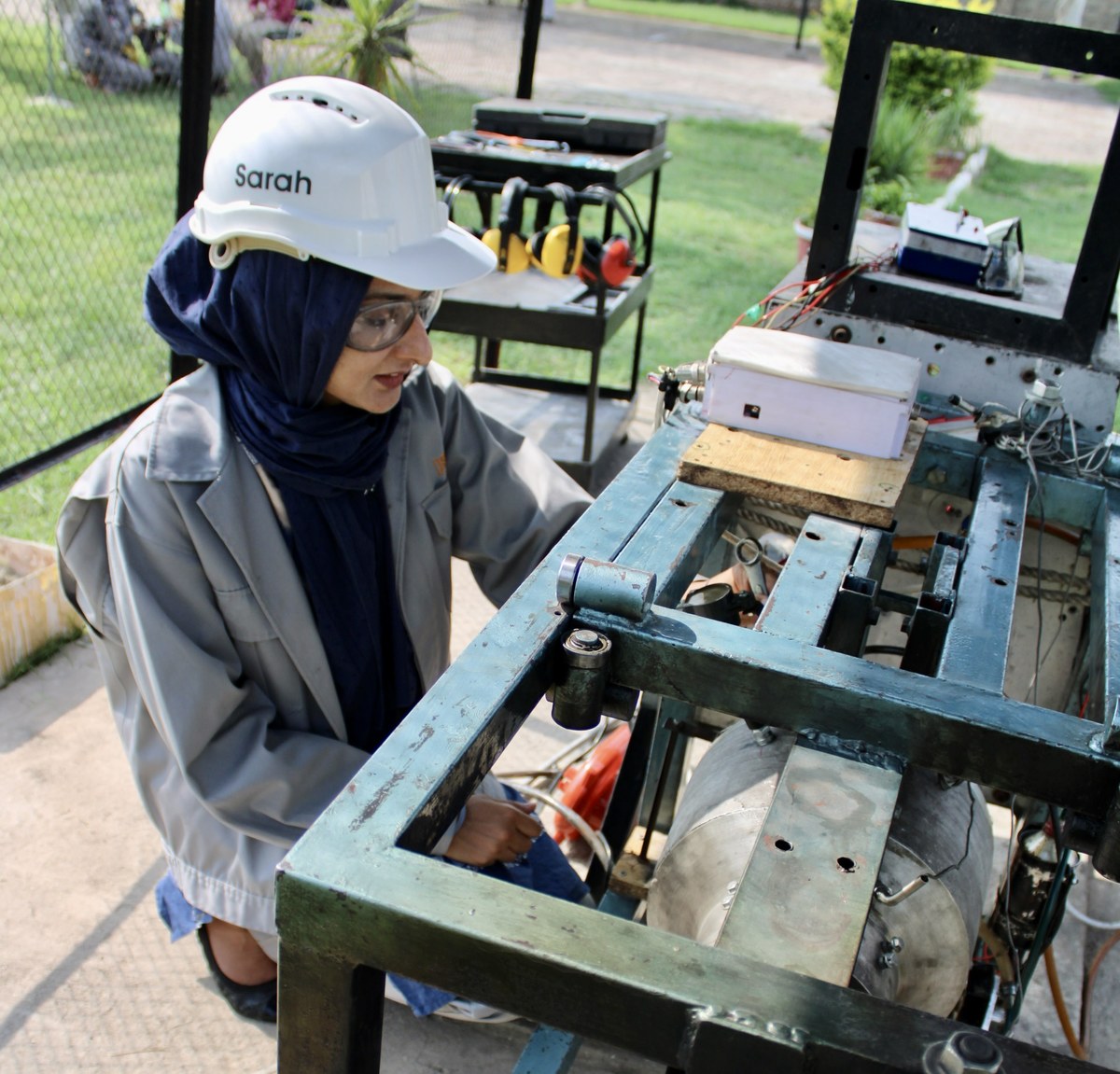


Pakistani aerospace engineer Dr. Sarah Qureshi is working at the Aero Engine Craft site in Islamabad, Pakistan, on July 1, 2022. (Photo courtesy: Dr. Sarah Qureshi)

After receiving a patent from the United States in March this year, Qureshi now has three patents, two of which bear her father’s name.

As the scientist seeks international investment to advance her project, she hopes Saudi Arabia would contribute, especially under Saudi prime minister and Crown Prince Muhammad bin Salman’s Vision 2030 to diversify the economy away from oil.

“I would like to collaborate with Islamic countries such as Saudi Arabia because I have witnessed the transformative changes brought about by Saudi Arabia’s Vision 2030,” Qureshi said.
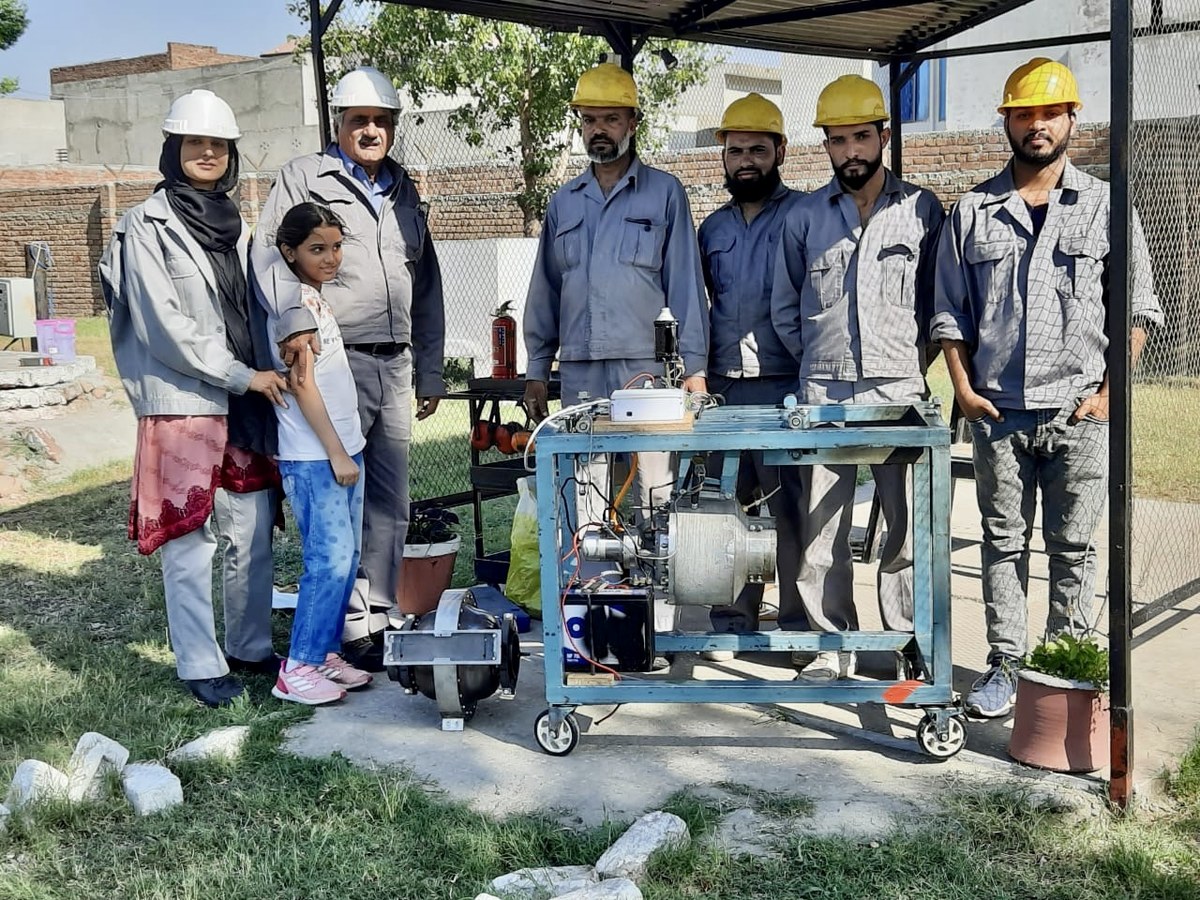


Pakistani aerospace engineer Dr. Sarah Qureshi is working at the Aero Engine Craft site in Islamabad, Pakistan, on July 1, 2022. (Photo courtesy: Dr. Sarah Qureshi)

“I have observed remarkable progress, such as the historic achievement of a Saudi woman going to space, and the growing recognition and empowerment of Arab women across various domains.”

Speaking about her company, Qureshi said it had been developing engines on a “small scale” thus far. 

The first phase of any invention involved creating a prototype, which was then scaled into an actual model after successful testing, she explained.

“We have already constructed and tested a small-scale model,” Qureshi said, “and we have also developed a jet engine.”

The engineer said she owed her success to her parents, who had encouraged her to be confident and have her own identity.

“Thanks to my father and mother, I have a natural inclination toward machines, inventions, and science,” Qureshi said.

Her message for other women who wanted to pursue science?

“Each person is blessed in their own way. Identify your goals and focus on them, leaving everything else behind.”


World Bank president in Pakistan to discuss development projects, policy issues

Updated 01 February 2026
Follow

World Bank president in Pakistan to discuss development projects, policy issues

  • Pakistan, World Bank are currently gearing up to implement a 10-year partnership framework to grant $20 billion loans to the cash-strapped nation
  • World Bank President Ajay Banga will hold meetings with Pakistan Prime Minister Shehbaz Sharif and other senior officials during the high-level visit

ISLAMABAD: World Bank President Ajay Banga has arrived in Pakistan to hold talks with senior government officials on development projects and key policy issues, Pakistani state media reported on Sunday, as Islamabad seeks multilateral support to stabilize economy and accelerate growth.

The visit comes at a time when Pakistan and the World Bank are gearing up to implement a 10-year Country Partnership Framework (CPF) to grant $20 billion in loans to the cash-strapped nation.

The World Bank’s lending for Pakistan, due to start this year, will focus on education quality, child stunting, climate resilience, energy efficiency, inclusive development and private investment.

"World Bank President Ajay Banga arrives in Pakistan for a high-level visit," the state-run Pakistan TV Digital reported on Sunday. "During his stay, he will meet Prime Minister Shehbaz Sharif and other senior officials to discuss economic reforms, development projects, and key policy issues."

Pakistan, which nearly defaulted on its foreign debt obligations in 2023, is currently making efforts to stabilize its economy under a $7 billion International Monetary Fund (IMF) program.

Besides efforts to boost trade and foreign investment, Islamabad has been seeking support from multilateral financial institutions to ensure economic recovery.

“This partnership fosters a unified and focused vision for your county around six outcomes with clear, tangible and ambitious 10-year targets,” Martin Raiser, the World Bank vice president for South Asia, had said at the launch of the CPF in Jan. last year.

“We hope that the CPF will serve as an anchor for this engagement to keep us on the right track. Partnerships will equally be critical. More resources will be needed to have the impact at the scale that we wish to achieve and this will require close collaboration with all the development partners.”

In Dec., the World Bank said it had approved $700 million in ​financing for Pakistan under a multi-year initiative aimed at supporting the country's macroeconomic stability and service delivery.

It ‍followed a $47.9 ‍million World Bank grant ‍in August last year to improve primary education in Pakistan's most populous Punjab province.