UNITED NATIONS: For the first time in Syria’s 12-year war, people in every district are experiencing some degree of “humanitarian stress,” and a staggering 15.3 million — nearly 70 percent of the population — need humanitarian aid, the United Nations said Tuesday.
A UN appeal for $5.4 billion to help over 14 million people in Syria is less than 10 percent funded and the UN World Food Program has warned that without additional money, 2.5 million people are at risk of losing food or cash assistance from July.
The dire humanitarian situation, compounded by the February earthquake that devastated the rebel-held northwest, was spelled out to the Security Council by the UN humanitarian office’s operations director Edem Wosornu.
The Syrian people “are more and more reliant on humanitarian assistance as basic services and critical infrastructure are on the brink of collapse,” she said.
Wosornu urged generous pledges and the swift release of funds at a European Union hosted conference in Brussels on June 14-15. She said “Syrians need the support of the international community now more than at any time in the past 12 years.”
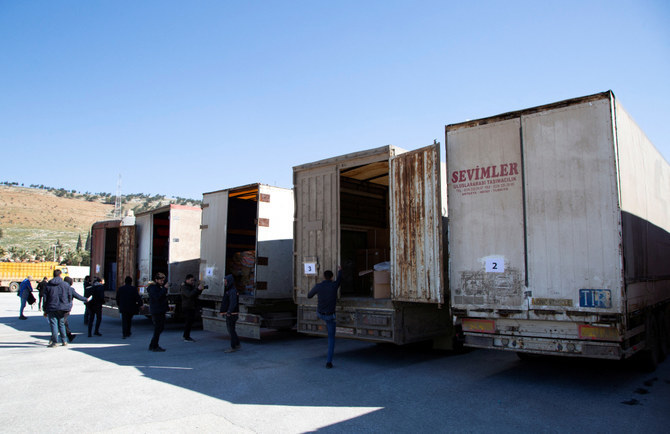
She said the need to maintain the delivery of humanitarian aid to the northwest is even more critical after the earthquake. She said UN Secretary-General Antonio Guterres has called for a 12-month extension of the UN mandate, which expires in July, saying the assistance is “indispensable” and “a matter of life and death for millions of people” in the region.
Russia’s UN Ambassador Vassily Nebenzia, whose country is a close ally of Syria, said Moscow shares concerns about the deteriorating humanitarian situation. But he said cross-border aid delivery “has outlived its usefulness” and “we see no reason at all to extend it.”
Nebenzia expressed concern that while cross-border aid was flowing and funded, the appeal to help millions of others in acute need in Syria is only 9 percent funded. It’s “a very odd moral imperative,” if aid “only applies to the terrorists in Idlib and it does not apply to the country as a whole.”
US Ambassador Linda Thomas-Greenfield said the United States will seek a council resolution to extend aid deliveries through the three border crossings currently operating: Bab Al-Hawa, which was the single crossing Russia would allow to remain open in January, as well as Bab Al-Salam and Al Raée, which Syria’s President Bashar Assad agreed to open after the quake, which killed over 6,000 in Syria and has displaced over 330,000. Assad has agreed to keep the two additional crossings open through Aug. 13.
The US envoy accused Assad of “cynically” trying “to seize on the outpouring of international support following the earthquakes to reclaim its place on the world stage,” stressing that “merely sitting at the same table as other regional leaders does nothing to help the people of Syria.”
“If the Assad regime wants to help the Syrian people, it should act immediately and announce that it will keep the Bab Al-Salam and Al Raée crossings open through at least August 2024, or as long as it takes,” Thomas-Greenfield said. “And even if the Assad regime does the right thing, it is frankly no substitute for actions by this council, which has a responsibility to respond to the dire humanitarian needs of the Syrian people.”
Assad was welcomed back to the Arab League this month after a 12-year suspension. Geir Pedersen, the UN special envoy for Syria, told the Security Council that this meeting in Jeddah, Saudi Arabia along with others in Moscow and Amman that included Syrian officials could create new momentum in long-stalled efforts to end the conflict.
He reiterated that new diplomatic activity “could act as a circuit breaker in the search for a political solution in Syria – if there is constructive Syria engagement, and indeed if key regional and international groups and players can work together.”


![]()

UN: Staggering 15.3 million Syrians, nearly 70% of population, need aid
Short Url
https://arab.news/4snzq
UN: Staggering 15.3 million Syrians, nearly 70% of population, need aid
- 2.5 million people are at risk of losing food or cash assistance from July
- The Syrian people “are more and more reliant on humanitarian assistance as basic services and critical infrastructure are on the brink of collapse"


Latest updates





© 2026 SAUDI RESEARCH & PUBLISHING COMPANY, All Rights Reserved And subject to Terms of Use Agreement.