Ghee festival showcases products, heritage of Northern Borders region

1 / 5
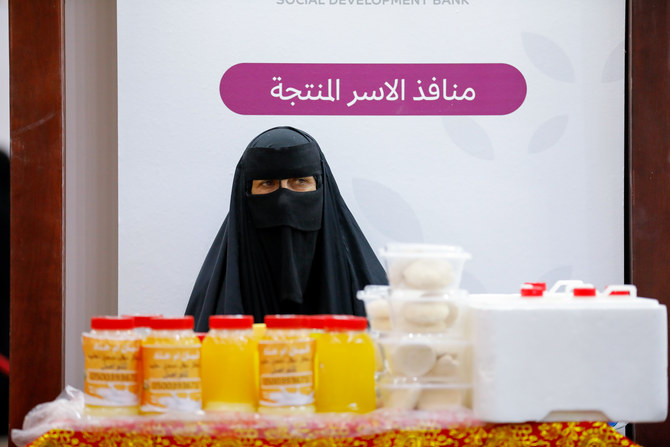
Global and local companies specializing in dairy products participated in the Al-Saman Festival in the Northern Borders region, which concluded on Monday. (Supplied)
2 / 5
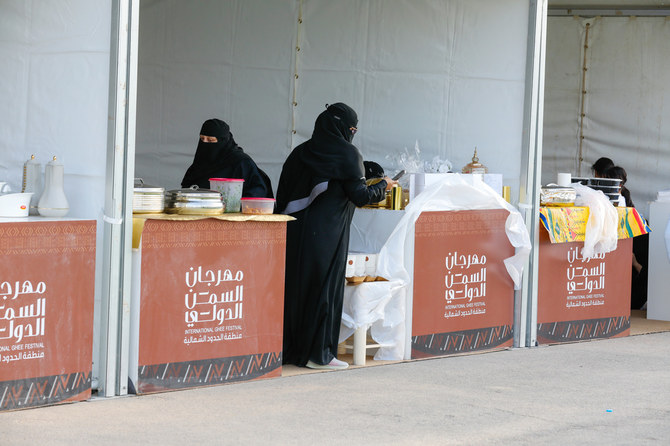
Global and local companies specializing in dairy products participated in the Al-Saman Festival in the Northern Borders region, which concluded on Monday. (Supplied)
3 / 5
Global and local companies specializing in dairy products participated in the Al-Saman Festival in the Northern Borders region, which concluded on Monday. (Supplied)
4 / 5
Global and local companies specializing in dairy products participated in the Al-Saman Festival in the Northern Borders region, which concluded on Monday. (Supplied)
5 / 5
Global and local companies specializing in dairy products participated in the Al-Saman Festival in the Northern Borders region, which concluded on Monday. (Supplied)
Short Url
Updated 30 May 2023
Follow

Ghee festival showcases products, heritage of Northern Borders region

  • Mohammed Al-Anzi, chairman of the festival’s media committee, told Arab News that the festival draws attention to the historical legacy of ghee
  • Ghee is produced in large quantities throughout the year and used in the preparation of delicious dishes, especially sweets, such as basbousa, a semolina-based cake

MAKKAH: Global and local companies specializing in dairy products participated in the Al-Saman Festival in the Northern Borders region, which concluded on Monday.
The festival, deriving its name from the Arabic word for “ghee,” highlighted the diverse products of the region, which is home to the largest number of livestock in Saudi Arabia and which is famous for producing ghee.
Mohammed Al-Anzi, chairman of the festival’s media committee, told Arab News that the festival draws attention to the historical legacy of ghee, which sustained generations of the region’s people.
Ghee is produced in large quantities throughout the year and used in the preparation of delicious dishes, especially sweets, such as basbousa, a semolina-based cake.
The six-day festival presented a wealth of knowledge, introducing the current generation to one of the most important food components that nourished Saudis and helped them survive hardships and rough conditions, Al-Anzi explained.
The festival, which aimed to stimulate the economy and attract large companies, featured a number of events, including an exhibition, a cooking corner, a children’s theater, an area dedicated to folk arts and more.
It also showcased historical utensils and tools, such as Al-Aaka, made of goat or sheep skin and used to preserve ghee and molasses for long periods of time in the past.
Umm Saad Al-Shamlani, who has been producing ghee for the past four decades, said that in the past, she used to manufacture Al-Aaka for her relatives and neighbors, which was the only way to preserve ghee at the time.



Is sourdough Saudi Arabia’s latest craft food?

Updated 07 February 2026
Follow

Is sourdough Saudi Arabia’s latest craft food?

  • Saudi home bakers point to a practice that was once routine, not artisanal
  • Naturally fermented bread reflects a broader shift toward process-driven, premium food culture

ALKHOBAR: Sourdough has started to shift from a niche interest into a mainstream feature of home kitchens, cafes and specialty bakeries across the Kingdom.

The rise of sourdough is part of a wider shift in Saudi Arabia’s food landscape, where artisanal production and slower preparation methods are gaining traction.

Specialty coffee seems to have set the early template for this transition, normalizing premium pricing, craftsmanship and an interest in process.

The rise of sourdough is part of a wider shift in Saudi Arabia’s food landscape, where artisanal production and slower preparation methods are gaining traction. (Supplied/creativecommons)

Bread is now undergoing a similar shift, with fermentation replacing extraction and roasting as the central point of differentiation.

In both cases, the appeal is rooted in the product’s perceived authenticity, reduced additives, and a clearer link between raw ingredients and final consumption.

Home bakers in Riyadh, Jeddah and the Eastern Province have adapted natural yeast cultures to the Saudi environment, adjusting feeding schedules, hydration ratios, and fermentation times to accommodate higher temperatures and lower humidity in the summer months.

HIGHLIGHTS

• Home bakers in Riyadh, Jeddah and the Eastern Province have adapted natural yeast cultures to the Saudi environment.

• They adjust feeding schedules, hydration ratios, and fermentation times to accommodate higher temperatures and lower humidity in the summer months.

Cafes and specialty bakeries have responded by adding sourdough loaves, baguettes and focaccia to their menus, often positioned as premium alternatives to conventional commercial bread.

For younger home bakers, the appeal lies in the craft and the learning curve rather than nostalgia. “It feels more real and more intentional,” home baker Sarah Al-Almaei told Arab News. She began experimenting with natural yeast at home after watching starter tutorials online.

The technical aspect — hydration percentages, fermentation control and starter maintenance — has become content in its own right, with TikTok and Instagram compressing trial-and-error learning into short videos and recipe cards.

But the practice of maintaining a natural yeast culture is not new in Saudi Arabia. Long before sourdough became a global trend, Saudi households kept what was commonly referred to as the “mother dough,” a natural yeast starter fed and used daily.

“We used to maintain it every day and bake with it,” said Hessa Al-Otaibi, 56, a Saudi home baker with more than four decades’ experience. “People today call it sourdough. For us, it was simply bread.”

Her comment highlights a cultural continuity that has remained largely unrecognized, partly because the practice was not framed as artisanal or health-oriented, but as a routine household function.

The modern sourdough trend differs in its market positioning. While the older model was practical and domestic, the current model is commercial, aesthetic and often health-coded. Bakeries justify higher pricing through longer fermentation times, higher ingredient costs and smaller batch production.

Consumers justify their purchases through digestibility, perceived health benefits, flavor and product integrity.

“Once you get used to it, it’s hard to go back,” said Amina Al-Zahrani, a regular buyer of sourdough from specialty bakeries in Alkhobar.

Digestibility and texture are often cited as reasons for substitution, especially among buyers who report discomfort from standard commercial bread.

Another consumer, Majda Al-Ansari, says sourdough has become part of her weekly routine, noting that availability and quality have improved significantly in the past year.

The social media component has played an outsized role in accelerating adoption. Home bakers document starter feeding cycles, cold proofing and first bakes, turning a once-private domestic process into visible public content.

This has also created micro-markets of home-based sellers, where individual bakers offer loaves to local buyers, often fulfilling orders through direct messaging.

What remains to be seen is how far the trend will scale. If specialty bakeries continue to expand and consumers maintain willingness to pay premium prices, sourdough could establish a long-term place in Saudi food culture.

If not, it may revert to a smaller niche of committed home bakers and specialty cafes. For now, however, sourdough occupies an unusual position: both a newly fashionable trend and a quiet continuation of an older Saudi baking practice.