- In Pakistan, there is deep admiration for ornamental designs, with people taking pride in the colonial heritage
- Khan’s architectural designs have garnered global attention after challenging traditional aesthetics in Pakistan
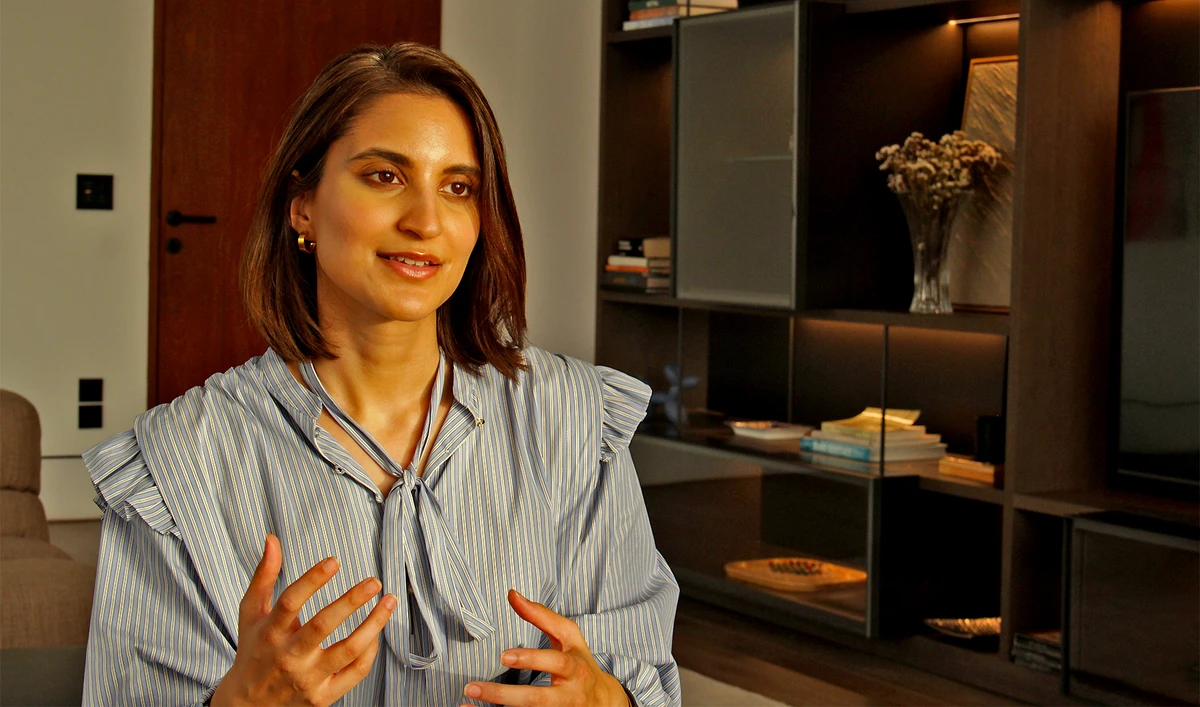
KARACHI: For Aleeya Khan, a 30-year-old Pakistani architect, most buildings with maximal, ornamental designs in Pakistan were prone to become quite “dated” and “antiquated” very quickly. Inspired by Japanese and Scandinavian designs, Khan has ditched these traditional designs for minimalist, more trendy and “timeless” ones in her home country, capturing global attention.
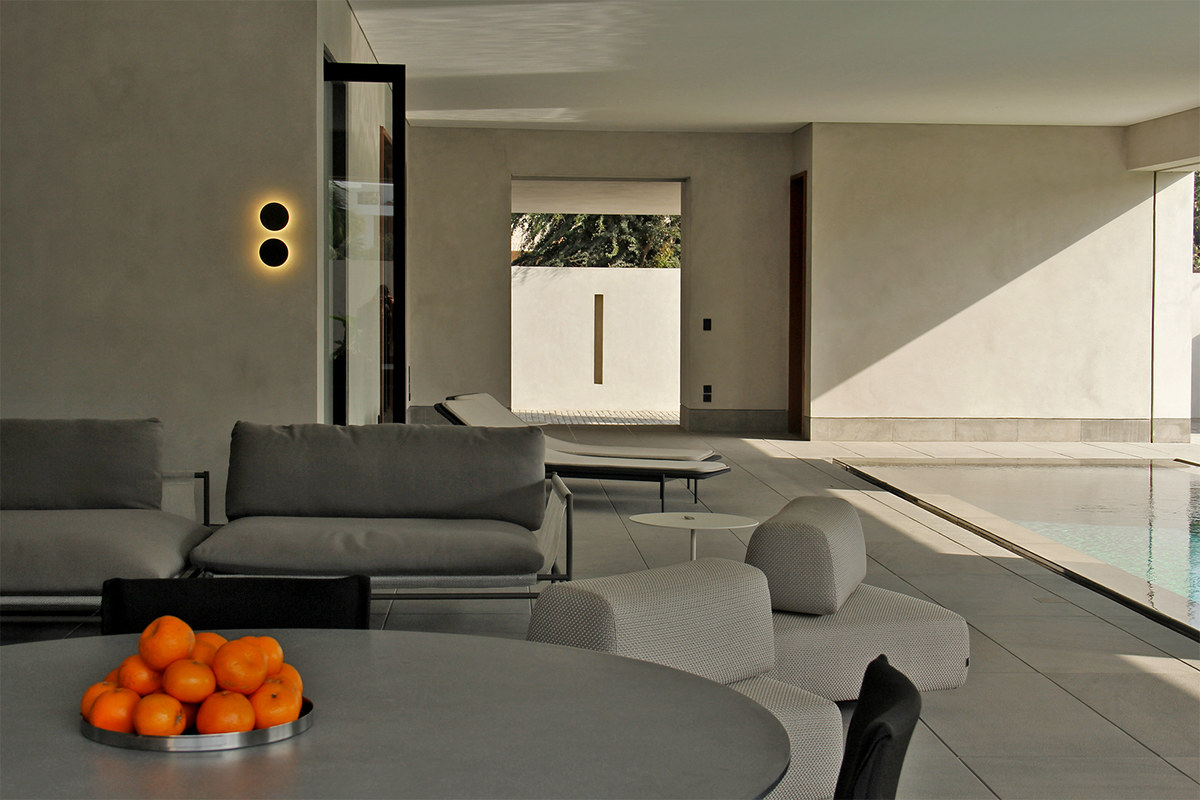
Defying the norms of ornamentation and maximalist palettes, Khan, who is the founder of ALEEYA. design studio, developed her 2,000-yard home in 2022 in an upscale neighborhood in Karachi in the Japandi style, a fusion of Japanese and Scandinavian designs. The house was built taking into account the sun’s path, the changing light through the day and optimizing cross ventilation, with spacious rooms and large windows allowing ample ventilation and preventing heat buildup.
With the facade horizontally divided, top half featuring slanting protruding masses and the bottom half finished with a customized concrete texture, Khan’s home not just caught the attention of many on social media in Pakistan, but has since been published in a number of design and architecture magazines in India, China and Europe.
Her designs stand in contrast with the prevalent ornamental and colonial styles seen almost everywhere in Pakistan, where people take pride in having maximalist designs in their homes. But Khan, who has designed a number of structures and some are currently under-construction, disagrees with them and prefers the minimal aesthetic.
“I think that it is something that is a very clean aesthetic, it’s something that is easy to maintain. More than anything, it’s timeless,” the architect told Arab News this week.
“I think, a lot of moments, people design, buildings that become very dated and very antiquated very quickly. But the modern, minimal aesthetic has a very long-term kind of impact. And it stays timeless throughout any moment in anybody’s life.”
Born and raised in Karachi, Khan’s fascination with architecture began at the age of 10 when she would spend time at the office of her aunt, who too was an architect. She said the small wooden models and the design process captivated her.
At the age of 17, Khan went to the US to study urban design and architecture at New York University and later acquired her master’s degree in architecture from Columbia University Graduate School of Architecture Planning and Preservation. Having worked in New York for around seven months, she returned to Pakistan in 2017 after she realized her country needed “intervention from someone of a professional standard.”
The architect agrees that different people have different kinds of aesthetic and design is subjective, but contends that a neutral palette provides an “open canvas.”
“For me, you know, the neutral palette is so warm, and it gives you the opportunity to create something new continuously, and it creates kind of an open canvas for you,” she told Arab News.
“So, it’s something that you’re not restricted by because you’ve not cluttered the home.”
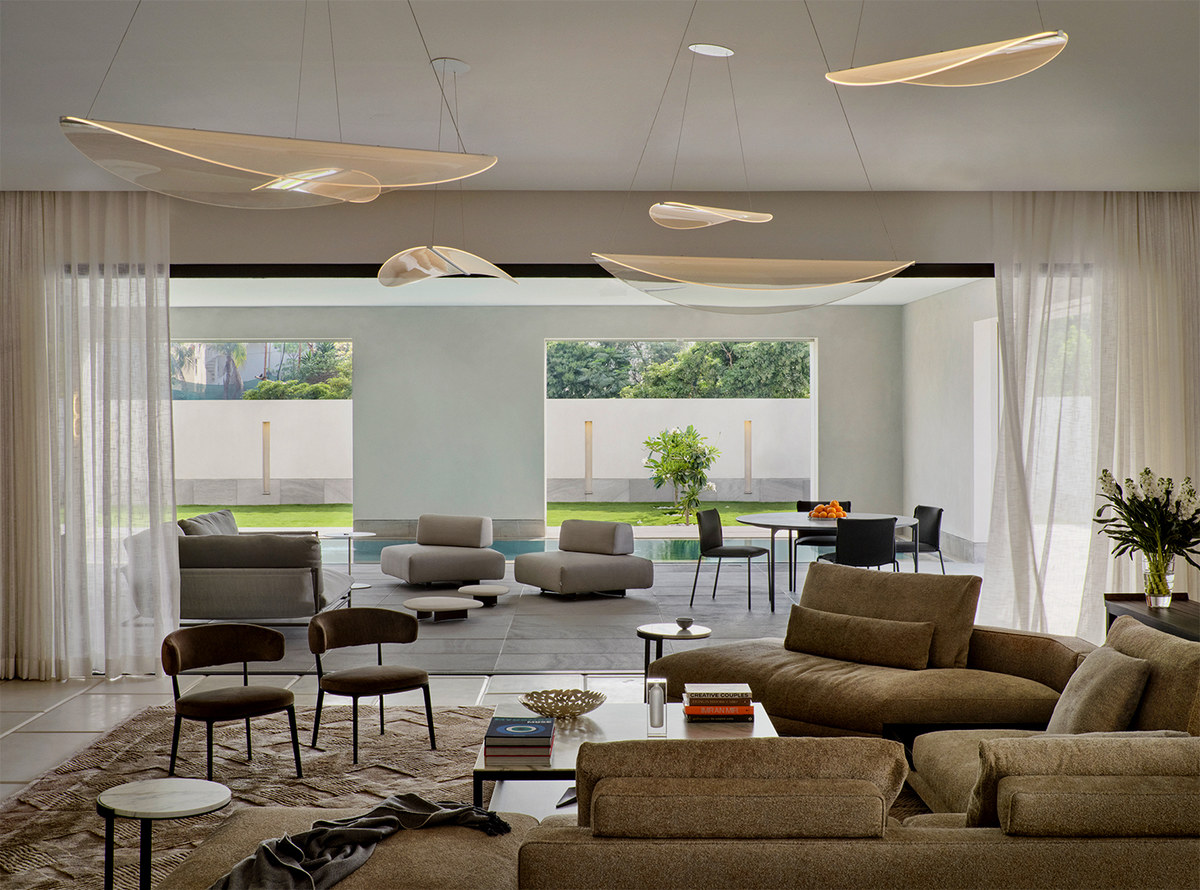
The architect says her minimal designs can be consistently unique and not replicas of her house:
“I always say as a designer, I don’t want to replicate anything I ever do, because I’m a creative person. So, I never want to create this house, for anybody ever again. I don’t like the cookie cutter kind of designs.”
While Khan acknowledges the progress being made in accepting and empowering women in managerial roles in the field of architecture, she highlighted the challenges that still existed in Pakistan, particularly when it came to authority and decision-making in a traditionally male-dominated industry.
“In the Pakistani climate, I still think that women do struggle in terms of authority, in terms of dealing with, for example, unskilled labor,” she said.
“An architect, like myself, having a woman come onto the site and deal with someone who is pouring concrete or doing plaster work, it’s hard for them to understand and take decisions from a woman in that sense.”
Khan, however, believed people in Pakistan had started realizing that ornamental and colonial-styled buildings were not the “future.”
“With the advent of social media, they’ve understood global design trends. And they’ve understood that ornamentals and colonial style is not really the future,” she said.
The architect envisions extending her futuristic approach beyond her home country and plans to market her designs in Middle Eastern cities like Dubai, Jeddah and Doha.
“I think the Middle East is definitely a market that we want to capture. It is where our aesthetic already very much exists,” she said, adding she planned to open offices in the Middle East in the coming year.