

Pakistani pilgrims laud Hajj arrangements

1 / 2
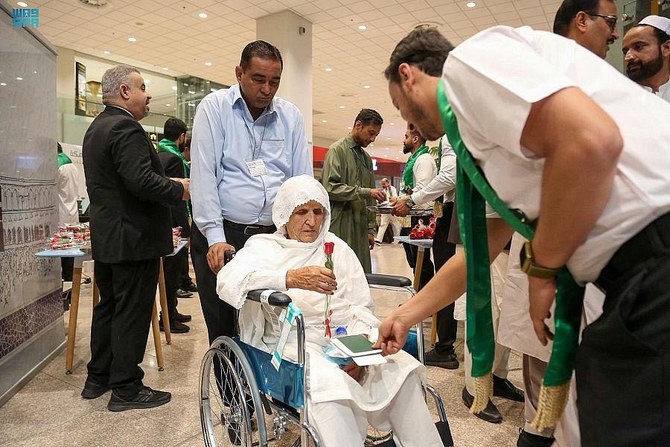
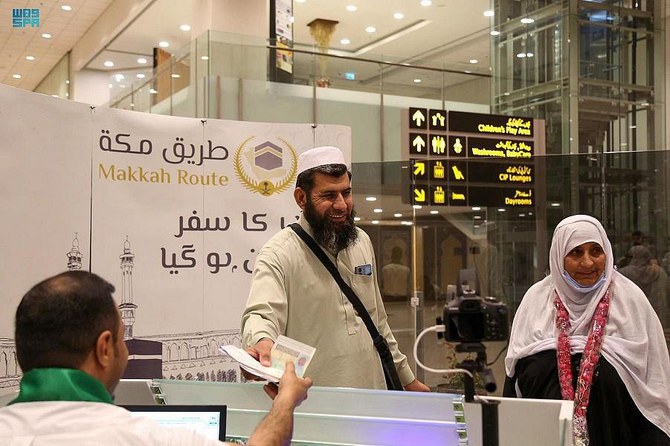
Pakistani pilgrims in Madinah have expressed satisfaction with the arrangements made by the government. (SPA)
2 / 2
Pakistani pilgrims in Madinah have expressed satisfaction with the arrangements made by the government. (SPA)
Short Url
Updated 28 May 2023
Follow

Pakistani pilgrims laud Hajj arrangements

  • Saudi authorities reinstated Pakistan’s pre-pandemic Hajj quota of 179,210 pilgrims in January and scrapped the upper age limit of 65

ISLAMABAD: With Hajj flight operation to Saudi Arabia in full swing, Pakistani pilgrims in Madinah have expressed satisfaction with the arrangements made by the government, saying their experience has so far been “better than expected.”

Saudi authorities reinstated Pakistan’s pre-pandemic Hajj quota of 179,210 pilgrims in January and scrapped the upper age limit of 65.

About 80,000 pilgrims are scheduled to perform Hajj under the government scheme in the ongoing year while the rest will be facilitated by private tour operators.

The first group of Pakistani Hajj pilgrims arrived in Madinah on May 22, while the last flight will depart from Pakistan on June 20.

According to Pakistan’s Religious Affairs Ministry, these pilgrims will depart for Makkah after spending eight days in Madinah.

“The arrangements made for us here by the Pakistani government are better than expected,” Mohammed Farrukh, a pilgrim from southern Karachi city, said in a video interview circulated by the ministry.

“(The ministry officials) have addressed all our concerns. For instance, we were worried about purchasing sacrificial animals for Hajj. But the government returned our money so we could buy the animal of our choice.”

Another pilgrim from Peshawar, Naveed Durrani, said he boarded the Hajj flight from Islamabad.

“The hotel (booked for us) is right opposite the Prophet’s Mosque in Madinah, which is very convenient for us,” he added.

While most pilgrims maintained they had not faced any problem in the Kingdom, they said patience was still the key to a pleasant experience.

“I am here for Hajj for the first time and this experience has been very good,” said Zara, a pilgrim from Lahore who only revealed her first name.

“Even if we complain about small issues, they are immediately addressed,” she added. “But we should remember that Hajj teaches us patience and how to be a good human, which is the key to a good experience.”


Israeli firm loses British Army contract bid

Updated 9 sec ago
Follow

Israeli firm loses British Army contract bid

  • Subsidiary Elbit Systems UK’s campaign for $2.6bn program was marred by controversy
  • Senior govt civil servant overseeing contract was dined, handed free Israel tour

LONDON: A UK subsidiary of Israeli weapons giant Elbit Systems has lost its bid to win a prominent British Army contract, The Times reported.

The loss followed high-profile reporting on controversy surrounding Elbit Systems UK’s handling of the bid.

The subsidiary led one of two major arms consortiums attempting to secure the $2.6 billion bid to prepare British soldiers for war and overhaul army standards.

Rivaling Elbit, the other consortium led by Raytheon UK, a British subsidiary of the US defense giant, ultimately won the contract, a Ministry of Defence insider told The Times.

It had been decided following an intricate process that Raytheon was a “better candidate,” the source said.

Elbit Systems UK’s controversial handling of its contract campaign was revealed in reports by The Times.

A whistleblower had compiled a dossier surrounding the bid that was shown to the MoD last August, though the report was privately revealed to the ministry months earlier.

It alleged that Elbit UK had breached business appointment rules when Philip Kimber, a former British Army brigadier, had reportedly shared information with the firm after leaving the military.

Kimber attending critical meetings at the firm to discuss the training contract that he had once overseen at the ministry, the report alleged.

In one case, Kimber was present in an Elbit meeting and sitting out of view of a camera. He reportedly said he “should not be there,” according to the whistleblower’s report.

In response to a freedom of information request, the MoD later admitted that it had held the dossier for seven months without investigating its claims. Insiders at the ministry blamed the investigative delay on “administrative oversight.”

A month after being pushed on the allegations by The Times, a senior civil servant completed an “assurance review” in September and found that business appointment rules had not been breached.

Other allegations concerned lunches and dinners hosted by Elbit UK in which civil servants at the heart of the contract decision process were invited.

One senior civil servant was dined by the British subsidiary seven times, while rival Raytheon did not host events.

Mike Cooper, the senior responsible owner at army headquarters for the army training program, also traveled to Jerusalem with two senior British military officers.

He took part in a sightseeing tour funded by Elbit Systems, the British subsidiary’s parent company.

In response to the allegations, an MoD spokesperson said in a statement: “The collective training transformation programme will modernise training for soldiers to ensure the British Army can face down the threats of the future.

“We will not comment further until a preferred tenderer announcement is made public in due course.”

Amid mounting criticism of Israel within the British military establishment, four former senior army officers, in a letter to Prime Minister Keir Starmer, recently urged the government to end involvement with Israeli-owned or Israeli-supported weapons companies.

“Now is not the time to return to business as usual with the Israeli government,” they wrote, urging harsher sanctions.