

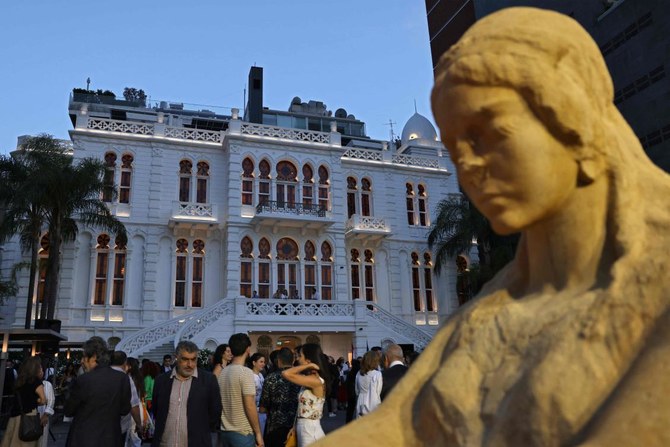
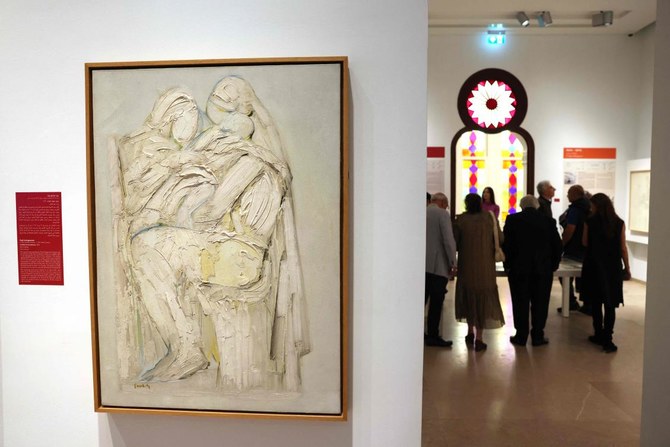

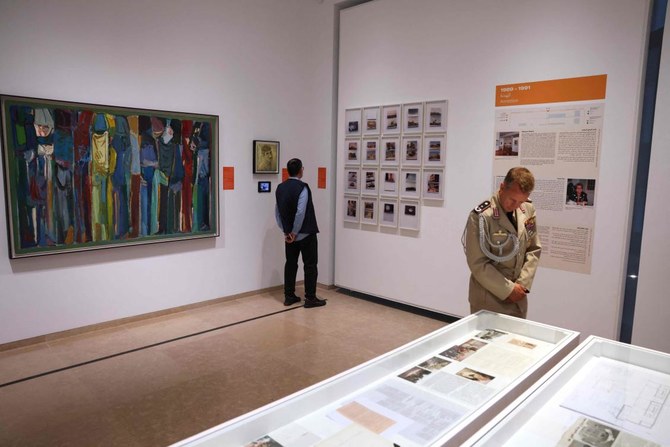

BEIRUT: The Sursock Museum reopened on Friday nearly three years after the devastating Beirut Port explosion of Aug. 4, 2020, which damaged the museum’s artistic treasures and its vibrant glass facade. The explosion — just 800 meters away from the museum — resulted in the collapse of the building’s wooden ceiling and cracks in its walls.
Sursock’s restoration was marked by a celebration on Friday evening, funded by the international alliance for heritage protection in conflict zones (Aliph), the Italian Agency for Development Cooperation, the French Ministry of Culture, UNESCO, and several Lebanese and Arab institutions.
French Ambassador Anne Grillo and Italian Ambassador Nicola Bongiorni attended the event amid heavy security.
Dozens of people gathered in the museum’s exterior courtyard, where members of the Saint Joseph University Choir gave a live performance.
Ambassador Grillo said: “France has fulfilled its promise after the tragedy. We announced our contribution to the museum’s reconstruction because we uphold diversity and freedom in this region.”

People attend the reopening of the Sursock Museum in the Lebanese capital Beirut. (AFP)
The reconstruction work was carried out without help from the Lebanese government, but over $2 million were raised, with Italy contributing $965,000 through UNESCO’s For Beirut initiative. The French Ministry of Culture and Aliph donated half a million dollars each. The losses incurred by the museum were estimated at around $3 million.
The explosion destroyed the maritime facade of Beirut and left over 230 people dead and 6,000 injured. It severely damaged the museum’s Gothic-style architecture, electromechanical system, ceilings and wall coverings from Damascus dating back to the 1920s. It also damaged 66 of the museum’s 132 artworks, three of which were sent to the Center Pompidou in France for restoration.
The Sursock Museum was built in 1912 on a hill in Ashrafieh overlooking the capital, as the private villa for renowned Lebanese art collector Nicolas Ibrahim Sursock. Before his passing in 1952, Sursock bequeathed the building and his collection to Beirut, with the stipulation that it should be a free museum accessible to all.
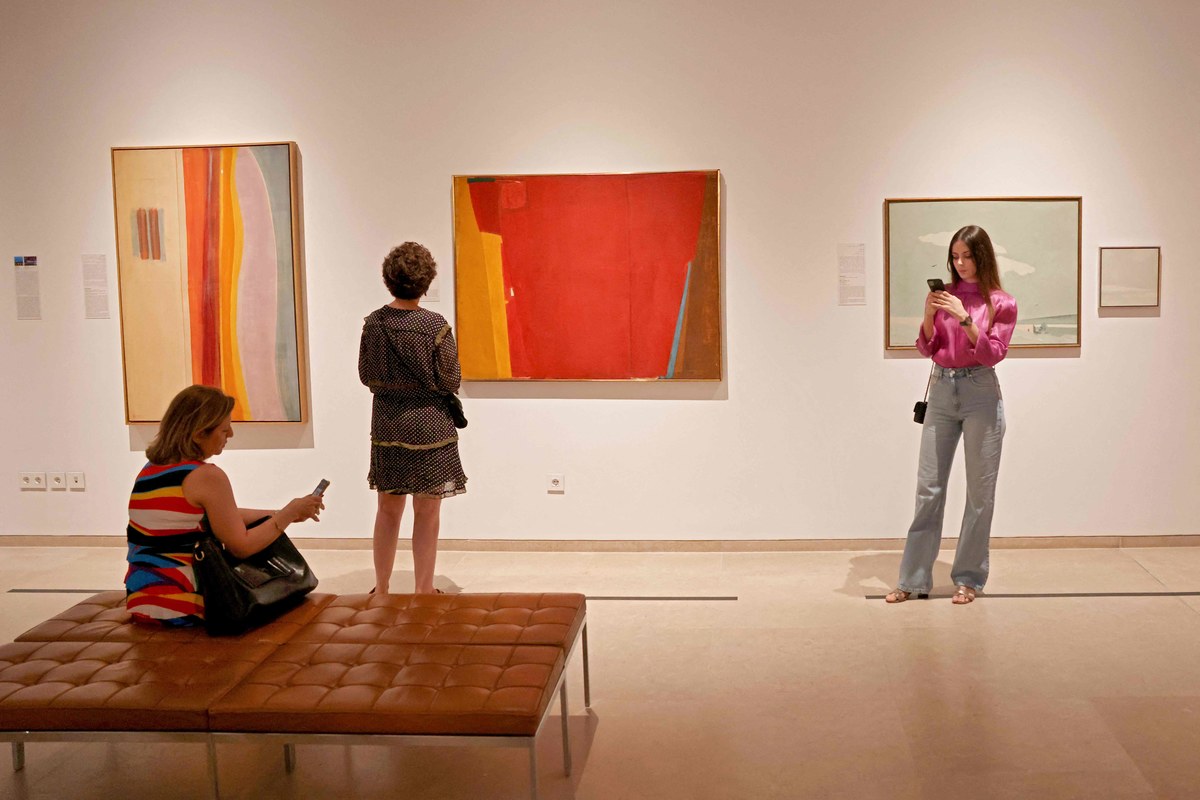
People attend the reopening of the Sursock Museum in the Lebanese capital Beirut. (AFP)
In 1999, the directorate general of antiquities classified the museum as a Class A historical building.
The museum houses artworks dating back to the late 19th century, and includes the Fouad Debbas Library, which contains an extensive collection of 30,000 photographs.
Additionally, the museum showcases works by Lebanese artists including painters Georges Daoud Corm and Jean Khalife, and sculptor Souad Rizk Choueiri. Signs of the blast’s damage are still visible in one of the paintings by Lebanese artist Paul Guiragossian, serving as a reminder of the event.
Sursock director Karina El-Helou said: “The unprecedented destruction that befell the museum was unlike anything we have witnessed, even during the Lebanese Civil War. Seventy percent of the building was severely damaged.”
 She said she hopes that the museum’s reopening will help lift the spirits of many Lebanese who survived the explosion and are now enduring the country’s economic collapse, providing a safe space for freedom of expression. She described it as a symbol of hope.
El-Helou said the museum’s message was one of resilience. “We resist, and Beirut will remain a platform for Arab artists.”
The Friends of the Archaeological Museum at the American University of Beirut celebrated the restoration of 26 damaged artworks.
Dr. Nadine Panayot Haroun, an assistant professor in the department of history and archaeology at the university, said a cabinet in the museum containing 74 rare glass pieces, including small vessels, cups, and colored plates mostly dating back to the Roman and Byzantine periods, fell during the port explosion. The glass pieces had been collected from various areas of the Middle East, Haroun added. All the artifacts were restored through the collaborative efforts of professionals and student volunteers.


