



DUBAI: As people across Jordan, and the wider Arab world, prepare to celebrate the wedding of Jordan’s Crown Prince Hussein bin Abdullah and Rajwa Al-Saif from Saudi Arabia, Arab News take a closer look at the royal power couple.
While Al-Saif largely lived outside the public eye until the couple’s engagement was announced last year, Hussein has been in the spotlight since the moment he was born in Amman on June 28, 1994. He was appointed crown prince by royal decree on July 2, 2009.
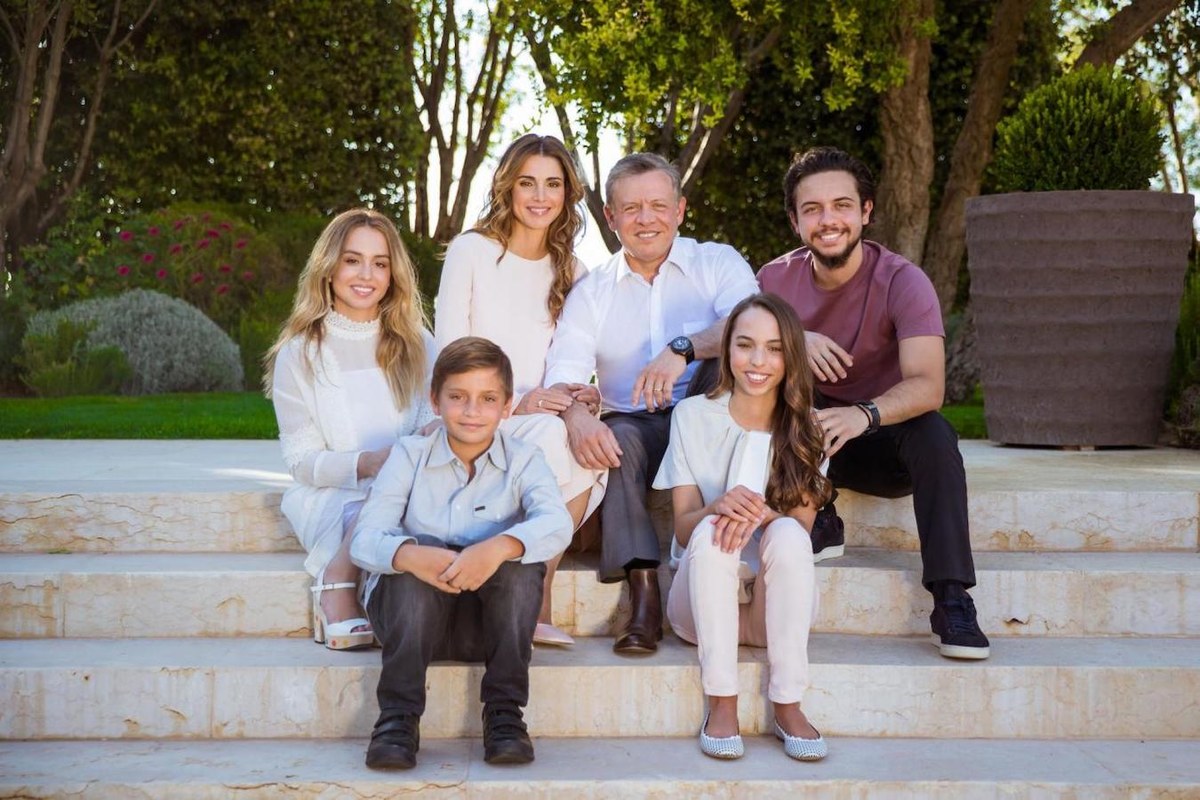
The crown prince has three siblings: Princess Iman, Princess Salma and Prince Hashem. (Supplied)
The 28-year-old prince, the eldest son of King Abdullah II and Queen Rania, has three siblings: Princess Iman, 26, who tied the knot with financier Jameel Alexander Thermiotis on March 12, Princess Salma, 22, and Prince Hashem, 18.
The crown prince was named after his grandfather, King Hussein bin Talal, who became king in 1952 at the age of 17 and ruled Jordan for almost five decades until his death in 1999. Hussein’s paternal grandmother is Princess Muna Al-Hussein, a British convert to Islam, and his mother is of Palestinian descent.
He complete his high school studies in 2012 at King’s Academy in Jordan. In 2016, he graduated with a degree in international history from Georgetown University in Washington, D.C.
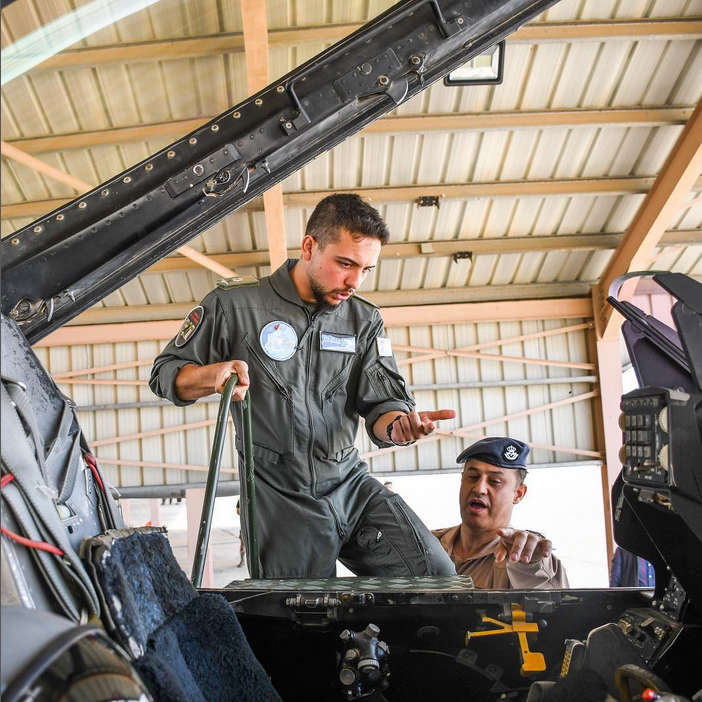
He is a qualified helicopter pilot. (Supplied)
Like many male members of the Jordanian royal family, including his father and grandfather, the prince attended Britain’s prestigious Royal Military Academy Sandhurst, graduating in 2017.
He often accompanies King Abdullah during official visits in Jordan and has also embarked on several official trips abroad. Most recently, he accompanied the king and queen on a visit to Japan in April.
“The King has been preparing the prince for years,” Samih Al-Maaytah, Jordan’s former minister of information, told Arab News.
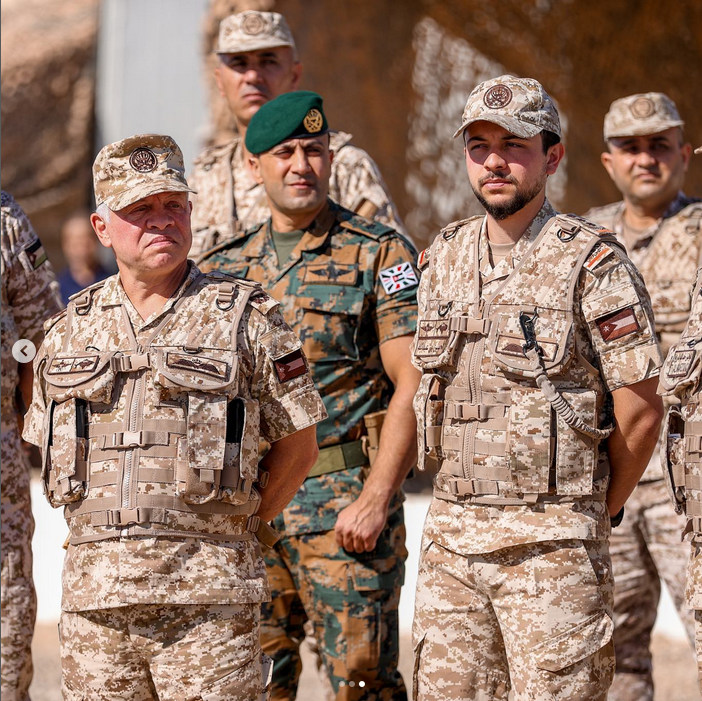
He holds the rank of captain in the Jordanian Armed Forces. (Instagram)
“The prince attends all the important meetings of his majesty the king with world leaders in the United Nations, Europe and at international and Arab conferences. So he is being trained directly by the king.”
In April 2015, at the age of 20, Crown Prince Hussein became the youngest person to chair a session of the UN Security Council when he presided over an open debate on the role of youth in efforts to counter violent extremism and promote peace. As a result, in August 2015, Jordan hosted the first Global Forum on Youth, Peace and Security, which produced the Amman Youth Declaration on those issues.
The prince made his debut in front of the UN General Assembly in 2017, when he delivered a speech criticizing the focus on militarization in the Middle East.
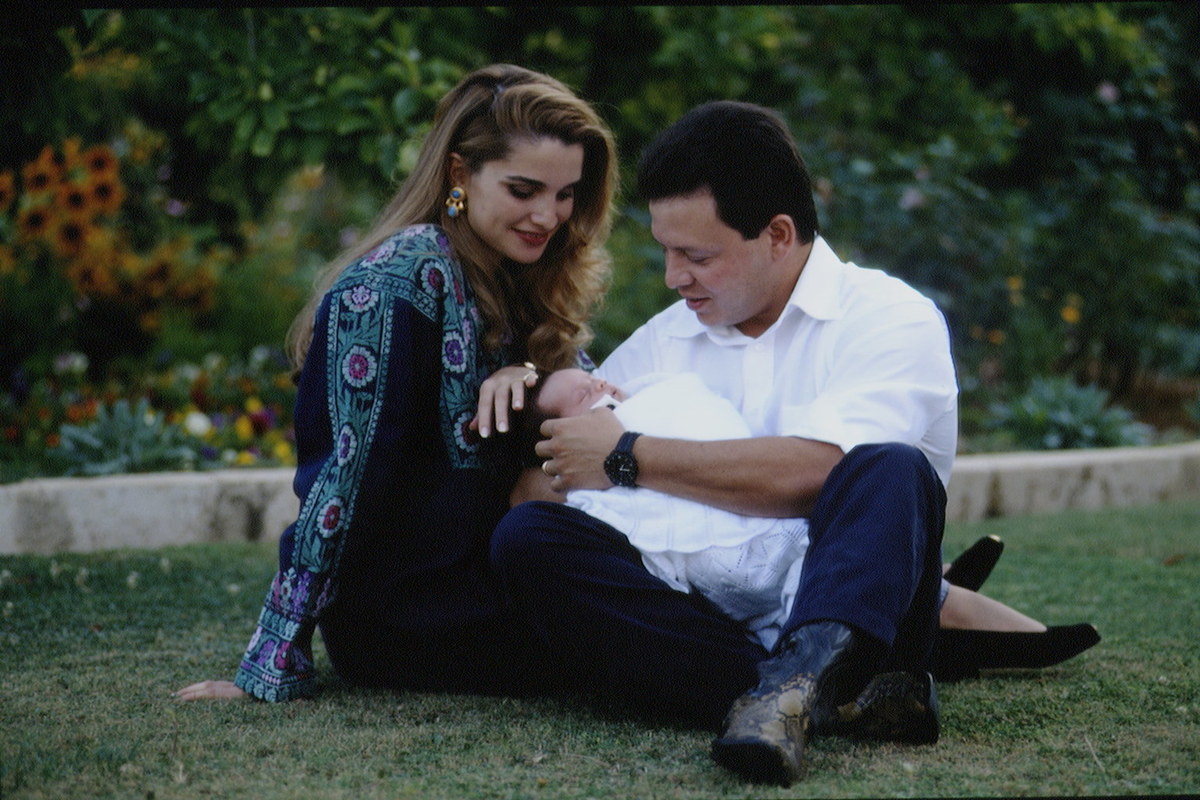
The crown prince with his parents. (Supplied)
He holds the rank of captain in the Jordanian Armed Forces and is often an observer at military drills in the country. He is a qualified helicopter pilot; after his first solo flight in 2018, he was doused with a bucket of water in a traditional military celebration of such occasions.
Al-Maaytah described the prince’s relationship with the Jordanian public as “active, dynamic and close to the youth.” Hussein oversees the Crown Prince Foundation, which promotes education with a focus on technical training and initiatives to benefit young people in Jordan.
The prince also founded the Masar Initiative to encourage youths to take an interest and pursue careers in the field of space technology, and the “Hearing without Borders” project, which provides cochlear implants for deaf children.
“He always visits gatherings with the youth from different sectors, so he is a role model to the youth who have awareness, who are dynamic and passionate,” Al-Maaytah said.
In the rare moments the prince has to himself to pursue his own interests, he likes to share his activities and hobbies with his 3.9 million followers on Instagram. He appears to like to stay active and particularly enjoys basketball, football, hiking, cooking and playing the guitar.
The crown prince and Al-Saif announced their engagement in August last year during a ceremony in Riyadh, in the presence of King Abdullah, Queen Rania and Al-Saif’s family. The royal family of Jordan’s Hashemite dynasty will welcome its newest member on June 1, when the couple are due to wed at Zahran Palace in Amman, but what do we know about the future queen?
Born on April 28, 1994, Al-Saif is the daughter of Saudi businessman Khalid bin Musaed bin Saif bin Abdulaziz Al-Saif and his wife, Azza bint Nayef Abdulaziz Ahmad Al-Sudairi. The youngest of four children, her older siblings are called Faisal, Nayef and Dana.
The Al-Saif family traces its lineage to the Subay tribe, who have been present in the Sudair region of Najd since the beginning of the era of King Abdulaziz, the founder of modern-day Saudi Arabia.
Al-Saif’s mother comes from the prominent Al-Sudairi family. Incidentally, Saudi Arabia’s King Salman is one of the so-called “Sudairi Seven,” an influential alliance of seven full brothers born to King Abdulaziz and Hussa bint Ahmed Al-Sudairi.
After graduating from high school in Saudi Arabia, Al-Saif studied at Syracuse University’s School of Architecture in New York state. She also holds an Associate of Arts Professional Designation in visual communications from the Fashion Institute of Design and Merchandising in Los Angeles.
After a spell working at an architecture firm in Los Angeles, she returned to her native Saudi Arabia to work at the Designlab Experience design studio in Riyadh.
Since their engagement, Al-Saif and the crown prince have made numerous public appearances together, including a visit in January to the “Fragrance of Colors” initiative in Amman, which aims to teach the blind and visually impaired to draw by identifying colors through their sense of smell. They were briefed by Suheil Baqaeen, the founder of the initiative, on the creative work of students during a workshop at Darat Suheil, a gallery and art space in Jabal Luweibdeh in Amman.
“It was one of the most beautiful moments in my life. Believe you me, she is so simple, elegant, nice and humble,” Baqaeen told Arab News when asked about his encounter with Al-Saif. “And they both were so, so sweet.
“They showed so much sensitivity when talking to the children. When the crown prince and Ms. Rajwa came to our simple Darat Suheil, they gave their positive energy to the children by spending time with them and talking to them.
“It felt like a healing energy … there was no obstacle in the conversation. There was so much freedom to talk. She also asked the children about their dreams.”
Baqaeen said Al-Saif spent time painting alongside the children.
“She showed a lot of skill with the watercolor painting, since she is an architect and has a design background,” he added.
The Royal Hashemite Court has yet to reveal full details of Al-Saif’s future role as a working member of the Jordanian royal family after the wedding, though it is thought likely she will follow in her mother-in-law’s footsteps as a philanthropic force to be reckoned with, first as crown princess and then as queen.


