

Real Estate Development Fund deposits $250m in Sakani accounts to boost Saudi housing goals

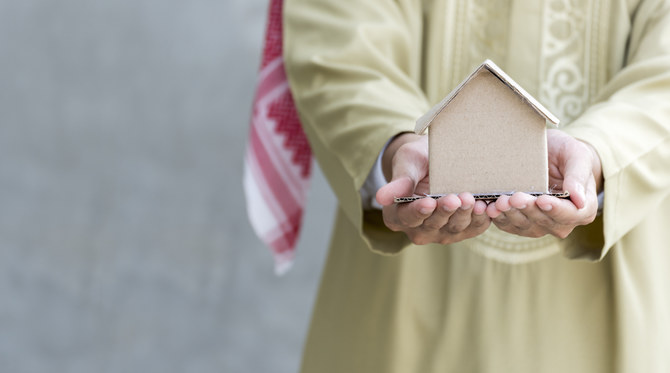
The newly-deposited amount also aligns with the Kingdom’s Vision 2030 goals, which aim to provide adequate housing opportunities for Saudi families. (Shutterstock)
Short Url
Updated 24 May 2023
Follow

Real Estate Development Fund deposits $250m in Sakani accounts to boost Saudi housing goals

RIYADH: More support has been handed out to help Saudi families own their homes after SR940 million ($250 million) were deposited into their Sakani accounts in May, the Saudi Press Agency reported.

The amount — paid out by Saudi Arabia’s Real Estate Development Fund in conjunction with the Ministry of Municipal and Rural Affairs and Housing — is in line with the fund’s continued efforts to support Sakani beneficiaries.

Sakani is a real estate initiative aimed at supporting Saudi citizens and families to own their first home.

The program seeks to raise the proportion of housing ownership for Saudi families to 70 percent by 2030.

The newly-deposited amount also aligns with the Kingdom’s Vision 2030 goals, which aim to provide adequate housing opportunities for Saudi families.  

The amount was allocated to support various housing support contracts, according to REDF CEO Mansour bin Madi.

The total amount deposited in the accounts of Sakani beneficiaries since the announcement of the transformation program back in June 2017 has exceeded SR48.4 billion, Bin Madi disclosed.

Earlier this week, REDF signed agreements with Bank Albilad and Saudi Awwal Bank with the aim of allowing more Saudi citizens the access to easy financing solutions to help them own homes.

The deals aim to diversify the housing support options for Sakani beneficiaries, one of which includes provision of up to SR150,000 on certain housing options such as ready-made units.

The two agreements were part of strategic partnerships planned with banks and real estate financing institutions, the CEO explained.

Ongoing initiatives implemented by the government, including access to finance and regulations standardizations, are reforming the housing market and improving access for Saudi families, according to a report from PwC Middle East. 

Saudi Arabia’s housing demand stood at 99,600 houses in 2021 and is expected to increase by more than 50 percent to reach 153,000 houses by 2030.


Implementation of the direct Gulf electrical interconnection project with the Sultanate of Oman begins

Updated 6 sec ago
Follow

Implementation of the direct Gulf electrical interconnection project with the Sultanate of Oman begins

RIYADH: The Gulf Cooperation Council Interconnection Authority has announced the commencement of implementing the direct interconnection project between its system and the Sultanate of Oman's network, marking a strategic step that reflects the evolution of Gulf integration pathways in the energy sector and the strengthening of regional infrastructure.

Undersecretary of the Ministry of Energy and Minerals and Chairman of the Board of the Gulf Cooperation Council Interconnection Authority, Mohsen Al-Hadhrami, confirmed that the direct electrical interconnection project with the Sultanate is not merely a technical expansion of an electricity network, but rather represents an extension of a long-term strategic vision laid down by Their Majesties and Highnesses, the leaders of the Gulf Cooperation Council.

He noted that this vision was approved when the Gulf electrical interconnection project was adopted as one of the pillars of Gulf integration in infrastructure, stemming from the leaders’ belief that energy security constitutes a fundamental pillar for the stability of states, the growth of their economies, and the sustainability of their development.

He pointed out that the Gulf electrical interconnection has proven, over more than two and a half decades, to be one of the most successful models of joint Gulf action, as it has contributed to enhancing the reliability of electricity networks and achieving significant economic savings for the GCC states.

Al-Hadhrami added that the direct interconnection project with the Sultanate of Oman enhances the depth of the Gulf grid, increases its operational flexibility, and embodies an advanced model of Gulf partnership in financing vital infrastructure projects.

For his part, Ahmed Al Ibrahim, CEO of the Gulf Cooperation Council Interconnection Authority, explained that the project is considered one of the largest expansion projects in the authority’s history.

It aims to enhance the capacity of the Gulf grid to accommodate the rapid growth in electricity demand, in light of the expansion of internal networks in GCC states, major changes in electrical loads, and increased electricity generation, in addition to supporting renewable energy projects and raising the readiness of networks to face emergency situations.

The direct interconnection project with the Sultanate of Oman is considered a strategic step to enhance the integration of Gulf and regional energy networks, increase the reliability and sustainability of electricity systems, and support the objectives of GCC states in energy transition and reducing carbon emissions, thereby reinforcing the position of the Gulf electrical interconnection as a global model for regional integration in the energy sector.