JERUSALEM: Prime Minister Benjamin Netanyahu’s government on Wednesday passed a new two-year budget, a step that could bring some stability to his coalition and clear the way for it to press ahead with its religious, pro-settlement agenda.
While the budget could buy Netanyahu some quiet inside his coalition of ultra-Orthodox and ultranationalist parties, Israel’s most hardline ever, it also was expected to deepen the divisions in Israel.
Critics have accused Netanyahu of increasing spending on his ultra-Orthodox allies for religious programs that have little benefit for the economy and broader society.
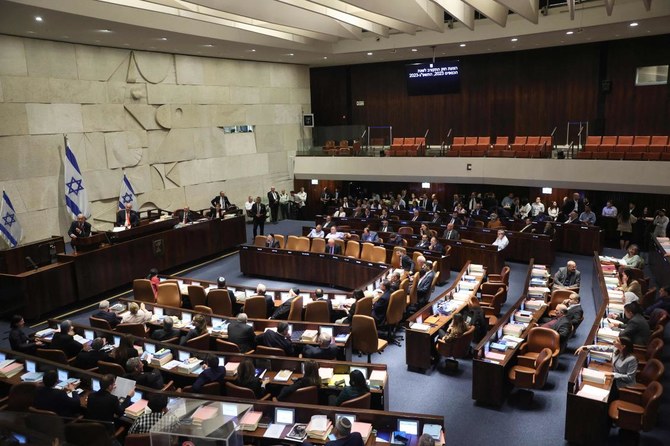
The vote dragged on overnight, with the budgets for 2023 and 2024 finally passing with a 64-56 vote in parliament after daybreak. It followed weeks of tense negotiations between Netanyahu and the parties in his coalition.
“We have received the tools, we’re rolling up our sleeves and going to work,” Finance Minister Bezalel Smotrich said after the vote.”
The new budget has been criticized for allocating nearly $4 billion in discretionary funds, much of it for ultra-Orthodox and pro-settler parties.
That will include increases in controversial stipends for ultra-Orthodox men to study full time in religious seminaries instead of working or serving in the military, which is compulsory for most secular males.
It also includes more money for ultra-Orthodox schools, which are widely criticized for not teaching students skills like math and English needed in the modern workplace.
The funds also include tens of millions of dollars for hardline pro-settler parties to promote pet projects through the ministries they control.
Finance Minister Bezalel Smotrich, a settler leader, has said he hopes to double the population of West Bank settlers in the coming years.
The government’s composition and agenda have deeply divided the country. On Tuesday, several thousand flag-waving Israelis protested outside the parliament building against the budget.
That smaller demonstration over the budget followed months of sustained mass protest against a series of proposals by Netanyahu’s government to overhaul the country’s judicial system while he is on trial for corruption.
Proponents say the measures are needed to rein in an overzealous Supreme Court, but critics say the plan would destroy the country’s system of checks and balances and compromise Israeli democracy.
That plan has raised concerns overseas but is now on hold. Now that the budget has passed, however, Netanyahu may face renewed pressure from his allies to bring it back before parliament.
Following the budget vote, Netanyahu told Israel’s Channel 14 that it was the “dawn of a new day” and said that the judicial overhaul plan would be revived.


![]()

Israel: Netanyahu, allies pass new budget with sweeping grants for settlements, ultra-Orthodox
Short Url
https://arab.news/narjz
Israel: Netanyahu, allies pass new budget with sweeping grants for settlements, ultra-Orthodox
- Critics have accused Benjamin Netanyahu of increasing spending on his ultra-Orthodox allies for religious programs that have little benefit for the economy and broader society


Latest updates


© 2026 SAUDI RESEARCH & PUBLISHING COMPANY, All Rights Reserved And subject to Terms of Use Agreement.