RIYADH: The Arab world is celebrating a historic moment after three Arab astronauts were united in space for the first time, with Emirati astronaut Sultan Al-Neyadi welcoming Saudi astronauts Rayyanah Barnawi and Ali Alqarni to the International Space Station.
“Following in Prince Sultan bin Salman’s pioneering footsteps, three Arab astronauts will be in space together,” tweeted Al-Neyadi.
The Axiom Mission 2, or Ax-2, journeyed to the ISS in the SpaceX Dragon Freedom, which successfully docked on the space-facing port at about 4.12 p.m. KSA time. The Ax-2 mission set a new record for transit time from lift-off to soft capture at 15 hours, 35 minutes. It was the most efficient and fastest transit to the ISS from Launch pad 39A at NASA’s Kennedy Space Center in Florida.

In the hours before reaching the ISS, while in orbit, the Saudi astronauts greeted the Kingdom from space.
“We are here feeling microgravity thanks to our Kingdom of Saudi Arabia, and the leaders, King Salman, and the visionary Crown Prince Mohammed bin Salman, for their support in this mission,” said Barnawi.
She added: “To the people around the world, the future is very bright, and I would like you to dream big. Believe in yourself and in humanity.”
Alqarni shared his gratitude to King Salman and the crown prince for their “never-ending empowerment, support and trust.”
He added: “This moment is historic, not just for me, but for every Saudi. I couldn’t have done it without the support, love and trust from all of you guys.”
HIGHLIGHTS
• The Ax-2 is a planned 10-day mission that includes eight days on the International Space Station, one day for ascending and docking and one day for undocking and descent.
• The Ax-2 set a new record for transit time to the ISS from lift-off to soft capture at 15 hours, 35 minutes.
• The crew of the second fully private mission will witness 16 sunrises and sunsets a day aboard the ISS.
The Ax-2 launch took place slightly after midnight in the Kingdom, and Saudis around the country gathered to witness history in the making. Many tuned in to the livestream to witness the docking and the welcoming of the Saudi astronauts into the ISS.
The monumental flight of Saudis into space reflects the ambitions of the nation and has inspired the next generation to take giant leaps toward space travel.
“As our Crown Prince Mohammed bin Salman said, ‘the sky is the limit’ for Saudi society’s ambitions. Today, we are literally living in this moment,” said Prince Mansour bin Saad Al-Saud, assistant secretary-general at the King Faisal Foundation.
“As the first Saudi woman in space, our good wishes and prayers are with her and astronaut Ali Al-Qarni. I wish to congratulate Al-Faisal University for the historical achievement of its alumnus astornaunt Rayyana being the first Saudi woman to head to space, this is just the part of our extraordinary journey with young Saudi leaders,” he added.
Amal Shuqair, the deputy minister for scholarships at the ministry of education, was present during the Ax-2 mission launch.
The Saudi delegation included Princess Reema bint Bandar, the Kingdom’s ambassador to the US, and Abdullah bin Amer Al-Swaha, the chairman of the board of directors of the Saudi Space Commission.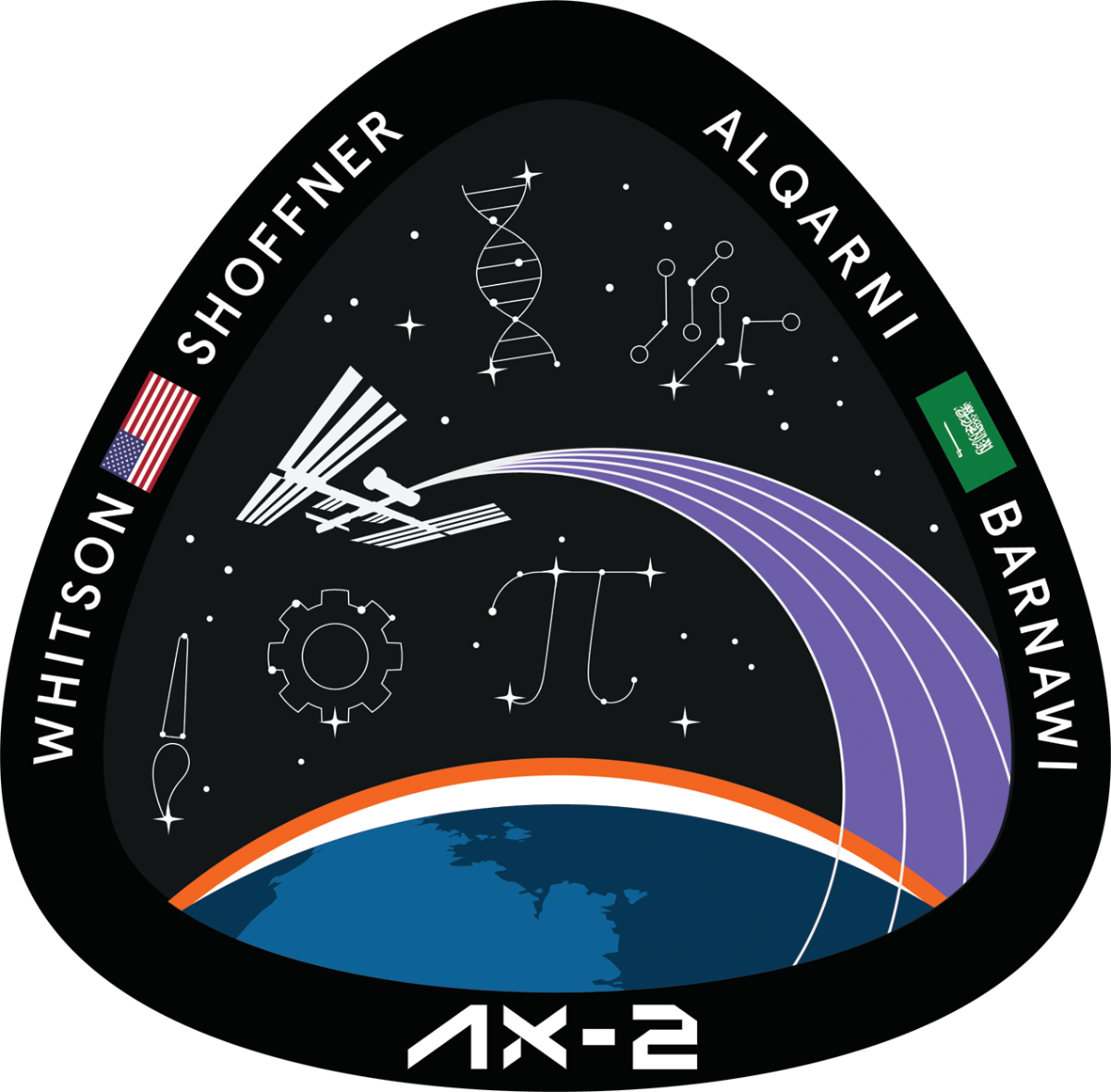
“I feel like we all shared the same feeling of being proud of them and of this mission. We were the talk of the town,” said Shuqair.
She added: “All the Saudi students watching the launch were very eager to take in the footsteps of the two Saudi astronauts.”
The families of the two Saudi astronauts were also present at the International Space Station in Florida, bidding farewell to them ahead of the launch.
In a Facebook post, Ahmed Barnawi, Rayyanah’s younger brother, shared his feelings on the launch of the Saudi mission.
“The excitement, pride, and happiness is overwhelming. Big sister is taking more than just a step, further than just a leap, she’s soaring ... into space,” said Ahmed Barnawi.
The Saudi astronauts, a day after they blasted off to space, have become heroes and role models for young Saudis, including Anmar Al-Asiri, who shared his joy and excitement at the Saudi space mission.
In a video uploaded by Anmar’s father, Hossam, on Twitter, Anmar greeted the Saudi astronauts and proudly showed them his DIY space rocket.
In celebration of the Saudi Space mission, Ithra in Dhahran was lit in blue to mark the historic occasion.
In the follow-up to the launch, the commission organized three major Saudi Toward Space exhibitions in Riyadh, Jeddah and Dhahran. The exhibitions and their accompanying attractions will run until June 2.
Targeted at youth, the exhibitions will highlight the country’s research contributions and scientific impact in the sector.
The immersive and interactive space exhibition in Riyadh is being held at the King Abdullah Financial District. It consists of three main zones; the exhibition zone, with several large screens, installations, VR experiences, smart screens and guides on the ground; a zone showcasing live experiments by experts in the field; and a zone featuring food vendors and areas to relax.
The exhibition in Riyadh also held a private countdown viewing party for select guests to witness the launch live.
While awaiting the countdown, the convention center provided interactive programming to keep children engaged.
Nourah bint Khalid Al-Saud brought her 12-year-old son, Bandar, and 8-year-old son, Mohammed, to the launch viewing party.
Bandar enjoyed exploring the spaceship journey on display and inspecting the spacesuits.
“I learned today about who is going to space and when they are going, and that they’ll be testing everything and doing experiments,” he told Arab News.
Mohammed was bursting with eager energy and reflective wonder. He had been fully transfixed on all things space, and was excited to witness history being made in real-time.
“It’s the first time a female has been to space from our country, so it’s exciting,” he told Arab News.
The Ax-2 mission crew will witness 16 sunrises and sunsets a day on the ISS. The ISS international laboratory has supported several scientific discoveries, publications and historic breakthroughs.
During their time on the ISS, the Saudi astronauts will conduct 14 experiments, including research on inflammatory diseases, intercranial pressure and monitoring changes in the optic nerve. They will also undertake an artificial rain experiment which simulates the cloud seeding process used in the Kingdom and other countries to increase precipitation rates.
The Ax-2 is a planned 10-day mission that includes eight days on the ISS, one day for ascending and docking and one day for undocking and descent. The mission marks the second fully private mission to the ISS.