

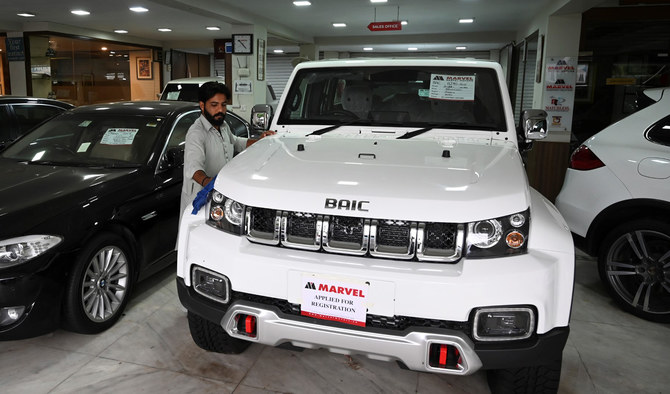

ISLAMABAD: Pakistan's automotive industry has laid off thousands of employees in recent months as the sale of vehicles and spare parts has declined most due to a government ban on the import of raw materials, a massive depreciation of the rupee and soaring inflation, industry officials said on Monday.
Pakistan is facing its most daunting economic crisis to date, with foreign exchange reserves held by the central bank falling to $4 billion, barely enough to cover three weeks of imports, and its national currency plummeting to historic lows against the US dollar. The South Asian country also imposed restrictions on the import of raw materials last year to prevent the outflow of US dollars from Pakistan, leading to a sharp decline in industrial output and causing layoffs and unemployment. Amid the worsening dollar crunch, commercial banks also stopped opening letters of credit (LCs), leaving importers in a limbo to arrange the greenback for already placed orders.
Inflation meanwhile soared to 36.4 percent in April, the highest in the country since 1964.
“We have retrenched thousands of workers in recent months as our production has virtually come to a halt," Munir Karim Bana, chairman of the Pakistan Association of Automotive Parts and Accessories Manufacturers (PAAPAM), told Arab News. "There is no buyer now as auto manufacturers have shut down their plants."
Auto parts' manufacturers were paying demurrage, a charge payable to the owner of a chartered ship on failure to load or discharge the ship within the time agreed, Bana said, as raw materials worth billions of rupees were stuck at the Karachi port.
PAAPAM supplies around 90 percent of local parts of vehicles to the auto industry.
“We have been paying interests on our loans from the banks, our material is getting devalued but there is nobody to listen to our grievances,” Bana said.
With production units closed, income streams were drying up, he added.
“We were profitable and paying taxes to the state as all our sales are documented and tax paid,” he said. “But we are bankrupt now, and there is hardly any chance of revival of our industry in the coming years.”
Rana Ihsan Afzal, the coordinator to Prime Minister Shehbaz Sharif on commerce and industry, said the automobile industry in Pakistan was import dependent and dollar intensive, "so we may not be able to run it at its full efficiency until revival of the IMF bailout program.”
A staff-level agreement on the ninth review of an IMF bailout deal signed in 2019 has been delayed since November.
“We have to protect our foreign exchange reserves at this stage by keeping a check on the import of the raw material for the industry,” Afzal said.
Commenting on the decline in sales and the mass layoffs, the PM's coordinator called it "unfortunate," while assuring that the government was "working round the clock to revive the economy.”
“Each new day is better than the last,” the official said. “Even now we are ensuring the minimal sustainability of the industry ... This is a temporary phase in which we have to stick to some import restrictions for the automotive industry, but when our reserves build up, we will be seeing a boom in the auto industry again.”
Meanwhile, the sale of vehicles has declined around 70 percent in one year while some manufacturing plants have remained shut for several months now, Abdul Waheed, a spokesperson for Pakistan Automotive Manufacturers Association, told Arab News.
“We have non-production days as cars manufacturing plants remain shut due to multiple reasons including inflation, decrease on sales and ban on imports ... Vehicle prices have shot up due to rapid rupee devaluation and this led to a significant reduction in demand,” he said.
Waheed added that companies were paying their staff despite manufacturing plants going through temporary closures.
“The future seems to be bleak in terms of job opportunities in the auto sector," Waheed said.
“The current political and economic environment in Pakistan doesn’t favor industrial production as the consumers' backbone has broken with soaring inflation and rupee devaluation,” he added.


