ABU DHABI: The UAE is hosting the region’s first Organ Transplantation for Cancer Patients conference, with 1,500 specialists arriving in Abu Dhabi to attend the event.
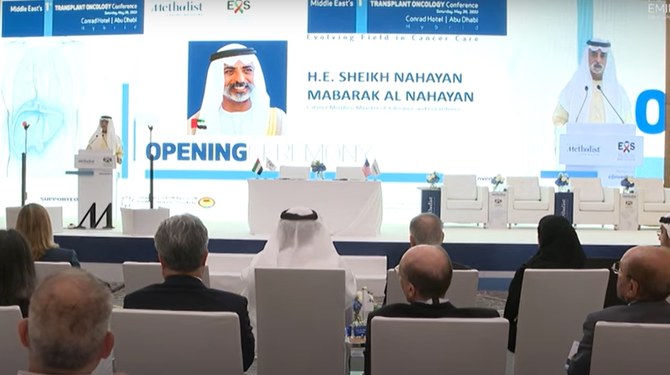
The Emirates Oncology Society (EOS), in cooperation with Houston Methodist Global Health Services, is organizing the conference under the patronage of Sheikh Nahyan bin Mubarak, the UAE’s minister of tolerance and coexistence, in Abu Dhabi.
Emirates News Agency reported that the event is drawing specialists in the fields of oncology, cancer and organ transplantation from the UAE, Middle East and worldwide to the Emirati capital, which has become a leading medical tourism destination.
Addressing the attendees, some of whom are attending virtually, Sheikh Nahyan said: “This distinguished conference is being held for the first time in the Middle East … it brings together leading regional and international experts in cancer prevention, examination, diagnosis and treatment, to identify the challenges facing successful treatment of cancer, and to discover solutions and innovative actions that will enhance health care.”
Attendees from major countries, including the US, UK and Saudi Arabia, presented clinical experiences and the latest therapeutic innovations, while the conference hosted 24 panel sessions and discussions on more than 50 research papers.
Sheikh Nahyan said that medical industry events promote research and the exchange of knowledge, boosting education in the UAE and the wider region.
He added that organ transplantation stands as a promising method for treating cancer patients, especially those with liver cancer. The method has shown great potential around the world in prolonging the lives of patients and easing pain, he said.
The conference aims to promote organ transplantation for cancer patients as a new medical specialty worldwide.
Conference chair and EOS President Prof. Humaid Al-Shamsi said: “We seek to provide all advanced and necessary treatments and reduce patients’ need for travel and treatment abroad.
“The presence of many experts in the fields of oncology and organ transplantation helped to broaden their knowledge and familiarize them with the most recent treatment options being used around the world in order to improve their application and help lower infection rates.”


![]()

UAE hosts region-first medical event on organ transplants for cancer patients
Short Url
https://arab.news/bubnr
UAE hosts region-first medical event on organ transplants for cancer patients
- Emirates Oncology Society president hails worldwide health innovations
- Landmark conference to include 24 panel sessions, discussions on over 50 research papers


Latest updates


Recommended


© 2026 SAUDI RESEARCH & PUBLISHING COMPANY, All Rights Reserved And subject to Terms of Use Agreement.