

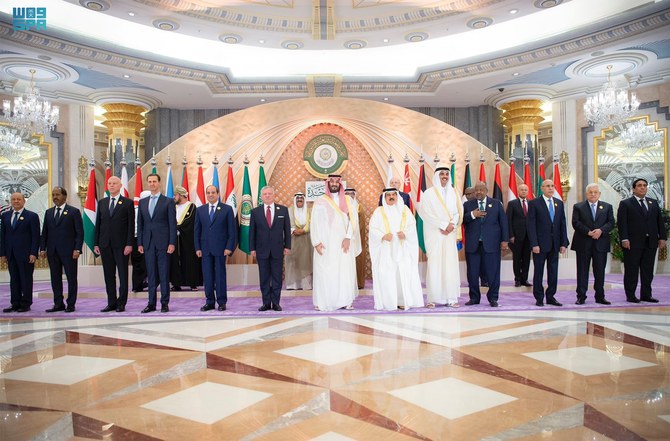
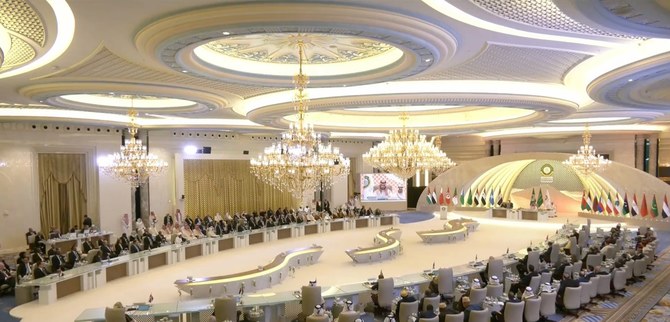
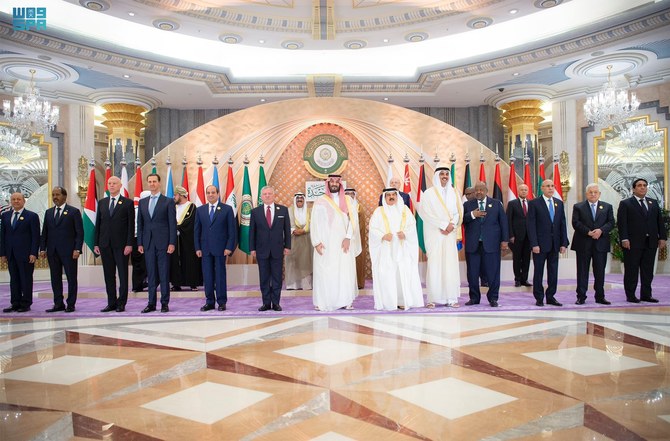

JEDDAH: Saudi Arabia’s Crown Prince Mohammed bin Salman told the Arab League Summit on Friday that they must not allow the region to turn into a conflict zone, but reassured the world that “world peace” was near.
The Kingdom hosted the summit in which Syrian President Bashar Assad was welcomed back after a 12-year suspension and Ukrainian President Volodymyr Zelensky made a surprise visit to rally support for his country.
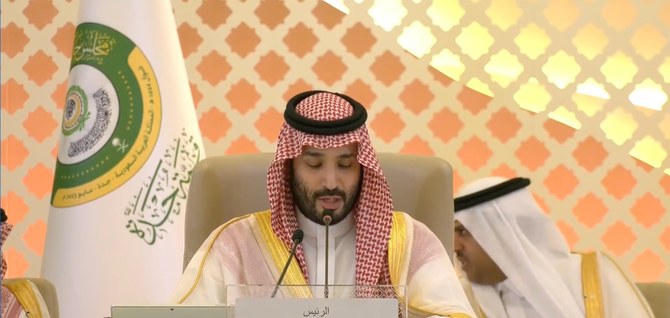
“We assure friendly countries in the East and the West that we are moving forward in peace. We will not allow our region to turn into a zone of conflict,” the crown prince said.
“It is enough for us, with turning the page of the past, to remember the painful years of conflicts that the region lived through, it is enough for us to have conflicts that the peoples of the region suffered from and because of which development was faltered in the region,” he added.
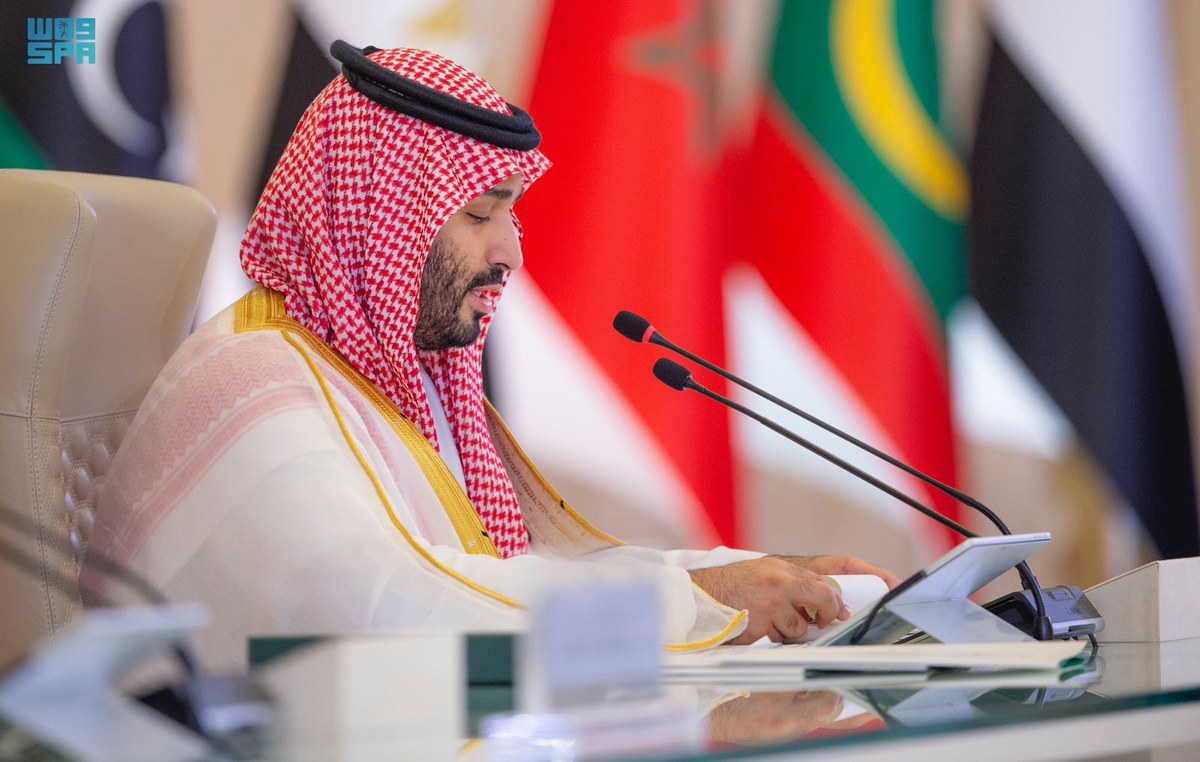
Crown Prince Mohammed bin Salman speaking at the Arab League Summit in Jeddah. (SPA)
And on Syria the crown prince said: “We hope that Syria’s return to the Arab League will mark an end to its crisis.”
The crown prince emphasized that the Palestinian cause was, and still is, the pivotal issue for all Arabs.
He also expressed hope that dialogue would lead to a resolution of the crisis in Sudan. “Saudi Arabia is welcoming the signing of the Jeddah Declaration by the two parties involved in the conflict in Sudan,” he said.
The outgoing chairman of the Arab League has called on the world to bring the Israeli settlement policy to an end and he added: “The Palestinian cause was and still is the central issue of the Arabs.”
Ukranian President Volodymyr Zelensky – who had arrived in Jeddah a short time before – told delegates his country was in a state of war – not just a conflict.
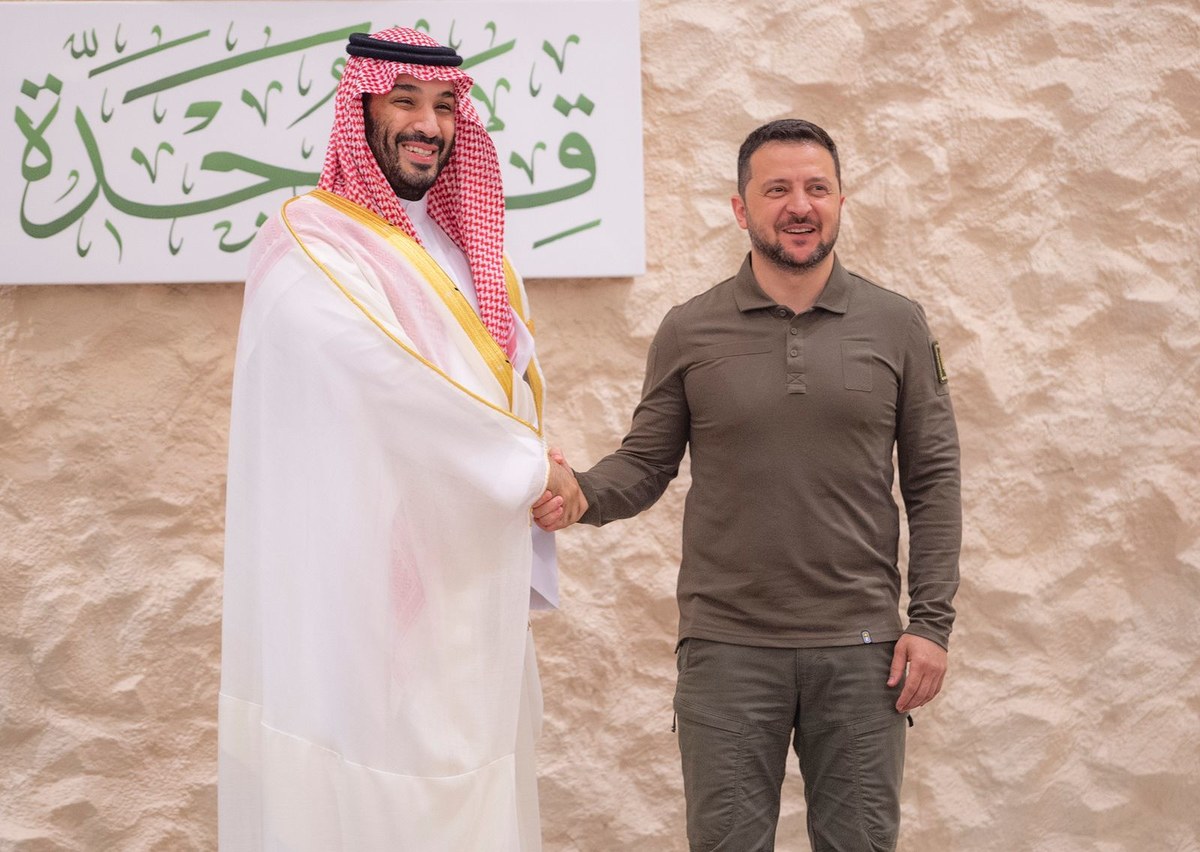
Ukranian President Volodymyr Zelensky with Crown Prince Mohammed bin Salman. (SPA)
He also said he appreciated the Saudi mediation for the release of prisoners of war last year.
The crown prince said: “We reaffirm the Kingdom’s position supportive to everything that contributes to reducing the intensity of the crisis in Ukraine, and not to allow further worsening of the humanitarian situation there, Saudi Arabia is ready to continue mediation efforts between the Russian Federation and Ukraine.”
Also on Friday, Russian President Vladimir Putin sent a cable to the Arab League saying his country would continue to provide all possible assistance to settle the Palestinian-Israeli conflict.
He also said Moscow intended to expand its multifaceted cooperation with Arab countries, and remained keen to support efforts to resolve the crises in Sudan, Libya and Yemen.
In his opening remarks of the summit outgoing Arab League chairman Algerian prime minister Aymen Benabderrahmane, praised Saudi Arabia for hosting the event.
He added that the world was going through increased polarization with an energy crisis and face threats to food security.
He said all efforts to solve the ongoing crisis in Yemen would be appreciated.
Jordan’s ruler King Abdullah II told the summit the system of joint Arab action required the cooperation between the countries to be strengthened.
And he added: “A fair and comprehensive peace will only be achieved through the establishment of an independent Palestinian state.
King Abdullah said the crisis in Syria had come at a high price. “We welcome its return to the Arab League,” he added, addressing the Syrians.
Egyptian president Abdel Fattah El-Sisi said countries were going through a harsh period.
“Preserving the national institutions of our countries is necessary and vital,” he said.
He said Egypt was continuing in its efforts to stabilize Gaza, and he affirmed the need to establish a Palestinian state to achieve regional peace.
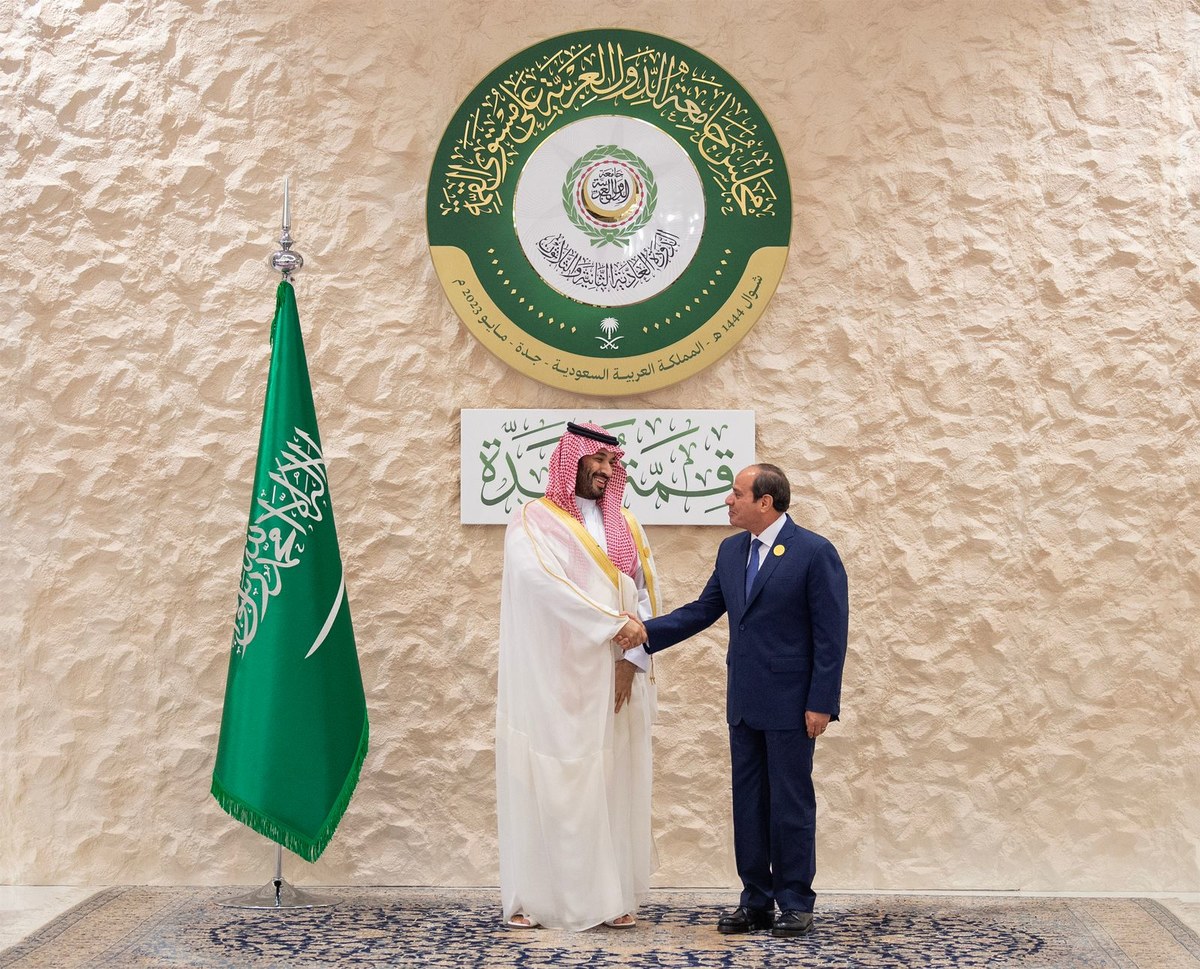
Egyptian president Abdel Fattah El-Sisi welcomed to the summit by Crown Prince Mohammed bin Salman. (SPA)
Palestine’s President Mahmoud Abbas called on the international community to “provide protection to the Palestinian people,” and to “resort to all international courts to restore our rights.”
But he thanked his Arab neighbors for their support.
“We commend the firm positions of Arab leaders towards the Palestinian cause.”
Tunisian President Kais Saied condemned what he described as the international community’s inaction over Palestine.
“There must be an end to the violations against the Palestinian people and the international silence towards them,” he said.
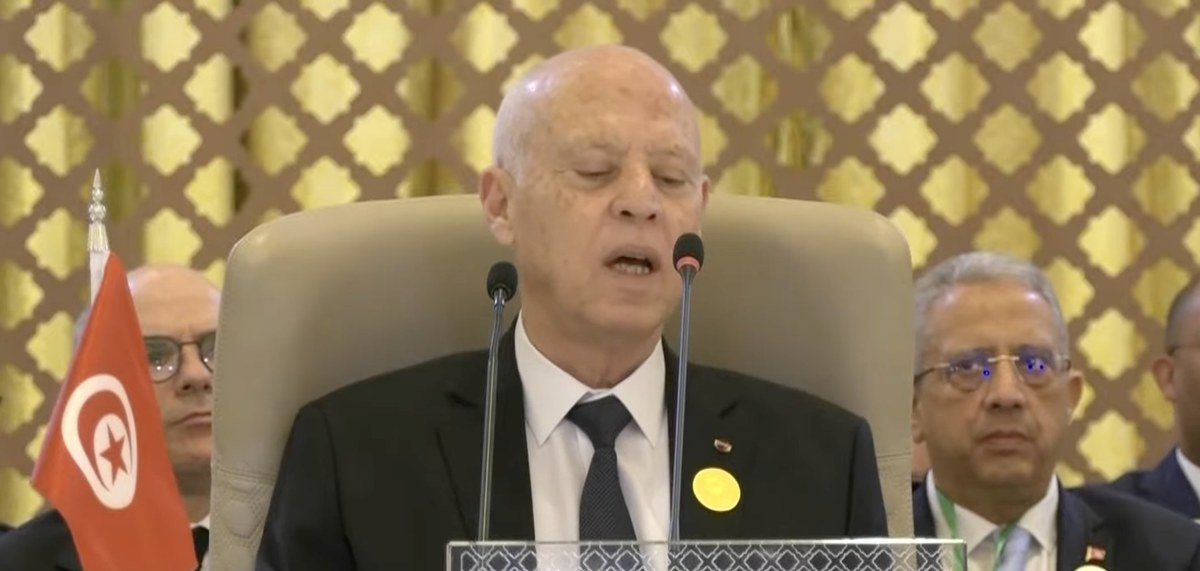
Tunisian President Kais Saied. (Screenshot)
Syrian President Bashar Assad thanked Saudi Arabia for promoting the reconciliation in the region in his first speech to the Arab League in over a decade.
“We are facing a historic opportunity to sort out our situation without foreign intervention,” he said.
Without mentioning specific countries, he then went onto add: “We must prevent foreign interference in our affairs.”
Saudi Crown Prince Mohamed bin Salman had welcomed dignitaries through the afternoon for the start of the Arab League Summit in jeddah.
Representatives started arriving for meetings in the build up to the summit earlier in the week.
Among the most notable arrivals for the main meeting was Syrian President Basha Assad who was greeted by the crown prince before the pair shook hands and then posed for a photograph.
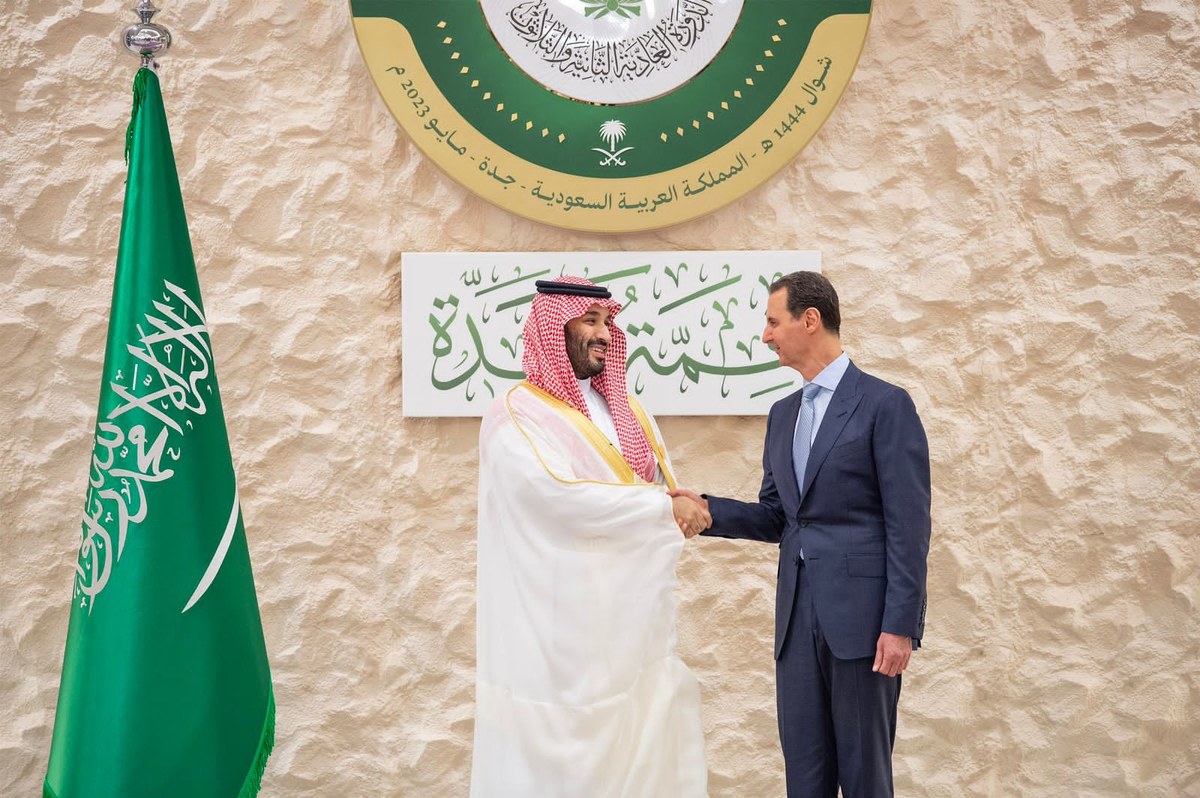
Syrian president Bashar Assad with Crown Prince Mohammed bin Salman. (SPA)
It's the first time in more than a decade that Assad was excluded from the alliance.
A short time before the opening of the summit, images were transmitted around the globe of Ukrainian president Volodymyr Zelensky as he arrived for what he described as a historic visit to build relations with Arab nations.
Qatar's Emir Sheikh Tamim bin Hamad Al-Thani was the first Arab leader to leave the summit on Friday afternoon, as others began returning home in the evening.


