Saudi Arabia to attract huge investments as NCP inks deal with top Chinese bank

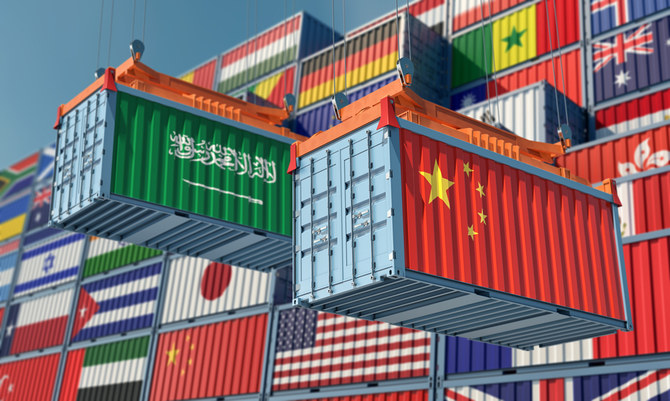
The current pipeline includes over $50 billion in investments, with an additional 300 projects under evaluation, indicating further growth potential. (Shutterstock)
Short Url
Updated 17 May 2023
Follow

Saudi Arabia to attract huge investments as NCP inks deal with top Chinese bank

RIYADH: Saudi Arabia can expect a boost in private investments from prominent Chinese investors following a recent agreement between the government’s privatization arm and a top bank based in Beijing. 

The National Center for Privatization and PPP signed a collaboration agreement with the Industrial and Commercial Bank of China, the largest bank in the world with total assets of $5 trillion, 8 million corporate clients and 650 million retail customers. 

The Kingdom’s privatization authority will leverage the extensive client base of the bank to woo investors keen on investing in the growth story of the Saudi private sector. 

The agreement will also facilitate market surveys, financial advisory services, and local and international events to engage with clients and potential investors eyeing opportunities in the Saudi private sector. 

The deal was signed by Hani Al-Saigh, NCP’s vice president for strategic marketing and knowledge management, and ICBC General Manager Jing Lin Gu. 

NCP CEO Mohannad bin Basodan and ICBC chairman Chen Siqing attended the signing ceremony. 

Basodan emphasized that the bank’s support will significantly bolster NCP’s role in strengthening public-private partnerships, as such institutions play a pivotal role in the success of privatization in the Kingdom. 

He highlighted that this agreement marks the sixth collaboration signed with local and international banks to identify potential investors interested in NCP’s privatization opportunities. 

NCP recently announced the launch of its privatization and PPP pipeline, comprising 200 approved projects across 17 sectors, which aligns with the goals of Vision 2030 to increase the private sector’s contribution to the gross domestic product from 40 percent to 65 percent by 2030. 

The current pipeline includes over $50 billion in investments, with an additional 300 projects under evaluation, indicating further growth potential. 

Privatization is pivotal in Saudi Arabia’s Vision 2030 strategy, showcasing remarkable progress with the successful privatization of 30 projects over the past five years. This approach has also created significant opportunities for domestic and international investors to actively engage in the Kingdom’s flourishing economic sectors. 

Established in 1984, ICBC clocked over $209 billion in revenue in 2021. 


Arab food and beverage sector draws $22bn in foreign investment over 2 decades: Dhaman 

Updated 28 December 2025
Follow

Arab food and beverage sector draws $22bn in foreign investment over 2 decades: Dhaman 

JEDDAH: Foreign investors committed about $22 billion to the Arab region’s food and beverage sector over the past two decades, backing 516 projects that generated roughly 93,000 jobs, according to a new sectoral report. 

In its third food and beverage industry study for 2025, the Arab Investment and Export Credit Guarantee Corp., known as Dhaman, said the bulk of investment flowed to a handful of markets. Egypt, Saudi Arabia, the UAE, Morocco and Qatar attracted 421 projects — about 82 percent of the total — with capital expenditure exceeding $17 billion, or nearly four-fifths of overall investment. 

Projects in those five countries accounted for around 71,000 jobs, representing 76 percent of total employment created by foreign direct investment in the sector over the 2003–2024 period, the report said, according to figures carried by the Kuwait News Agency. 

“The US has been the region's top food and beverage investor over the past 22 years with 74 projects or 14 projects of the total, and Capex of approximately $4 billion or 18 percent of the total, creating more than 14,000 jobs,” KUNA reported. 

Investment was also concentrated among a small group of multinational players. The sector’s top 10 foreign investors accounted for roughly 15 percent of projects, 32 percent of capital expenditure and 29 percent of newly created jobs.  

Swiss food group Nestlé led in project count with 14 initiatives, while Ukrainian agribusiness firm NIBULON topped capital spending and job creation, investing $2 billion and generating around 6,000 jobs. 

At the inter-Arab investment level, the report noted that 12 Arab countries invested in 108 projects, accounting for about 21 percent of total FDI projects in the sector over the past 22 years. These initiatives, carried out by 65 companies, involved $6.5 billion in capital expenditure, representing 30 percent of total FDI, and generated nearly 28,000 jobs. 

The UAE led inter-Arab investments, accounting for 45 percent of total projects and 58 percent of total capital expenditure, the report added, according to KUNA. 

The report also noted that the UAE, Saudi Arabia, Egypt, and Qatar topped the Arab ranking as the most attractive countries for investment in the sector in 2024, followed by Oman, Bahrain, Algeria, Morocco, and Kuwait. 

Looking ahead, Dhaman expects consumer demand to continue rising. Food and non-alcoholic beverage sales across 16 Arab countries are projected to increase 8.6 percent to more than $430 billion by the end of 2025, equivalent to 4.2 percent of global sales, before exceeding $560 billion by 2029. 

Sales are expected to remain highly concentrated geographically, with Egypt, Saudi Arabia, Algeria, the UAE and Iraq accounting for about 77 percent of the regional total. By product category, meat and poultry are forecast to lead with sales of about $106 billion, followed by cereals, pasta and baked goods at roughly $63 billion. 

Average annual per capita spending on food and non-alcoholic beverages in the region is projected to rise 7.2 percent to more than $1,845 by the end of 2025, approaching the global average, and to reach about $2,255 by 2029. Household spending on these products is expected to represent 25.8 percent of total expenditure in 13 Arab countries, above the global average of 24.2 percent. 

Arab external trade in food and beverages grew more than 15 percent in 2024 to $195 billion, with exports rising 18 percent to $56 billion and imports increasing 14 percent to $139 billion. Brazil was the largest foreign supplier to the region, exporting $16.5 billion worth of products, while Saudi Arabia ranked as the top Arab exporter at $6.6 billion.