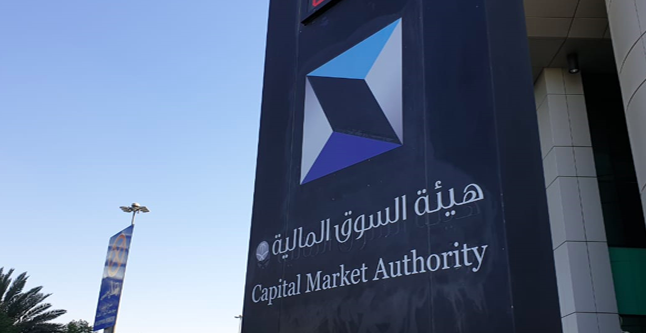

RIYADH: Saudi Arabia’s financial market led its counterparts in other G20 countries in 2022 in terms of shareholders’ rights and stock market capitalization as a percentage of gross domestic product, according to the Capital Market Authority.
The shareholder’s rights as a percentage of GDP give a sense of the influence that they have on the economy, while the stock market capitalization-GDP ratio indicates the size of the stock market in relation to the country’s economy.
In its annual report for 2022, the authority stated that the rate of public offerings in the Saudi capital market advanced to a new high, with a portion of 37 businesses’ shares offered for sale in the main and parallel markets for a total of SR40 billion ($10.6 billion).
Some 13 firms’ shares were registered for a direct listing on the parallel market in the same context.
Saudi’s capital market was dubbed “resilient” in February by Wassim Alkhatib, CEO of Lazard Investment Banking for the Middle East and North Africa, as he talked of the unprecedented global challenges that countries around the world had faced in 2022.
“The CMA is creating the potential required to provide a suitable and encouraging environment for the capital market system to positively reflect on the Kingdom’s economy,” Mohammed bin Abdullah Elkuwaiz, chairman of the CMA said in the report.
In terms of foreign ownership, the main market witnessed record net foreign investment levels in 2022, amounting to about SR184 billion.
By the end of 2022, foreign investors’ ownership value in the main market totaled SR347 billion, which represents 14 percent of the free float total value.
According to the regulator, since the Saudi market joined the MSCI Emerging Markets Index in 2019, the pace of growth in foreign investment last year was the highest.
The CMA approved three new operational regulations — Securities Exchanges and Depository Centers Regulations, Instructions on Direct Financing Investment Funds, and Instructions for Shariah Governance in Capital Market Institutions.
Additionally, the authority altered seven implementing regulations, rules, and guidelines.
Some 91 licenses were the subject of inspections, which were broken down into 53 cycle inspections and 38 cause inspections.
On the control level, thorough investigations into possible trading violations increased by 17.7 percent to 859 instances in 2022 from 730 cases in 2021, yielding 11 suspected cases and 152 control inquiries, the CMA reported.
Elkuwaiz emphasized that such accomplishments are the result of the hard work and dedication of all employees aiming to place the Kingdom in its rightful place and achieve the CMA’s strategic objectives.
These objectives include ranking the Saudi market as the leader in the Middle East and placing it among the top 10 capital markets globally, in line with the Kingdom’s Vision 2030.
Complaints received fell 15.7 percent to 12,118, with 11,354 settled and 512 referred to the Committee for the Resolution of Securities Disputes, while 252 are under review.
On the legal level, the total compensation ordered by the CRSD in its final rulings was SR1.75 billion, a rise of 377.7 percent from 2021.