CAIRO: Sudan’s military chief ordered the freezing of all bank accounts belonging to a rival paramilitary force, the latest step in a fight for control of the resource-rich nation.
The two sides have battled for weeks across Sudan, pushing the troubled country to the brink of all-out war.
The decree, issued on Sunday by Gen. Abdel Fattah Burhan, will target the official accounts of the Rapid Support Forces in Sudanese banks, as well as the accounts of all companies belonging to the group, the state news agency SUNA reported.
It remains unclear what immediate effect the freezing would have on the RSF and how Burhan’s orders are to be enforced. Over the past decade, the paramilitary force has amassed great wealth through the gradual acquisition of Sudanese financial institutions and gold reserves.
Burhan on Sunday replaced Sudan’s Central Bank governor. On Monday, he removed the country’s police chief and sacked two ambassadors at the Foreign Ministry. Burhan did not elaborate on his moves.
Since mid-April, the Sudanese army, led by Burhan, and the RSF, commanded by Mohamed Hamdan Dagalo, have been locked in a power struggle that has forced tens of thousands to flee to neighboring countries.
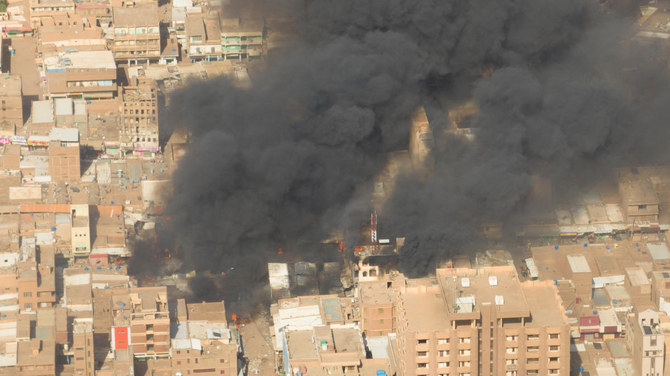
Chaos has taken over much of the country since the conflict broke out. The capital, Khartoum, has been reduced to an urban battlefield and the western Darfur region is rocked by deadly tribal clashes. The violence has also killed over 600 people, including many civilians, according to the World Health Organization.
A two-day outbreak of fighting in Geneina, the capital of West Darfur province, killed scores of people last week, said the Sudan Doctors’ Syndicate, a group that tracks civilian casualties. It said the fighting began when RSF fighters and militiamen entered the city on Friday and clashed with other armed groups and residents.
Meanwhile, explosions resounded in a southern neighborhood of Khartoum on Monday while videos posted online show a hospital in the East Nile area, a neighborhood just east of Khartoum, being bombed.
Human rights organizations have accused the RSF of looting and attacking civilians, and the military of indiscriminately bombing residential areas. The two sides agreed to several short cease-fires since the fighting started, but all were violated. Both have also traded blame and exchanged heated accusations of human rights abuses.
The Emergency Lawyers, a Sudanese legal group focusing on human rights cases, said two women were raped Sunday by armed men who stormed a women’s university in Omdruman, Khartoum’s twin city.
According to the lawyers, the attack took place inside a dormitory for teachers at Ahfad University, which falls within RSF-controlled territory. The news comes amid a string of alleged sexual assault incidents involving the paramilitary.
Last Thursday, the military and the RSF signed a pact in the Saudi city of Jeddah, promising safe passage for civilians fleeing the conflict and protection for humanitarian operations in the East African nation. International efforts — led by Saudi Arabia and the United States — are underway in an attempt to turn Thursday’s agreement into a lasting truce.


![]()

Sudan military chief freezes bank accounts of rival armed group in battle for control of the nation
Short Url
https://arab.news/89tuv
Sudan military chief freezes bank accounts of rival armed group in battle for control of the nation
- The two sides have battled for weeks across Sudan
- Burhan earlier replaced Sudan’s Central Bank governor


Latest updates


Recommended


© 2026 SAUDI RESEARCH & PUBLISHING COMPANY, All Rights Reserved And subject to Terms of Use Agreement.