

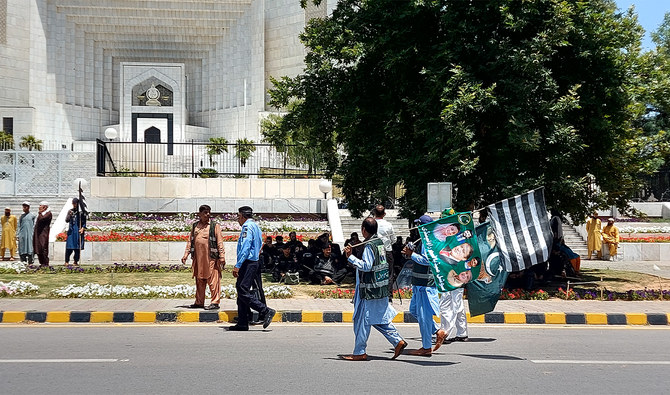

ISLAMABAD: Hundreds of supporters of the ruling coalition entered the Pakistani capital of Islamabad on Monday to stage a sit-in outside the Supreme Court, in a deepening rift between the government and the judiciary over provincial elections and “undue facilitation” to former prime minister Imran Khan.
The political crisis has simmered for months, with Khan attempting to disrupt the coalition government by dissolving two provincial legislatures he controlled and agitating for early elections across the South Asian nation.
The ruling alliance, the Pakistan Democratic Movement (PDM), last week announced it would hold a protest demonstration outside the apex court, in a latest sign of mounting tension between the government and the judiciary.
The tensed atmosphere further aggravated when the Supreme Court last week declared Khan’s arrest on corruption charges “illegal” and ordered his immediate release amid violent protests by his supporters.
Members of the ruling coalition have since launched a fresh salvo against Pakistan’s senior judges, accusing them of repeatedly coming to Khan’s aid.
“A peaceful protest sit-in will be organized by the PDM outside the Supreme Court tomorrow,” Maulana Fazlur Rehman, the PDM president, said on Twitter late Sunday.
“Caravans have departed from all over the country. The people will now make a decision in the people’s court.”

Supporters of Jamiat-ul-Ulama-i-Islam march as they participate in a rally in Islamabad, Pakistan, on May 15, 2023. (AFP)
He urged activists of the coalition parties to peacefully reach Islamabad, saying, “This is our country and it will also be protected by us.”
Television channels showed coalition supporters with trucks and other vehicles, which carried logistics for the sit-in, marching from Serena Chowk toward the Supreme Court building in Islamabad at noon.
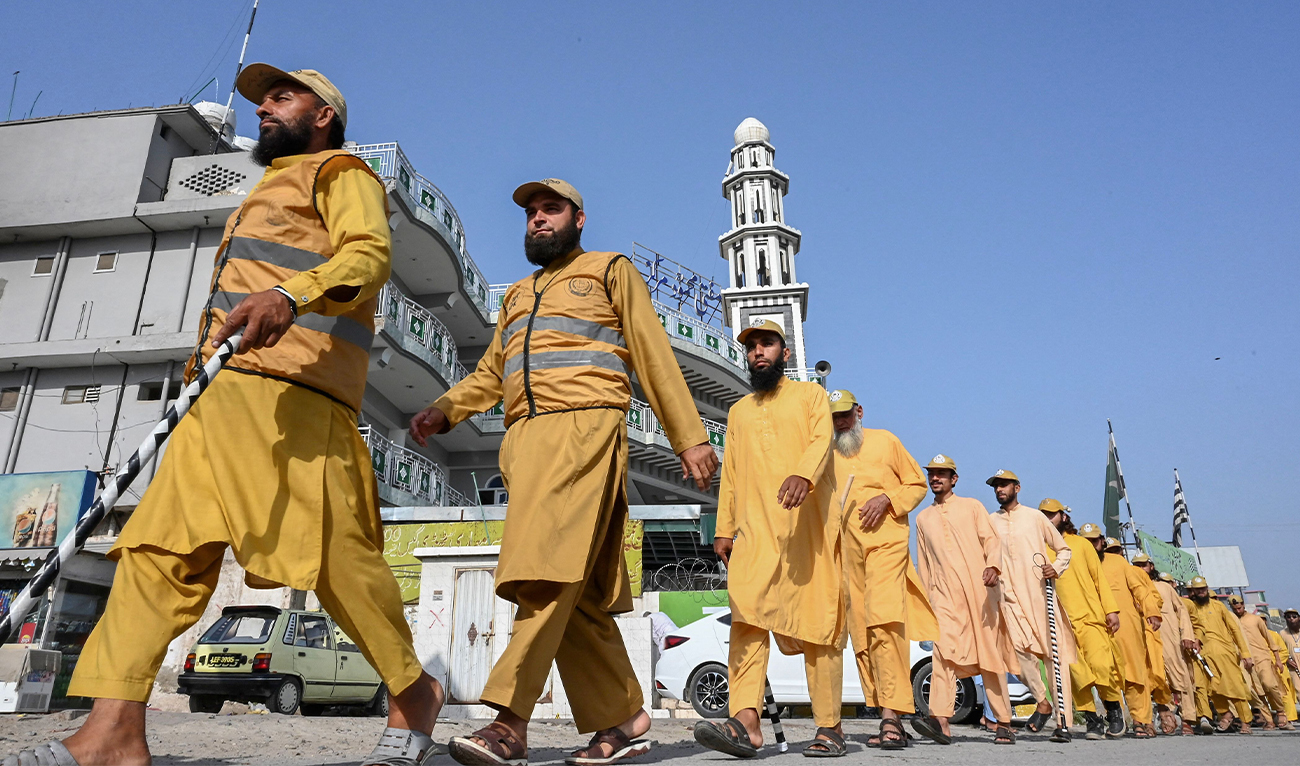
Supporters of Jamiat-ul-Ulama-i-Islam march as they participate in a rally in Islamabad, Pakistan, on May 15, 2023. (AFP)
The PDM’s call for protest coincides with the apex court’s hearing of a case relating to a delay in election in the Punjab province, which the court ordered to be held on May 14. Pakistan’s election regulator has asked the top court to review its order as the federal government, against the Supreme Court’s orders, has failed to provide Rs21 billion ($74 million) in funds and the required security to hold elections in Pakistan’s most populous province.
The political and constitutional crises gripped the country shortly after ex-premier Khan’s Pakistan Tehreek-e-Insaf (PTI) party dissolved provincial assemblies in the Punjab and Khyber Pakhtunkhwa provinces in January. The move was intended to force the government to announce snap national elections.

Supporters of Jamiat-ul-Ulama-i-Islam march as they participate in a rally in Islamabad, Pakistan, on May 15, 2023. (AFP)
PM Shehbaz Sharif’s government has repeatedly rejected Khan’s demand, saying polls for provincial assemblies and the National Assembly cannot be held on separately. Pakistan historically holds the provincial and national elections at the same time.
Irked by the top court’s decision to order polling on May 14, the PDM has accused Pakistan’s top judge of being biased against the government and has passed laws to curtail Chief Justice Umar Ata Bandial’s powers to take notice of cases and constitute benches in an individual capacity.
“The purpose of our protest is to convey to the Supreme Court judges that they should avoid granting undue facilitation to Imran Khan who is accused of corruption and corrupt practices,” Aslam Ghauri, a spokesperson for one of the coalition partners, the Jamiat Ulema-e-Islam-Fazl (JUI-F), told Arab News on Sunday.
Legal experts say the coalition parties want to mount pressure on the Supreme Court judges, especially the chief justice, to reconsider his judgment on elections in Punjab. They say the move is intended to preempt any action against the government and PM Sharif for defying the court’s directives.
“What message would it send to the international community if the sitting government would be protesting against a state institution, the country’s top court,” Justice (retired) Nasira Iqbal questioned, speaking to Arab News.
“They [the ruling alliance] just want to force the chief justice to refrain from any legal action against them for violating the constitution and the court’s order on Punjab elections,” she added.
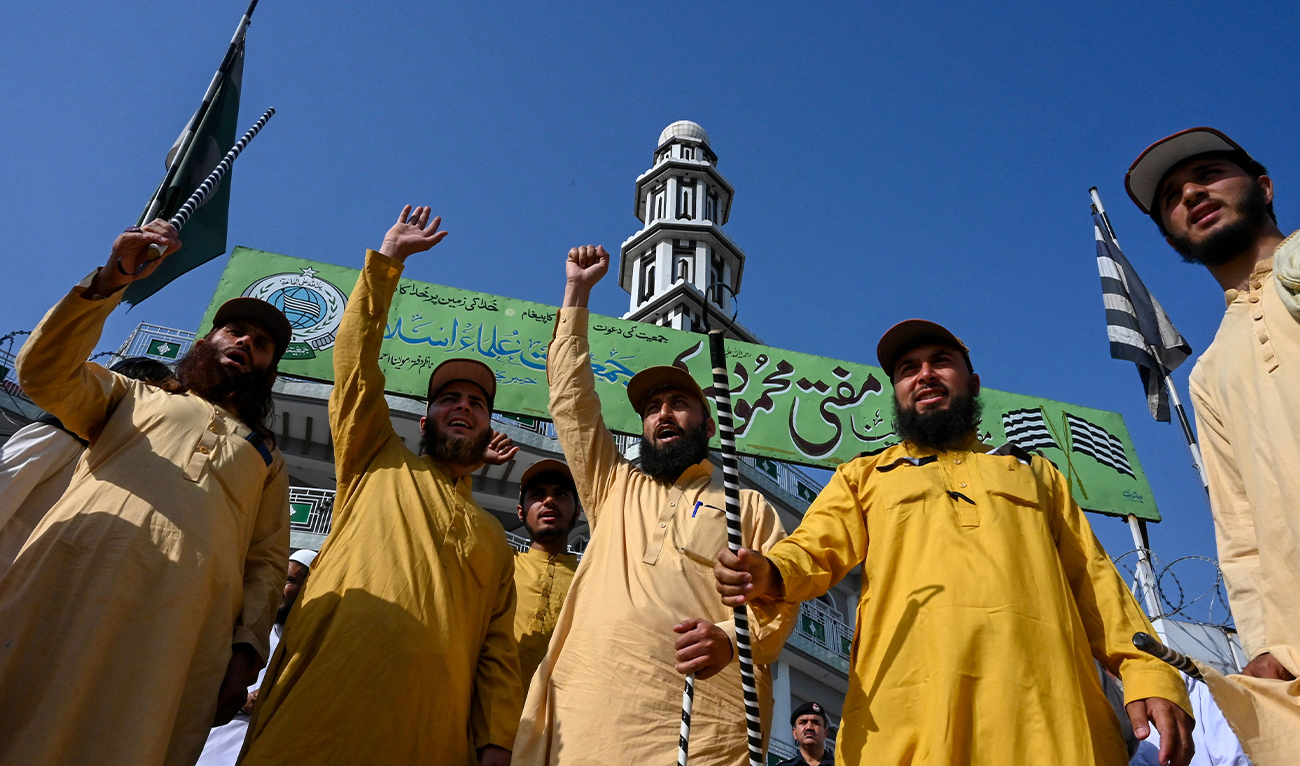
Supporters of Jamiat-ul-Ulama-i-Islam march as they participate in a rally in Islamabad, Pakistan, on May 15, 2023. (AFP)
Advocate Taimur Malik said it was “unprecedented” for a government to arrange a protest demonstration against the apex court on flimsy grounds.
“This will lead to further chaos and anarchy in the country as the government’s protest has got nothing to do with dispensation of justice or rule of law,” he told Arab News. “They should avoid it as it is a dangerous path to tread on.”


