Pakistan army slams ex-PM Khan for 'highly irresponsible' allegations against serving major general

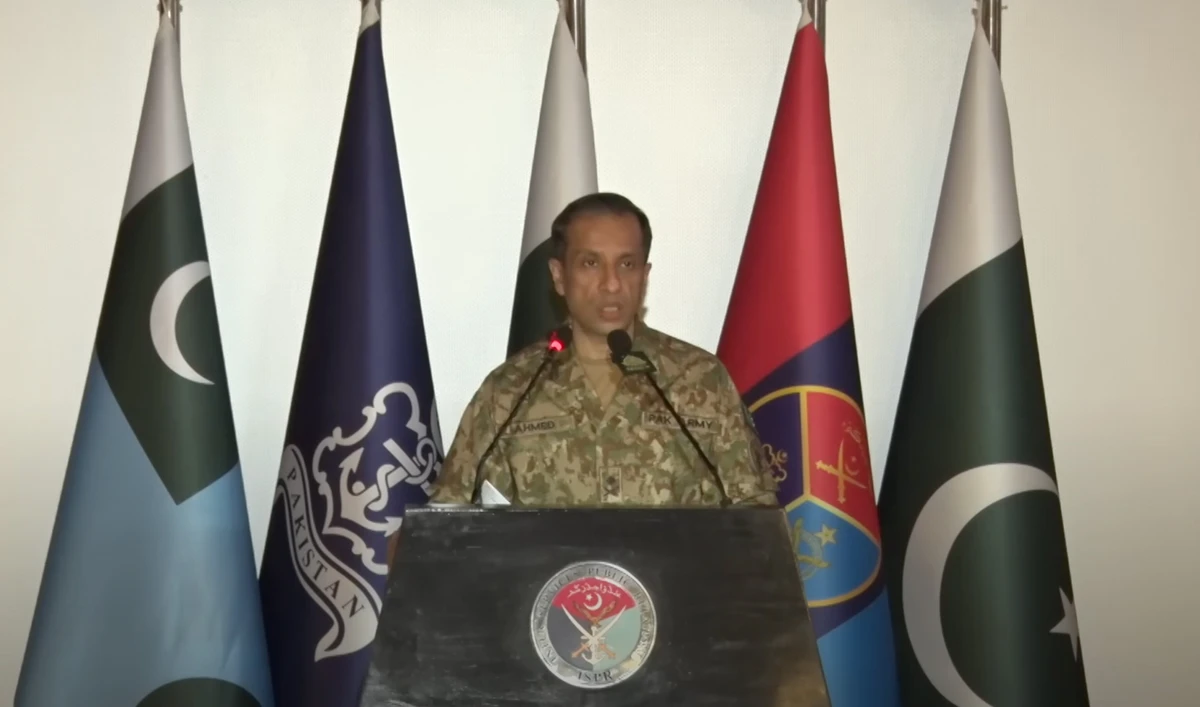
Director-General of Pakistan military's media wing, Ahmed Sharif Chaudhry, during a press conference is Rawalpindi on April 25, 2023. (Photo courtesy: ISPR/File)
Short Url
Updated 08 May 2023
Follow

Pakistan army slams ex-PM Khan for 'highly irresponsible' allegations against serving major general

  • Warns against taking legal action against Khan's "patently false and malafide statements and propaganda"
  • Khan says intelligence official Major-General Faisal Naseer was behind an apparent assassination attack against his life

ISLAMABAD: The Pakistan army on Monday slammed former Prime Minister Imran Khan for what it called "highly irresponsible and baseless allegations" against a serving senior military officer, warning him of legal action if he continued his "propaganda."

Khan, the chairman of the opposition Pakistan Tehreek-e-Insaf (PTI) party, has repeatedly said that Prime Minister Shehbaz Sharif, Interior Minister Rana Sanaullah and intelligence official Major-General Faisal Naseer were behind an apparent assassination attack against his life last year. In recent rallies, Khan has repeated the name of Naseer, saying he was plotting to kill him and also said he was behind the murder of a pro-Khan TV anchor, Arshad Sharif, shot dead in Nairobi last year in what Kenyan police have called a case of "mistaken identity."
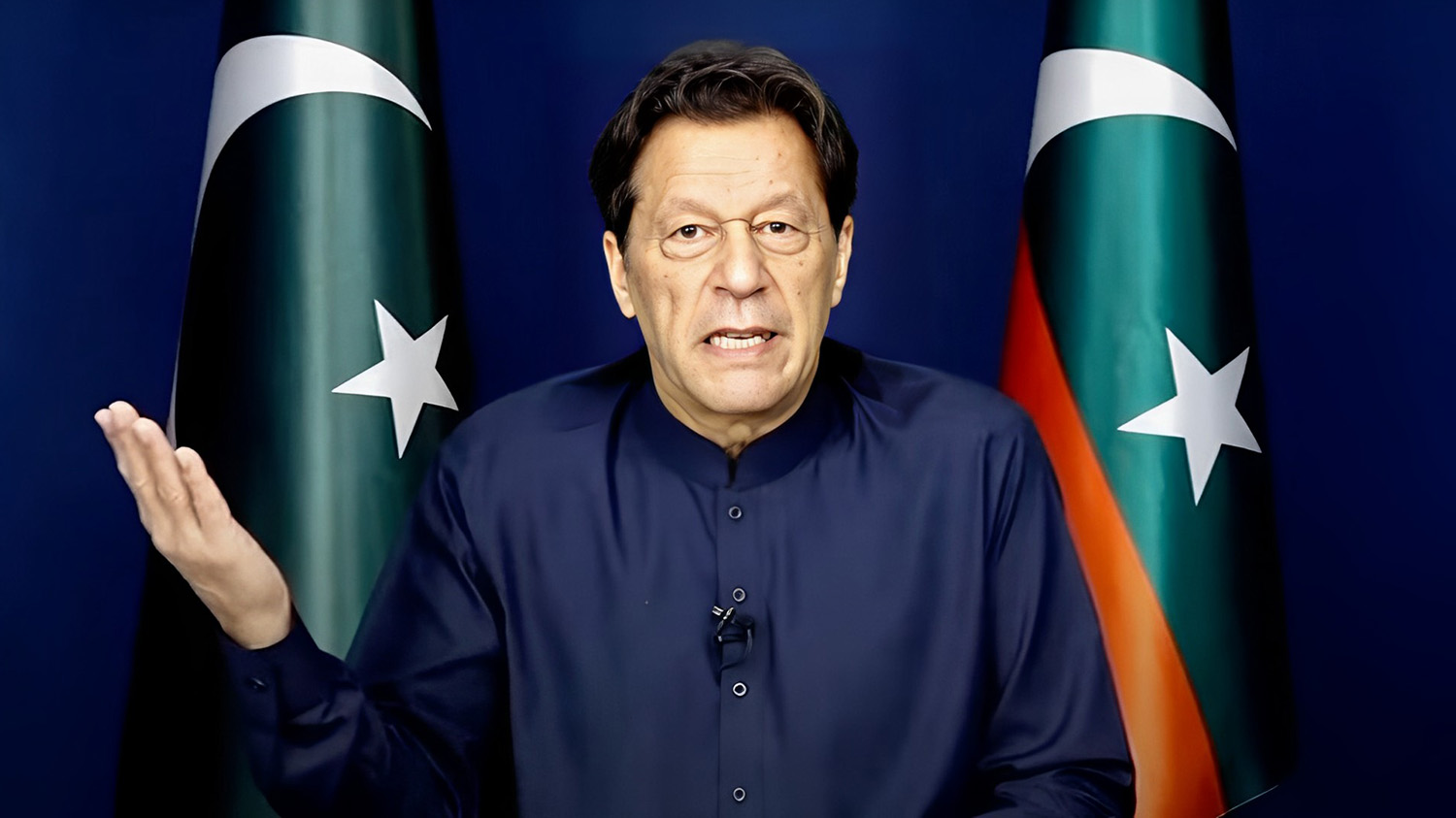


Pakistan's former prime minister Imran Khan addresses his supporters through a video link on May 5, 2023. (Photo courtesy: Pakistan Tehreek-e-Insaf)

"Chairman PTI has levelled highly irresponsible and baseless allegations against a serving senior military officer without any evidence," the military said in a statement. "These fabricated and malicious allegations are extremely unfortunate, deplorable and unacceptable."

"This has been a consistent pattern for last one year wherein military and intelligence agencies officials are targeted with insinuations and sensational propaganda for the furtherance of political objectives. We ask the political leader concerned to make a recourse to legal avenues and stop making false allegations."

The army said it reserved the right to "take legal course of action against patently false and malafide statements and propaganda."

Khan, who was ousted from the PM's office via a parliamentary no-trust vote in April 2022, has accused then army chief General Qamar Javed Bajwa of dismissing his government by colluding with current Prime Minister Shehbaz Sharif and his political allies. Khan came to power in a 2018 general election widely believed to have been rigged in his favour by the military - which both deny - but has since had a falling out with the army.

“Totally agree with ISPR [army media wing] that a legal recourse should be taken to resolve the allegations,” senior PTI leader Asad Umar said on Twitter in a caustic remark aimed at the fact that despite the PTI’s protestations, police have so far not named Naseer in the police FIR report in Khan’s assassination case.

“Imran khan has tried to do that by filing an FIR [police report] and approaching the supreme court.  The institution supporting that legal recourse would be a very positive step forward.”


Senior PTI leader Chaudhry Fawad Hussain said:

"ISPR has issued a shocking press release. If Imran Khan believes that any officer is involved in the murderous attack on him, he should be satisfied through an independent and transparent investigation that this is not the case. But by refusing to investigate the allegation and releasing such a press release, you [army] are telling that you are above the law in Pakistan. Such behavior is destructive for nations."




Pakistan urges equal application of international law, flags Indus treaty at UN debate

Updated 4 sec ago
Follow

Pakistan urges equal application of international law, flags Indus treaty at UN debate

  • Pakistani envoy says silence over violations of international law are fueling conflicts from South Asia to Gaza
  • He urges the UN secretary-general to use the Charter’s preventive tools more proactively to help avert conflicts

ISLAMABAD: Pakistan’s UN ambassador on Monday called for equal application of international law in resolving global conflicts, warning that India’s decision to hold the 1960 Indus Waters Treaty in abeyance and the unresolved dispute over Kashmir continued to threaten stability in South Asia.

Speaking at an open debate of the UN Security Council on “Leadership for Peace,” Ambassador Asim Iftikhar Ahmad said selective enforcement of international law and silence in the face of violations were fueling conflicts worldwide, undermining confidence in multilateral institutions.

His remarks come months after a brief but intense military escalation between India and Pakistan in May, following a gun attack on tourists in Indian-administered Kashmir. India blamed the attack on Pakistan, a charge Islamabad denied while calling for a transparent international probe.

The attack triggered a military standoff between the two South Asian nuclear neighbors and prompted New Delhi to suspend the World Bank-brokered Indus Waters Treaty, a move Pakistan says has no basis in international law and has described as “an act of war.”

“India’s unilateral suspension of the Indus Waters Treaty — a rare and enduring example of successful diplomacy — is yet another blatant breach of international obligations that undermines regional stability and endangers the lives and livelihoods of millions,” Ahmad told the council.

He said Jammu and Kashmir remained one of the oldest unresolved disputes on the Security Council’s agenda and required a just settlement in line with UN resolutions and the wishes of the Kashmiri people, a position India has long rejected.

Ahmad broadened his remarks to global conflicts, citing Gaza, Ukraine, Sudan and other crises, and said peace could not be sustained through “selective application of international law” or by sidelining the United Nations when violations occur.

The Pakistani envoy also referred to the Pact for the Future, a political declaration adopted by UN member states this year aimed at strengthening multilateral cooperation, accelerating progress toward the 2030 development goals and reforming global governance institutions.

While welcoming the pact, Ahmad warned that words alone would not deliver peace, pointing to widening development financing gaps, rising debt distress and climate shocks that he said were reversing development gains across much of the Global South.

He called for a stronger and more proactive role for the UN Secretary-General, including earlier use of preventive tools under the UN Charter, and urged the Security Council to demonstrate credibility through consistency, conflict prevention and greater respect for international court rulings.

“No nation can secure peace alone,” Ahmad said. “It is a collective endeavor, requiring leadership, cooperation and genuine multilateralism.”