Magrabi joins with top universities to train students; eyes more initiatives

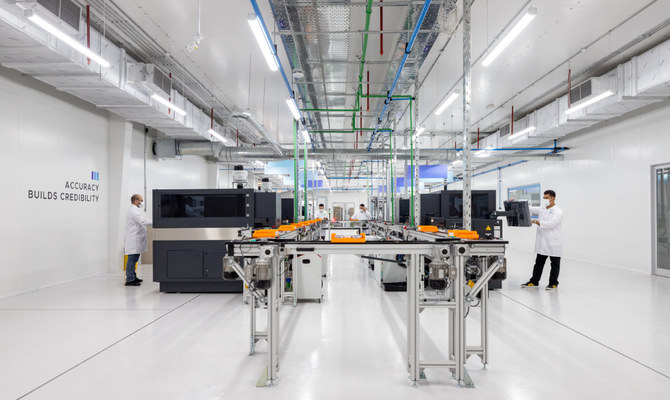
The partnership is not just about growing the business and expanding the company’s footprint, but also about taking social impact programs to foster local talent that will firmly establish Magrabi as a business group that the region looks up to. (Supplied)
Short Url
Updated 07 May 2023
Follow

Magrabi joins with top universities to train students; eyes more initiatives

  • Eyewear retailer is working on an internal Retail Academy across the Kingdom covering all its teams

RIYADH: After joining hands with two leading universities in Saudi Arabia — Umm Al-Qura and King Saud — to provide training facilities to students who are studying to become opticians, Magrabi Retail Group, the Middle East’s leading eyewear retailer, is eyeing more such initiatives, its CEO said.

Speaking in an exclusive interview with Arab News, Yasser Taher said Magrabi is working on the implementation of an internal Retail Academy across the Kingdom covering all its teams: optometrists, opticians, client advisors and managers.

“The Retail Academy covers all aspects of training and development around vision correction, technical know-how, client experience, product expertise, fashion and lifestyle, operational management and leadership.

“The Retail Academy will be in-house at Magrabi and it will be deployed across all the countries we are operating in,” Taher said.

The big picture

Commenting on the big picture behind the training programs Magrabi is participating in with Umm Al-Qura and King Saud universities, Taher said the company has taken on the responsibility as an industry leader to support the Saudi government to develop local talent. 

“We are doing what we can to equip students with the most advanced program to become professional opticians,” he explained. “We will continue to elevate the industry standards in Saudi with the most advanced technologies.” 
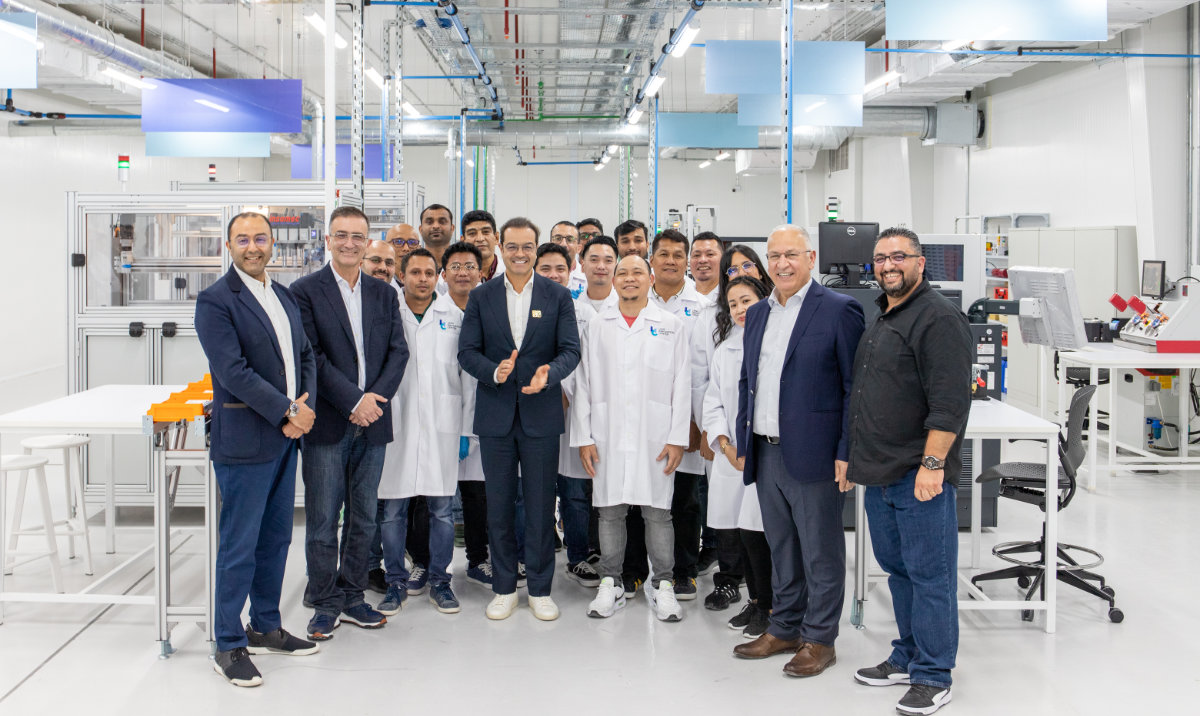
Talking of the key highlights of these training programs, Abdelazem ElGarawany, Saudi market vice president, Magrabi Retail Group, told Arab News: “These programs are focusing on technical information and knowledge which is the core of the optical field in addition to soft skills and marketing customized to fit the specialized medical field.”

With regard to the thought process behind partnering with the two universities ElGarawany said: “Umm Al-Qura and King Saud universities are two of the top universities in the region, and the objective was to have solid and long-term partnerships with entities that can provide a huge value to the industry alongside our expertise in the optical field.

“We depend on scientific research about the market need and what is the required know-how for this specialized industry which led us to partnering with King Saud and Umm Al-Qura universities.”

He further explained that this partnership “will provide the perfect start to establish the right foundation to the programs.”

While Magrabi’s long-term partnership with Umm Al-Qura University seeks to provide training facilities including venues, a laboratory, tools and machines for the execution of the program in Riyadh, the tie up with King Saud University aims to provide missing tools and machines for the laboratory.

The program in Umm Al-Qura University started on March 4, and it was recommended that Magrabi has instructors for some subjects from its side to educate the students about its world-class standards and procedures.

The first batch of the program was dedicated only for Magrabi, and the Magrabi team was involved in the selection of students also.
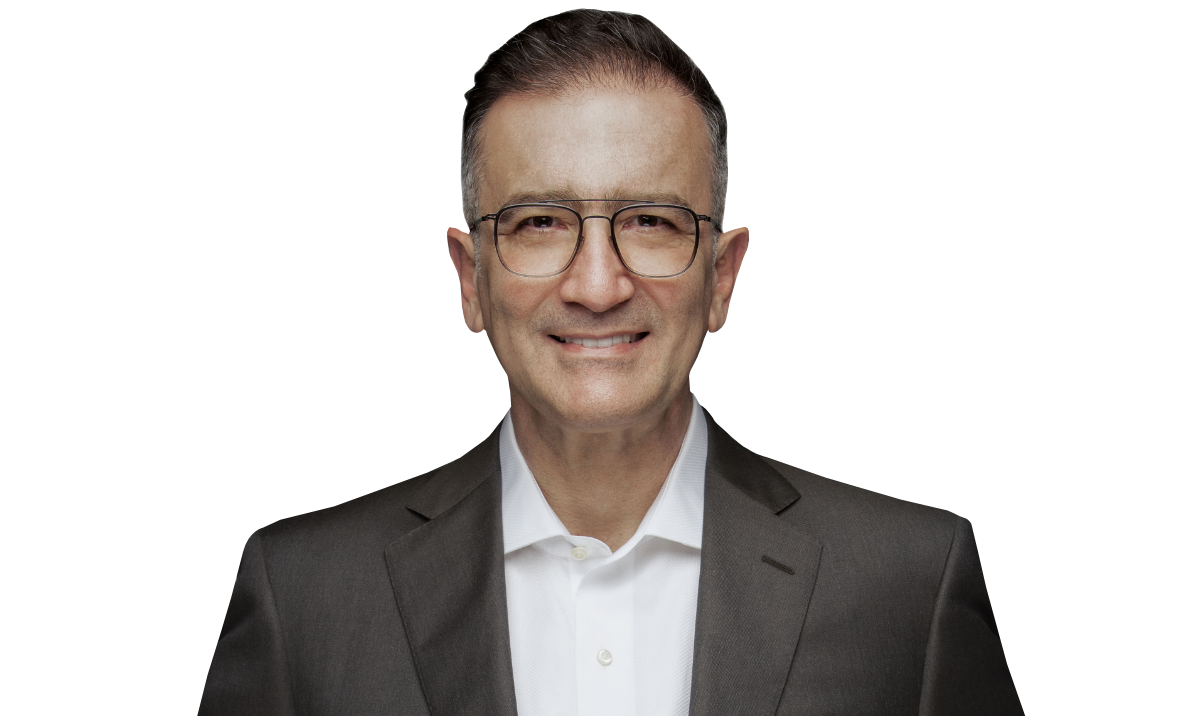
We want to play a major partnership role with governmental agencies to promote the industry and get the best talent to be well trained and equipped.

Yasser Taher, Magrabi Retail Group CEO

For the western region, the priority was for Magrabi to select the first batch from the Makkah branch. 

Some programs will also be executed in the Eastern Province and Magrabi will be considered as a first partner there as well.

Moving forward, Magrabi will be signing a new agreement with the Umm Al-Qura University to also include the major cities like Jeddah, Makkah and Madinah in the western region and the Eastern Province and the capital city Riyadh

For its part, the university will support the direction of unifying the programs running currently to be the same duration, subjects and certifications.

With regard to the partnership with King Saud University, Magrabi will present the company’s values and culture and explain the benefits for endoscopic cyclophotocoagulation on Career Day.

The university, on the other hand, will provide Magrabi all data for the graduated students to be part of the Career Day and offer training for the last year in Magrabi stores and facilities as part of an internship program.

Starting from the next graduated batch, Magrabi will also have priority when it comes to being involved in the selection of students. 

HIGHLIGHT

While Magrabi’s long-term partnership with Umm Al-Qura University seeks to provide training facilities including venues, laboratory, tools and machines for the execution of the program in Riyadh, the tie up with King Saud University Provide aims to provide missing tools and machines for the laboratory.

What’s more, after getting necessary approvals from the university’s legal department, it was also agreed to name the laboratory after Magrabi.

“Magrabi provided the experience (to the universities) from the daily situations and offered the practical know-how and our experience in customer service and optical knowledge,” according to ElGarawany.

Nurturing local talent

Asked what Magrabi hopes to achieve from these training programs in the long term, Taher replied: “We want to play a major partnership role with governmental agencies to promote the industry and get the best talent to be well trained and equipped."

“We also want to provide a continuous pipeline of Saudi opticians to support the growth of the industry,” he continued. 
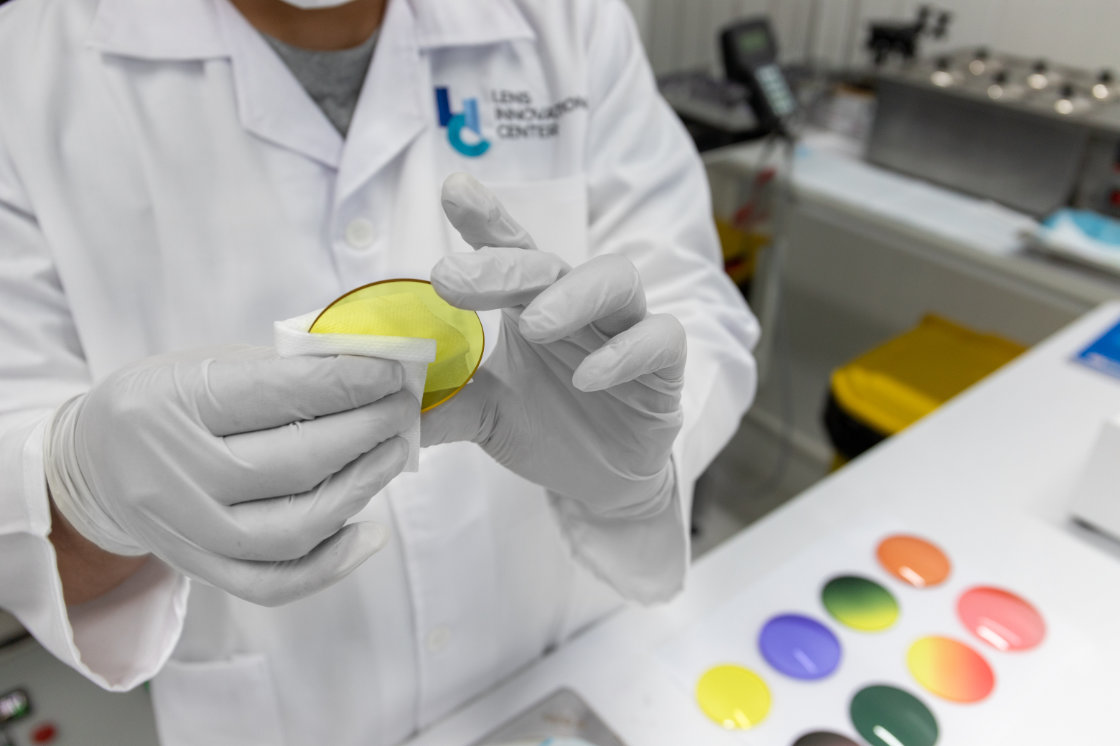
ElGarawany added: “Once the Saudization decision was issued by the Ministry of Human Resources, we felt it was our responsibility to be part of this vision and to lead the development of this program as an industry leader.”

Taher is clear with regard to the vision Magrabi has for students who have enrolled into these training programs. “We provide an amazing learning experience combining curriculum education with practical experience in our stores — both the Magrabi and Doctor M banners — during the entire program,” he said.

“In addition, we offer employment opportunities after the completion of the program and create a career journey for the students.

“Our plan promises career opportunities to all graduated students with a clear career path inside the Magrabi organization in addition to empowering all certified opticians to take a leadership role in all sections and departments inside the organization,” added ElGarawany.

After taking over as the CEO earlier this year, Taher told Arab News he was very excited about transforming this family business to become a world-class business group. 

“It’s a very progressive business that wants a place for itself on a global platform and is not just about finances and numbers,” he had said.

For Taher and his team, it is not just about growing the business and expanding the company’s footprint, but also about taking social impact programs to develop local talent that will establish Magrabi as a business group that the region — and the world — looks up to.



Airports in GCC are turning stopovers into tourism growth

Updated 14 February 2026
Follow

Airports in GCC are turning stopovers into tourism growth

  • Governments and airport operators are turning aviation as a central pillar of tourism and economic strategy

CAIRO: Once defined by fleeting layovers and duty-free corridors, airports across the Gulf Cooperation Council are increasingly gateways to short-stay tourism, driving non-oil growth, hospitality revenues and job creation. 

Across the region, governments, airlines and airport operators are treating aviation not merely as a transport sector but as a central pillar of tourism and economic strategy. Through streamlined visa regimes, airline-led stopover programs and sustained investment in airport infrastructure and technology, GCC countries are turning transit passengers into visitors. 

“Across the GCC, destinations have shifted from functioning primarily as global transit hubs to positioning themselves as places travelers actively choose to visit, even for short stays during onward journeys,” Nicholas Nahas, partner at Arthur D. Little, told Arab News. 

Airports in the Middle East are investing heavily in biometric processing systems, e-gates and digital border controls designed to shorten waiting times and improve passenger flow. These upgrades, backed by coordinated public-private initiatives, are narrowing the gap between arrival and exploration, making short stays viable even for passengers transiting for less than 48 hours. 

Unified GCC visa 

Two years after its initial proposal, the long-discussed unified GCC tourist visa is moving through final coordination stages, a development expected to further accelerate tourism spending linked to stopovers. 

Looking ahead, the visa could allow the region to function as a single tourism corridor. Robert Coulson, executive adviser for real estate at Accenture, said the next phase is about regional continuity. “The next leap for the GCC is making the region feel like one seamless journey while differentiating each stop with a distinct identity,” he told Arab News. 

First proposed in 2023 and approved in principle in 2024, the visa is designed to allow travel across Bahrain, Kuwait, Oman, Qatar, Saudi Arabia and the UAE under a single permit. Analysts say Saudi Arabia is positioned to be among the biggest beneficiaries, given its scale, expanding destination portfolio and growing aviation capacity. 

The unified visa is expected to complement existing stopover initiatives by allowing travelers to combine short visits to Saudi Arabia with trips to Dubai or Doha, effectively turning the Gulf into a single multi-country itinerary rather than a series of isolated transit points. 

Saudi aviation surge 

Saudi Arabia’s aviation-driven tourism growth has accelerated rapidly. The Kingdom welcomed an estimated 122 million visitors in 2025, moving closer to its Vision 2030 target of attracting 150 million tourists annually. 

“GCC travel hubs have stopped selling connections and started selling experiences,” Coulson said. “They’ve cracked the stopover-to-stayover model, turning a layover into a mini-holiday rather than dead time.” 

In January, Abdulaziz Al-Duailej, president of the General Authority of Civil Aviation, said international destinations served from Saudi Arabia increased to 176 in 2025, while the Kingdom remained home to some of the world’s busiest air routes. 

He credited this performance to the “unlimited support” of the Kingdom’s leadership, identifying aviation as a key enabler of Vision 2030 and broader economic diversification. 

Saudi Arabia’s newest airline, Riyadh Air, is expected to contribute more than $20 billion to non-oil gross domestic product and create over 200,000 direct and indirect jobs, underscoring aviation’s expanding economic footprint. 

A key pillar of Saudi Arabia’s strategy has been the introduction of a digital stopover visa in 2023, allowing transit passengers to enter the Kingdom for up to 96 hours. The initiative enables short visits for Umrah, trips to Madinah or exploration of the country’s cultural and historical sites.  The policy reflects a broader regional effort to turn time spent between flights into economic activity beyond the airport terminal, particularly in hospitality, transport and cultural tourism. 

Short-stay shift 

This evolution has been driven by global connectivity, simplified visa access and the ability to deliver high-quality experiences within a 24-to-72-hour window. The UAE, particularly Dubai, was the earliest and most established example of this transition, converting a growing share of its transit traffic into visitors through airline-led stopover packages, flexible visa categories and dense, short-stay-friendly attractions. 

Dubai International Airport handles more than 85 million passengers annually. Curated stopover products combining hotel stays with cultural and entertainment experiences have helped transform transit traffic into leisure demand. Direct metro access and streamlined entry processes have further reduced friction. As a result, Dubai welcomed around 19 million international overnight visitors in 2025. 

Other GCC destinations have since adopted similar models. Abu Dhabi expanded stopover offerings through its national carrier, promoting entertainment and cultural districts as compelling short-stay experiences. Qatar embedded stopover tourism into its national tourism strategy, converting transfer traffic at Hamad International Airport into city stays. Saudi Arabia expanded its tourism offering through its 96-hour digital visa linked to onward flights. 

A smooth transit experience is often the deciding factor in whether passengers remain airside or choose to explore. Fast entry processes, intuitive airport design and reliable airport-to-city connectivity can turn even a six- to eight-hour layover into usable time rather than idle waiting. 

Under Vision 2030, Saudi Arabia has invested heavily in airport expansion, digital border processes and urban mobility projects designed to shorten the distance between arrival and experience. Airline stopover platforms, transport apps and airport-based destination messaging increasingly reduce uncertainty and enable spontaneous exploration. 

Beyond transit traffic, Nahas said tourism growth across the GCC has been driven by integrated destination ecosystems. Successful destinations are designed end-to-end — from trip planning and arrival through accommodation, mobility, experiences and departure — requiring coordination across tourism authorities, airlines, airports, transport providers and experience operators. 

Designing destinations 

For developers shaping the region’s next phase of tourism growth, the focus has shifted toward creating destinations that capture travelers from the moment they arrive. 

Sultan Moraished, group head of technology and corporate excellence at Red Sea Global, said next-generation destinations are being designed to resonate with global travelers beyond a flight connection. 

“As we design and build next-generation destinations, our focus is always on creating experiences that resonate with global travelers from the moment they arrive to when they choose to explore beyond a flight connection,” he told Arab News. 

Moraished said offering experiences travelers cannot find elsewhere, from cultural immersion to nature-based activities, creates compelling reasons to extend visits beyond simple transit. He added that collaboration across aviation, hospitality and destination authorities ensures that every part of the journey is aligned with a shared vision for tourism growth. 

Looking ahead, Moraished said the intersection of innovation and hospitality will continue to open new pathways, from smart digital experiences to regenerative tourism practices that appeal to increasingly conscious travelers and encourage repeat visitation. 

Experience economy 

Airports have shifted from being standalone infrastructure assets to functioning as world-class distribution engines for cities and destinations. Investments in gateway airports have made them part of the destination brand promise. 

Tourism operates as a continuous conversion funnel, Coulson said. Every step removed between the flight gate and the city increases the likelihood that travelers will leave the terminal and spend money locally. Fast connections, predictable baggage handling and clear wayfinding reduce perceived risk, while simplified transit visas make spontaneity possible. 

A unified GCC tourist visa could unlock longer stays and multi-country itineraries, supported by investment in walkable districts, waterfronts and climate-smart design. 

Taken together, the transformation of transit hubs into tourism powerhouses reflects a broader shift in how the Gulf approaches aviation-led growth. Airports are no longer just points of passage but economic gateways where short stopovers translate into tourism spending, jobs and long-term diversification.