

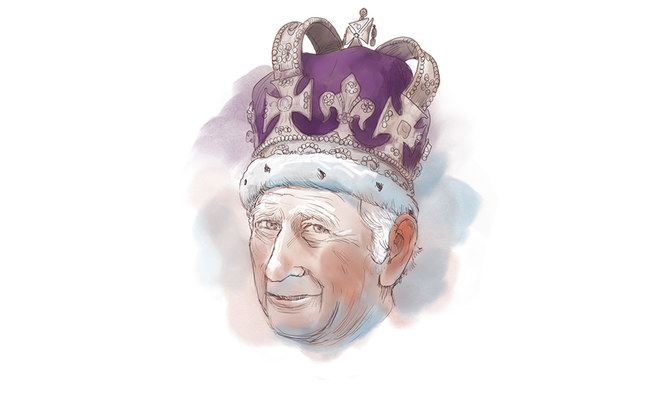

King Charles became monarch of the United Kingdom and 14 other realms on the death of his mother Queen Elizabeth in September, but on May 6 he will be crowned in a ceremony full of pomp, pageantry and solemn religious significance.
Westminster Abbey
For the best part of 1,000 years, the kings and queens of England and Britain have been crowned at London’s Westminster Abbey in a ceremony that has changed little throughout the centuries.
There have been 38 monarchs crowned at the Abbey - Edward V, one of two young princes believed to have been murdered in the Tower of London in the 15th century, and Edward VIII, who abdicated to marry American divorcee Wallis Simpson, were not crowned.
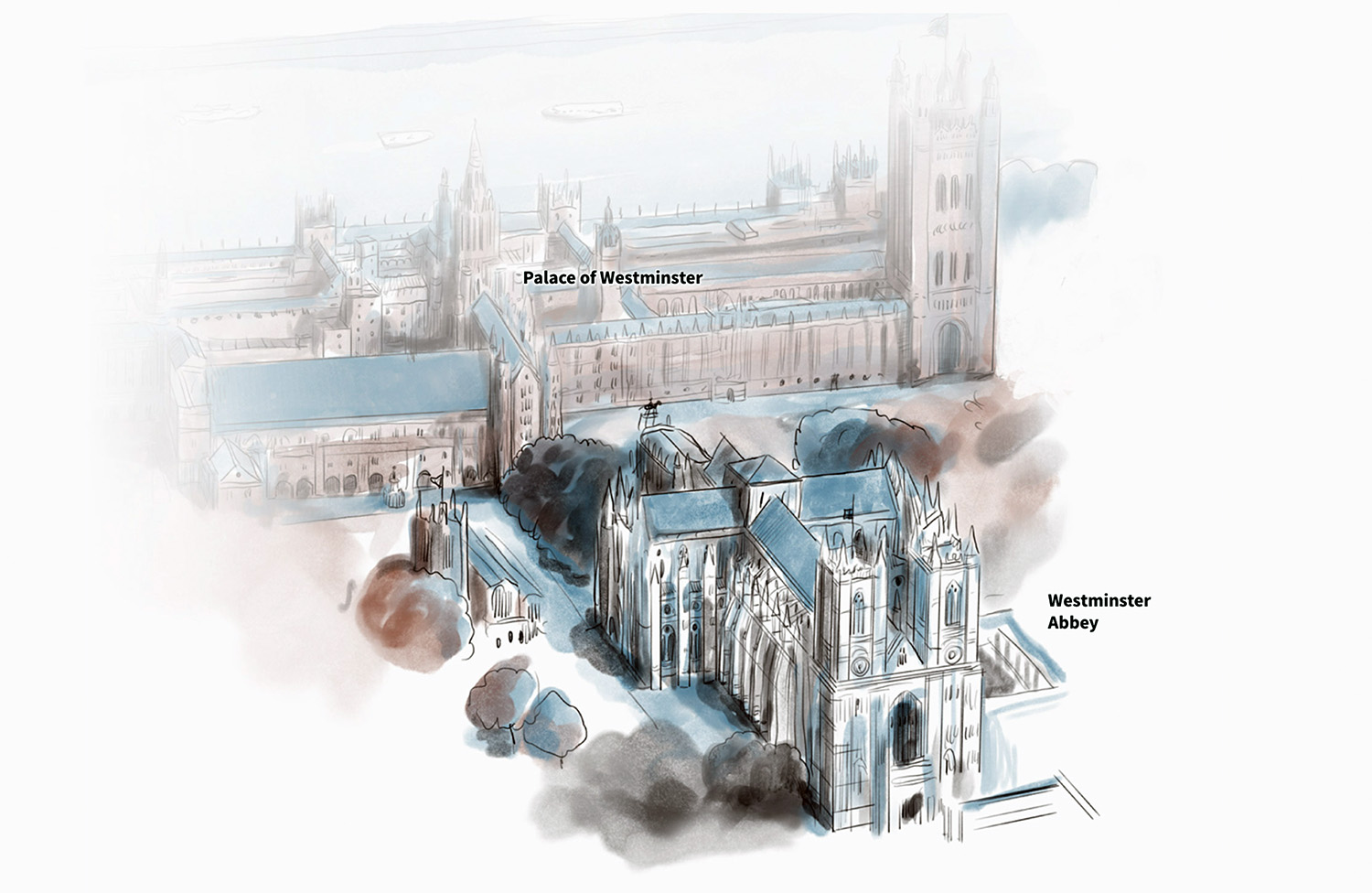
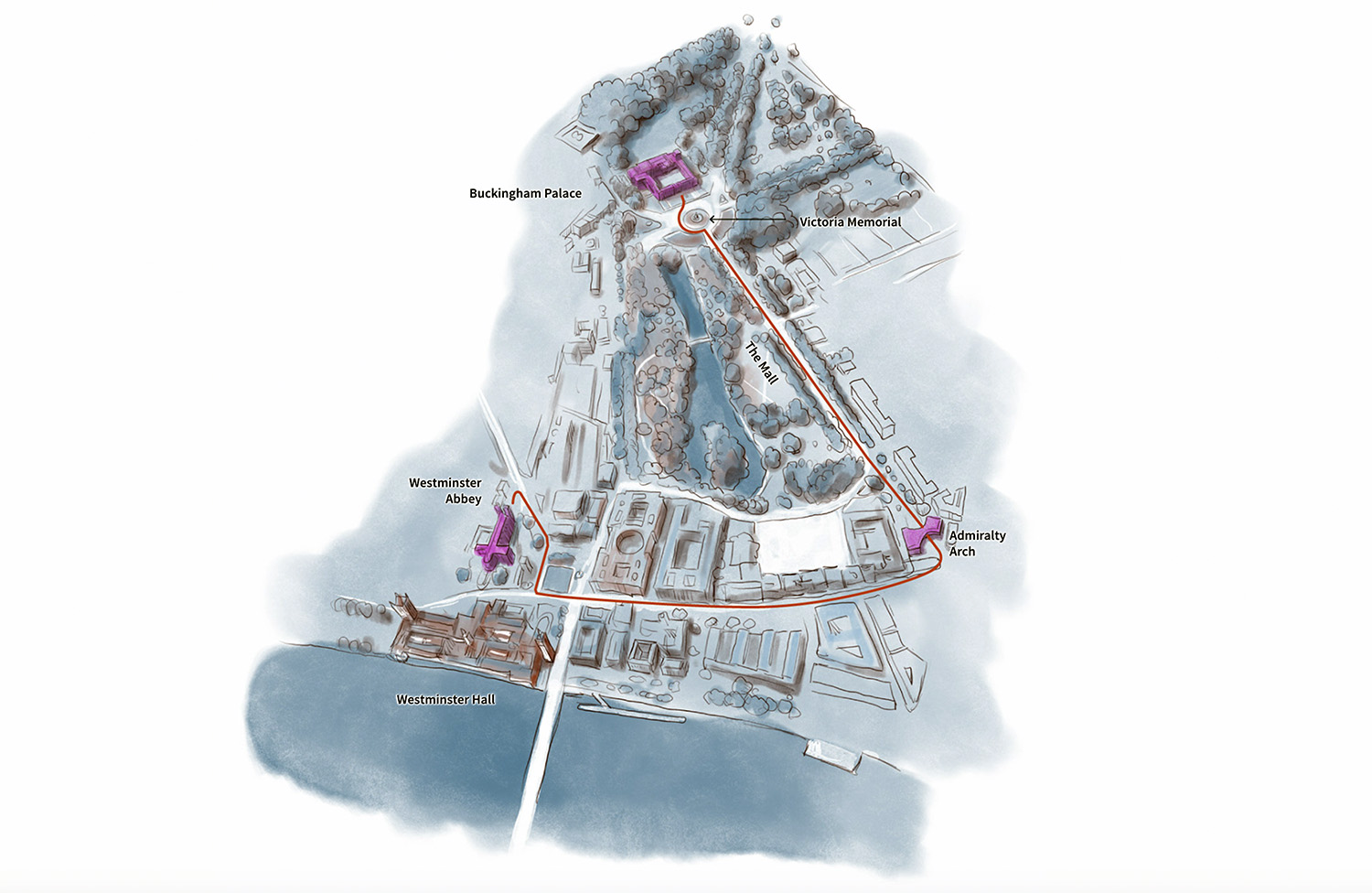
The coronation ceremony will begin at 1000 GMT following a procession from Buckingham Palace. It is set to be shorter than that for Charles’ mother 70 years ago at about two hours long, compared to almost four hours.
A much larger procession will depart the Abbey, made up of armed forces from Britain and across the Commonwealth. The king and queen will travel in the gold state coach which was commissioned in 1760.
Coronation chair
The coronation service is a solemn, religious occasion full of symbolism. Charles will take an oath to uphold the law and the Church of England.
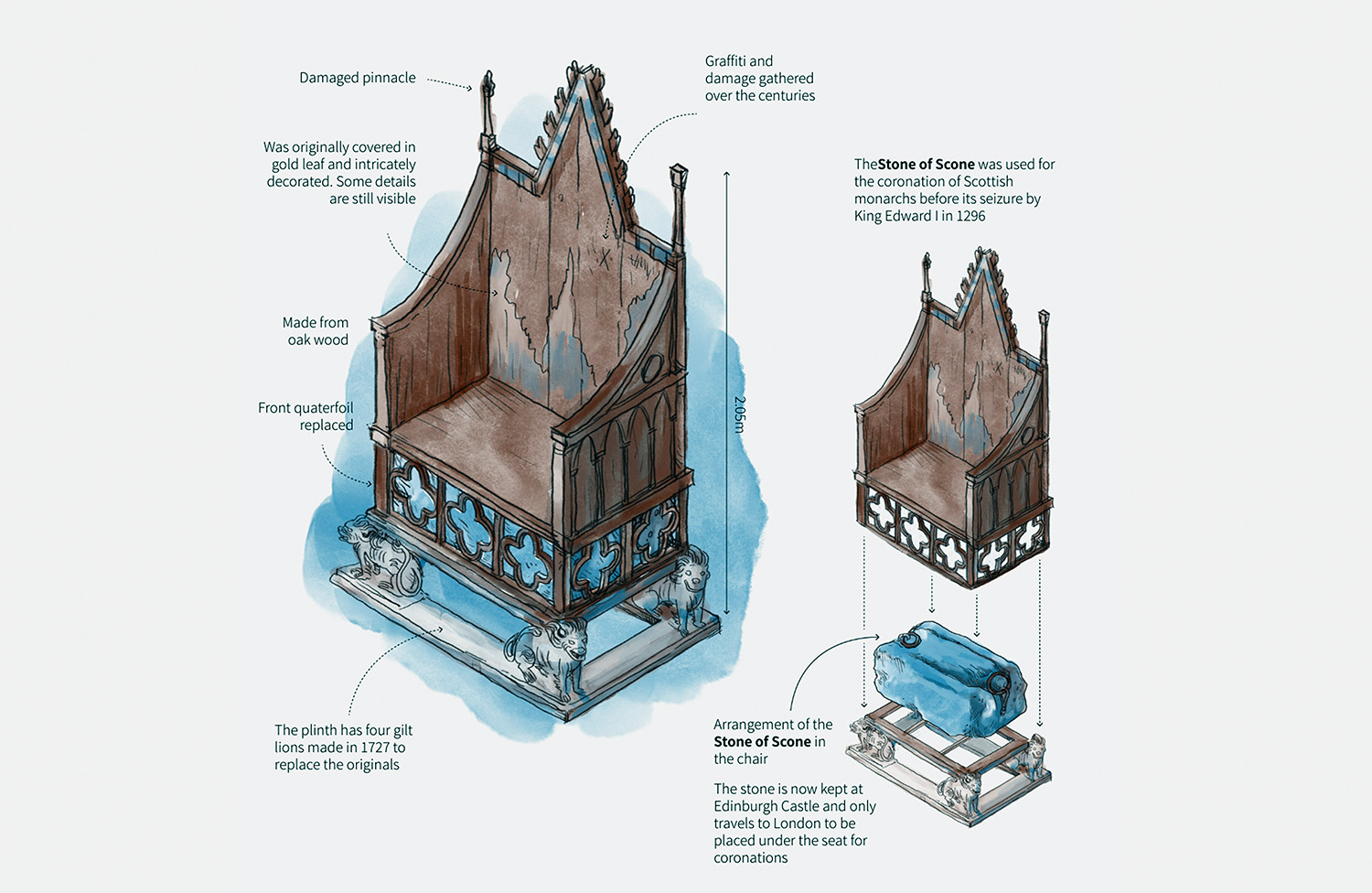
Sitting on the historic Coronation Chair, known as St Edward’s Chair and containing the Stone of Destiny, he will be anointed by the Archbishop of Canterbury, the spiritual leader of the worldwide Anglican Communion, with holy oil consecrated in Jerusalem.
The chair has featured in coronation ceremonies since 1308, and has been the chair used to crown monarchs since Henry IV in 1399, according to Westminster Abbey.
The centrepiece of the ceremony sees the crown placed on the head of the monarch sitting on the oak chair, which was originally covered in gold leaf gilding and elaborately decorated with coloured glass. The chair is being cleaned ahead of this year’s ceremony for King Charles.
Crowns
Charles will be crowned with the historic St Edward’s Crown that has been used since the coronation of King Charles II in 1661 after the monarchy was restored following the 10-year republic of Oliver Cromwell. It was removed from the Tower Of London in December for modifications for May’s ceremony.
The crown, which weighs about 2.2 kg (4 lb 12 ounces), is made up of a solid gold frame set with rubies, amethysts, sapphires, garnet, topazes and tourmalines, and has a velvet cap with an ermine band.
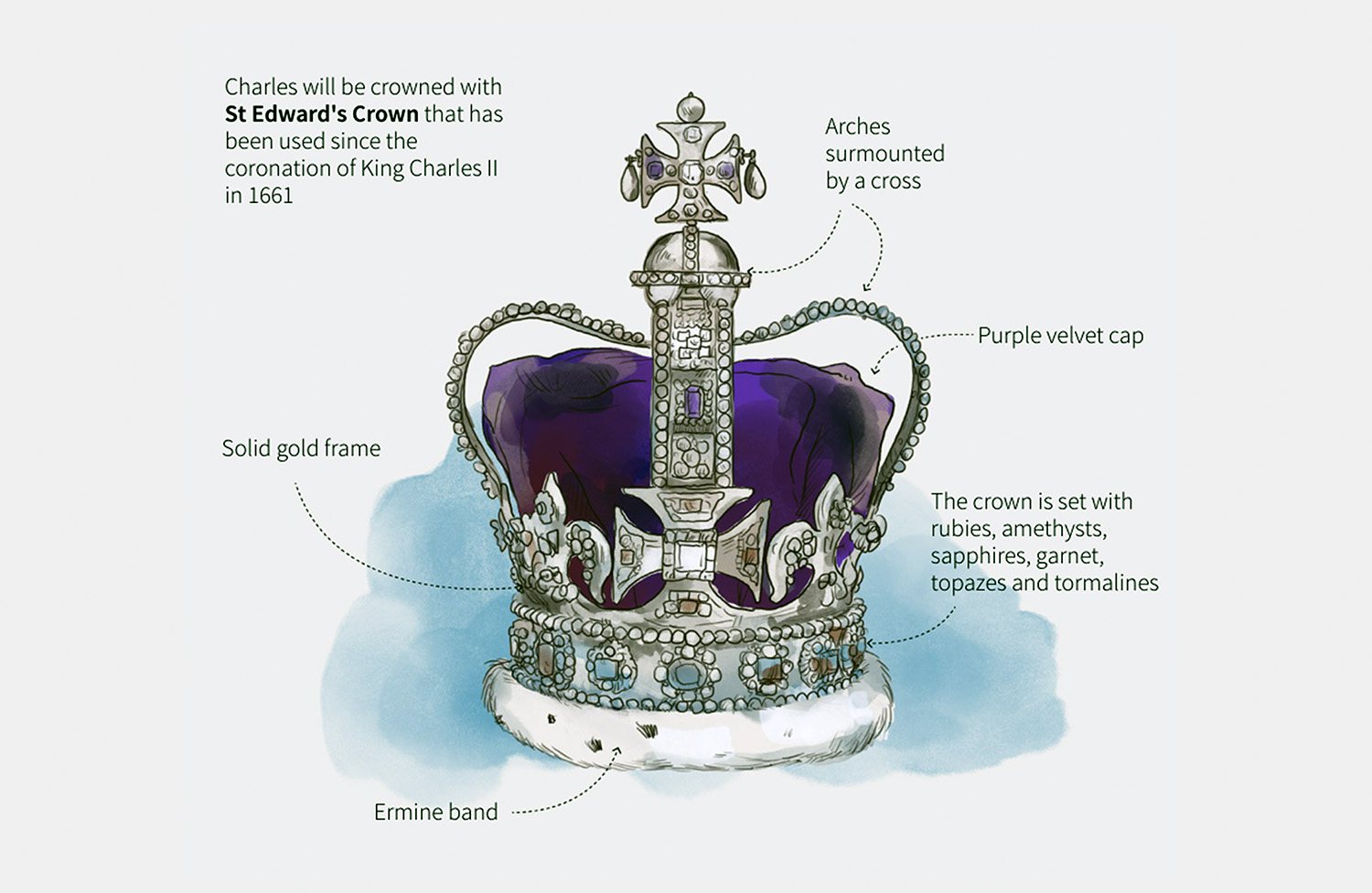
Charles will leave the Abbey wearing a different crown, the Imperial State Crown, illustrated below.
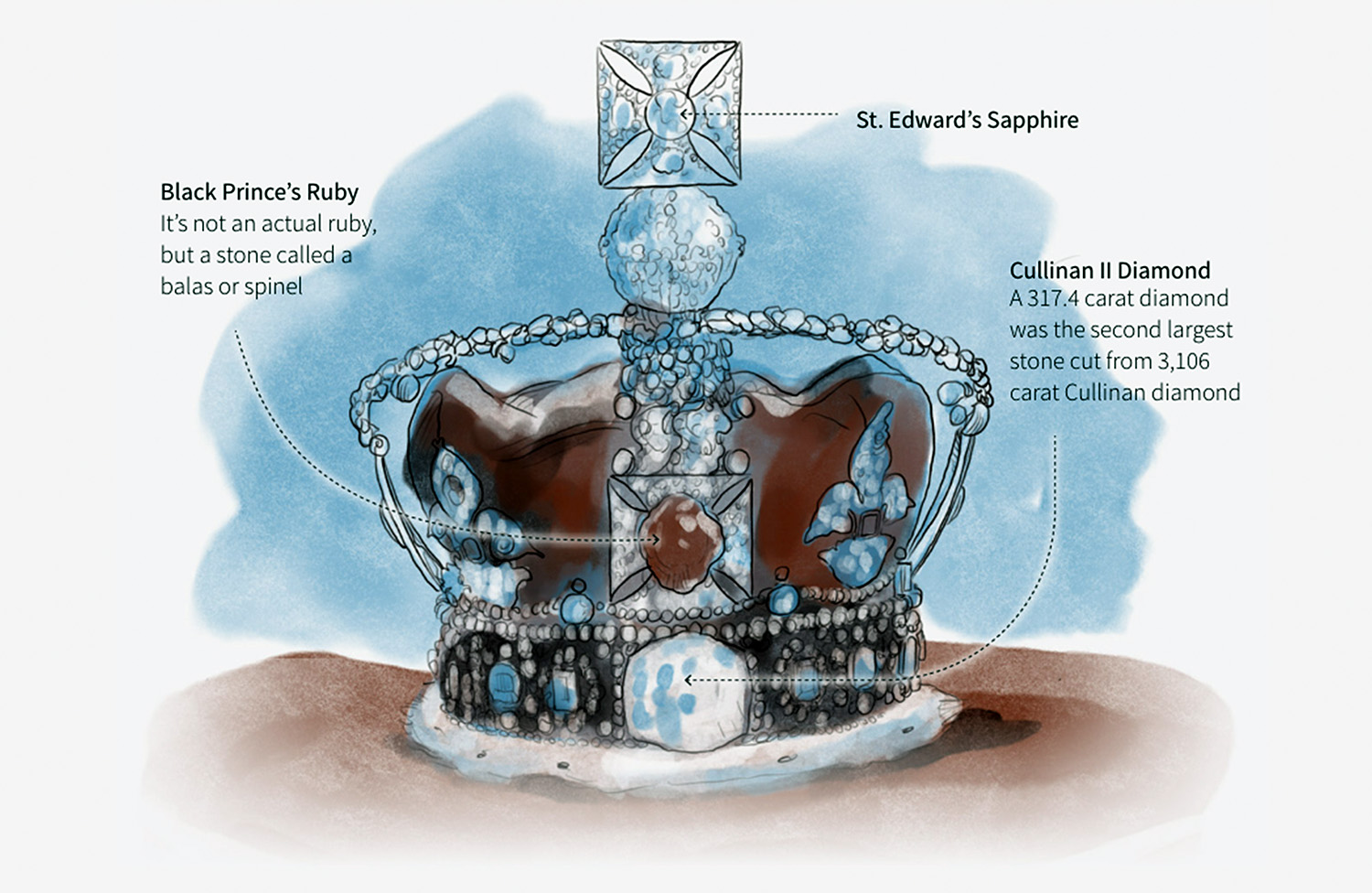
The Imperial Crown is the headware regularly used by British monarchs for official occasions such as the State Opening of Parliament.
Made for the coronation of Charles’ grandfather George VI in 1937, it is set with 2,868 diamonds in silver mounts including the 105-carat Cullinan II, the second biggest stone cut from the Cullinan Diamond, which was given by the government of the Transvaal in South Africa to Edward VII on his birthday in 1907.
The crown also features the large “Black Prince’s Ruby,” along with 17 sapphires, 11 emeralds and 269 pearls, including some of which are said to have been bought as earrings by Tudor monarch Queen Elizabeth I.
Regalia
A key moment of the ceremony will be when Charles is given regalia, from bejewelled orbs and sceptres to swords and a ring.
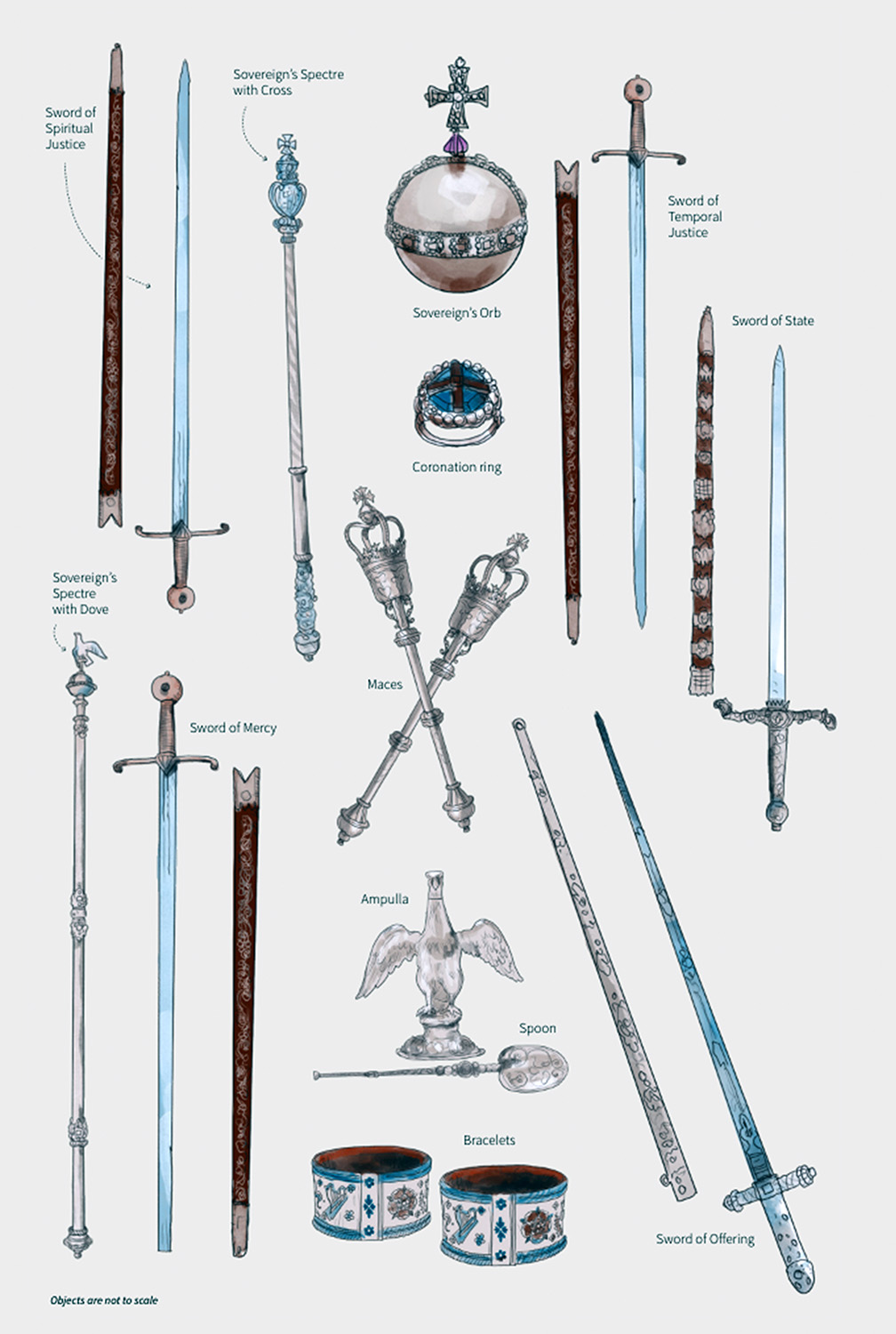
Sovereign's sceptre with cross
The Cullinan 1 diamond, also known as the Star of Africa, which weighs in at 530 carats and is the world's largest colourless cut diamond, was set in the bejewelled golden sceptre which has been used in every coronation since 1661.
The sceptre, which has undergone a number of alterations over the centuries, represents the sovereign's temporal power and is associated with good governance.
Sovereign's sceptre with dove
This is the second sceptre used in the ceremony, representing the sovereign's spiritual role. It also dates from 1661. It is made from a gold rod in three sections, mounted with diamonds, rubies, emeralds, sapphires and spinels. At the top is an enamelled dove with outspread wings, which represents the Holy Ghost.
The sovereign's orb
The Sovereign's Orb, another item commissioned for Charles II's coronation, is a globe of gold with a cross mounted on top, surrounded by a band of diamonds, emeralds, rubies, sapphires and pearls with a large amethyst at the summit. It is a representation of Christian sovereignty.
Coronation ring
The Coronation ring, known as "The Wedding Ring of England" and composed of a sapphire with a ruby cross set in diamonds, was made for the coronation of King William IV in 1831. Worn at every coronation since then, it symbolises kingly dignity.
Swords and maces
A number of swords will feature in the coronation procession.
These include the Sword of State, which symbolises royal authority and was made in about 1678, and was used at Charles' investiture as Prince of Wales in 1969. Also to feature will be the Sword of Temporal Justice, the Sword of Spiritual Justice and the Sword of Mercy, which were first used in the coronation of Charles I in 1626.
The bejewelled Sword of Offering, made for the coronation of George IV in 1821, is one of the objects used during the coronation ceremony.
Two maces, made of silver gilt over oak and date from between 1660 and 1695, will also feature. These are the ceremonial emblems of authority which are carried before the sovereign at events such as the State Opening of Parliament.
Ampulla
The golden ampulla, which dates from 1661, is a flask in the shape of an eagle that holds the holy oil, which was consecrated in Jerusalem in March and will be used to anoint the king.
Coronation spoon
The silver-gilt spoon is the oldest piece in the regalia, probably made for Henry II or Richard I in the 12th century. It was used to anoint King James 1 in 1603, and has featured at every coronation since.
Bracelets
Two armills, golden bracelets representing sincerity and wisdom, are placed on the sovereign's wrists. They are thought to relate to ancient symbols of knighthood and military leadership.
They date back to 1661 and have been used at every coronation from King Charles II’s until King George VI’s in 1937, with new armills specially prepared for Queen Elizabeth in 1953.


