THE HAGUE: Ukraine and Russia pressed their wartime rhetoric Thursday, with Ukrainian President Volodymyr Zelensky expressing confidence that Vladimir Putin would be convicted of war crimes and the Kremlin alleging that the US was behind an assassination attempt against the Russian president.
The country’s leaders have personally attacked each other multiple times during the war Russia started by invading Ukraine in February 2022. The latest flareup came Wednesday, with Russia’s claim that Ukraine had attacked the Kremlin in Moscow with drones meant to assassinate Putin.
Zelensky denied that Ukrainian forces were responsible for the purported drone attack. The Kremlin promised unspecified retaliation for what it termed a “terrorist” act, and pro-Kremlin figures called for the assassinations of senior Ukraine leaders.
Uncertainty still surrounds exactly what happened in the purported attack.
Putin’s spokesman on Thursday accused the United States of involvement. To generate domestic support for the war, Moscow has often tried to blame Washington for trying to destroy Russia through its help for Ukraine.
Kremlin spokesman Dmitry Peskov told reporters during a daily conference call that the Kremlin was “well aware that the decision on such actions and terrorist attacks is not made in Kyiv, but in Washington.”
“And then Kyiv does what it’s told to do,” Peskov said, without offering evidence for his claim.
John Kirby, a spokesman for the US National Security Council at the White House, described the claim as “ludicrous.” Zelensky, in the Netherlands, said he was “not interested” in the Kremlin’s opinion.
Zelensky’s top adviser, Mykhailo Podolyak, claimed Thursday that Russia had “staged” the alleged drone attack. He cited the delay in Russian state media reporting it and “simultaneous video from different angles” that appeared to show the aftermath of the alleged 2:30 a.m. attack.
The Washington-based Institute for the Study of War also saw evidence of staging.
“Russia likely staged this attack in an attempt to bring the war home to a Russian domestic audience and set conditions for a wider societal mobilization,” the think tank said.
Given recent Russian moves to bolster security, it’s “extremely unlikely that two drones could have penetrated multiple layers of air defense and detonated or been shot down just over the heart of the Kremlin in a way that provided spectacular imagery caught nicely on camera,” the ISW stated.
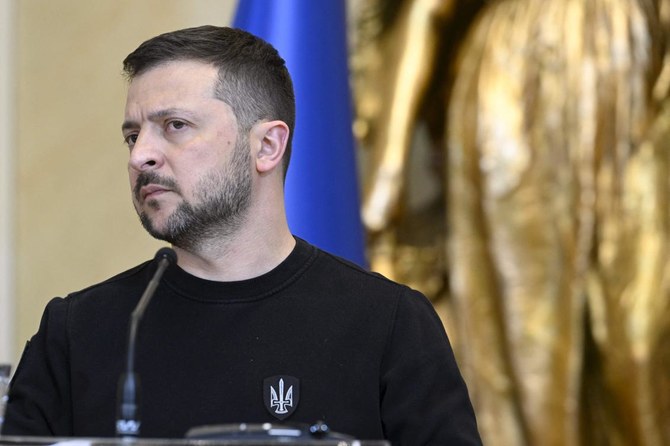
In The Hague, where the International Criminal Court is based, Zelensky urged the global community to hold Putin accountable and told the ICC judges that Russia’s leader “deserves to be sentenced for (his) criminal actions right here in the capital of the international law.”
In March, the ICC issued an arrest warrant for Putin for war crimes, accusing him of personal responsibility for the abductions of children from Ukraine. It was the first time the global court circulated a warrant for a leader of one of the five permanent UN Security Council members.
Zelensky’s visit to the Netherlands came a day after he went to Finland, which doubled the size of NATO’s border with Russia when it joined the military alliance last month, largely out of its concerns about Moscow’s long-term ambitions.
The Ukrainian president also used his trip to press the prime ministers of Belgium and the Netherlands to send advanced warplanes so his country can achieve “justice on the battlefield.” Zelensky has successfully assembled significant Western military and political support for Ukraine’s defense since the war began in February 2022.
Zelensky traveled in a Dutch-supplied plane and an armored car, with security kept tight at his appearances. Next week, he is expected to go to Berlin, the capital of European Union economic powerhouse Germany, in the latest display of the Western might marshaled against Putin.
Zelensky’s trips have paid dividends. After traveling to Washington last December and then London, Paris and Brussels in February, Ukraine received heavy artillery and tanks.
But the chances of Putin standing trial in The Hague are remote. The court, which puts individuals on trial for genocide, war crimes, crimes against humanity and aggression, does not have a police force to execute its warrants. The Russian leader is unlikely to travel to any of the ICC’s 123 member nations, which are under obligation to arrest him, if they can.
On the battlefield, Ukraine’s military claimed three Russian drones that hit the southern city of Odesa early Thursday had “for Moscow” and “for the Kremlin” written on them, seemingly implying they were sent in retaliation for the reported strike on the Kremlin.
Ukraine’s capital, Kyiv was the target of an air attack for the third time in four days. In total, Ukraine’s air forces intercepted 18 out of 24 Iranian-made drones launched by Russian forces in various regions. No casualties were reported.
In Russia, drones hit two oil facilities in southern regions of the country near Ukraine in what appeared to be a series of attacks on fuel depots behind enemy lines, Russian media reported Thursday.
Four drones struck an oil refinery in the Krasnodar region, which borders Russia-annexed Crimea, Russian state news agency RIA Novosti reported, citing law enforcement sources. Another facility was reportedly hit in the Rostov region.
The Netherlands has been a strong supporter of the Ukrainian war effort. Prime Minister Mark Rutte’s government has promised 14 modern Leopard 2 tanks it is buying together with Denmark. They are expected to be delivered next year.
The Netherlands also joined forces with Germany and Denmark to buy at least 100 older Leopard 1 tanks for Ukraine.
In addition, the Dutch government sent two Patriot air defense missile systems, promised two naval minehunter ships and sent military forensic experts to Ukraine to assist with war crime investigations.


![]()

Zelensky wants Putin trial, Russia accuses US of drone attack
Short Url
https://arab.news/z6cba
Zelensky wants Putin trial, Russia accuses US of drone attack
- Russia claims Ukraine attacked the Kremlin in Moscow with drones meant to assassinate Putin
- Kyiv was target of air attack for third time in four days


Latest updates


© 2026 SAUDI RESEARCH & PUBLISHING COMPANY, All Rights Reserved And subject to Terms of Use Agreement.