New book examines what Lebanese legend Fayrouz means to Arabs 

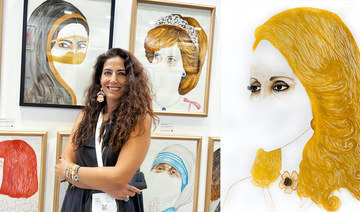
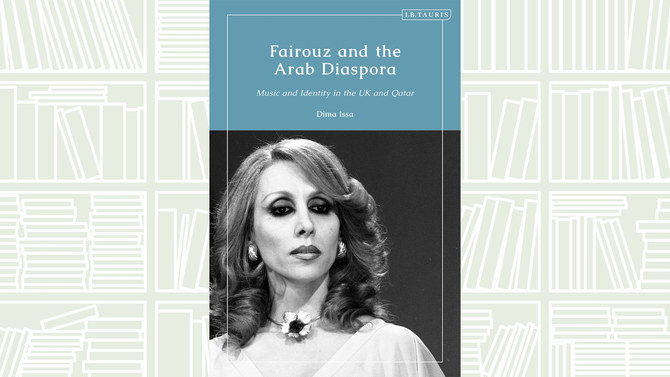
“Fairouz (sic) and the Arab Diaspora: Music and Identity in the UK and Qatar” was written by media communications professor Dima Issa. (Supplied)
Short Url
Updated 07 May 2023
Follow

New book examines what Lebanese legend Fayrouz means to Arabs 

DUBAI: The emotional impact of Lebanese singing legend Fayrouz’s voice on Arabs in the diaspora, permeating their homes and hearts, is the subject of a new English-language academic book.  

“Fairouz (sic) and the Arab Diaspora: Music and Identity in the UK and Qatar” was written by media communications professor Dima Issa from the University of Balamand, Lebanon. Issa herself has lived abroad most of her life, in Canada, Qatar, and the UK. 

“I was introduced to Fayrouz through my parents. Every morning with their coffee, they listened to her. Ever since I can remember, she was always there,” Issa told Arab News. “My friends and I were listening to other types of music, but there was always something comforting about her for my parents.”  
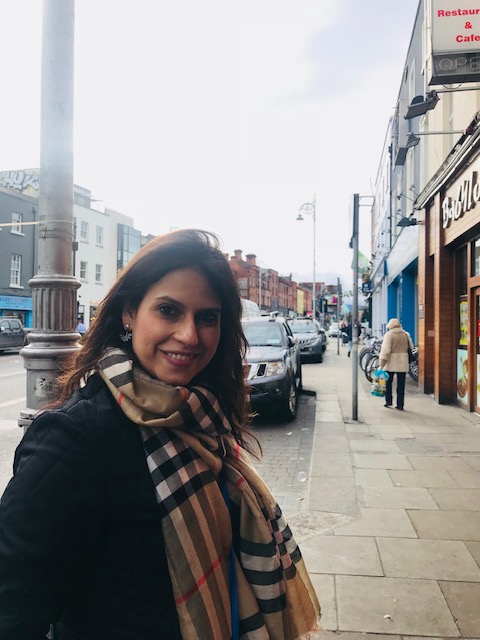


Issa herself has lived abroad most of her life, in Canada, Qatar, and the UK. (Supplied)

She warmed up to Fayrouz’s Arabic songs as she got older. When she moved to the UK to study, and felt out of place, she found solace in Fayrouz. “When I was listening to her, there was that feeling of comfort, belonging, and home,” she said. “She kind of travelled with me.”      

Issa describes Fayrouz as an “inherited” artist who transcends time and borders. She is not just a singer for the Lebanese, but, truly, an artist for all Arabs, Issa suggests. She also notes how Fayrouz’s melancholic, emotional voice transports her listeners as she sings about the Alexandrian shore, or the pilgrims of Makkah, or the temples of Jerusalem.   

In Issa’s theory-based book, she examines the personal lives of Arabs in the diaspora through Fayrouz’s music. “People can relate to her on different levels,” said Issa. The book is divided into a number of themes, including space, absence, time and ‘Arabness.’  

During her research, people opened up to Issa about how Fayrouz’s music helped them to build relationships with their parents. She also engaged with Syrian refugees, some of whom only started listening to Fayrouz when displaced from their homes. “When people discuss her music, there is a sense of loss, whether it’s a homeland, a person, or childhood,” said Issa.  

Conversations with Arab Londoners were also held at the advent of Brexit, when many were questioning where they belonged. “It’s a very nice way to understand the timeframe of what was happening culturally, socially, politically, and economically,” Issa said. “And to understand personally what Fayrouz meant to them in their lives.”  


Review: ‘Sorry, Baby’ by Eva Victor

Eva Victor appears in Sorry, Baby by Eva Victor, an official selection of the 2025 Sundance Film Festival. (Supplied)
Updated 27 December 2025
Follow

Review: ‘Sorry, Baby’ by Eva Victor

  • Victor makes a deliberate narrative choice; we never witness the violence of what happens to her character

There is a bravery in “Sorry, Baby” that comes not from what the film shows, but from what it withholds. 

Written, directed by, and starring Eva Victor, it is one of the most talked-about indie films of the year, winning the Waldo Salt Screenwriting Award at Sundance and gathering momentum with nominations, including nods at the Golden Globes and Gotham Awards. 

The film is both incisive and tender in its exploration of trauma, friendship, and the long, winding road toward healing. It follows Agnes, a young professor of literature trying to pick up the pieces after a disturbing incident in grad school. 

Victor makes a deliberate narrative choice; we never witness the violence of what happens to her character. The story centers on Agnes’ perspective in her own words, even as she struggles to name it at various points in the film. 

There is a generosity to Victor’s storytelling and a refusal to reduce the narrative to trauma alone. Instead we witness the breadth of human experience, from heartbreak and loneliness to joy and the sustaining power of friendship. These themes are supported by dialogue and camerawork that incorporates silences and stillness as much as the power of words and movement. 

The film captures the messy, beautiful ways people care for one another. Supporting performances — particularly by “Mickey 17” actor Naomi Ackie who plays the best friend Lydia — and encounters with strangers and a kitten, reinforce the story’s celebration of solidarity and community. 

“Sorry, Baby” reminds us that human resilience is rarely entirely solitary; it is nurtured through acts of care, intimacy and tenderness.

A pivotal scene between Agnes and her friend’s newborn inspires the film’s title. A single, reassuring line gently speaks a pure and simple truth: “I know you’re scared … but you’re OK.” 

It is a reminder that in the end, no matter how dark life gets, it goes on, and so does the human capacity to love.