Jeddah-returned driver isolated with suspected monkeypox in Pakistan’s Karachi

Passengers walk after their arrival at the Jinnah International Airport in Karachi, Pakistan on January 31, 2020. (AFP/File)
Short Url
Updated 03 May 2023
Follow

Jeddah-returned driver isolated with suspected monkeypox in Pakistan’s Karachi

  • Sindh Health Department says suspect had fever for seven days, developed maculopapular rashes
  • Pakistan confirmed first two cases of mpox last week with both patients recently arriving from trips abroad

ISLAMABAD: Pakistan has isolated another person suspected of carrying the monkeypox (mpox) virus in Karachi, the provincial Sindh Health Department said on Wednesday, a week after the first two cases of the infectious disease were confirmed in the country.

Monkeypox is a zoonotic infection that can spread from animals to humans. The viral disease can also be contracted from one person to another and cause high fever, rashes, and body pains.  

“The suspected case of monkeypox is currently in quarantine with his samples sent to a lab for confirmation,” the Sindh Health Department said in a statement. “The suspect was working as a driver in Jeddah, and came to Karachi through Muscat, Oman.”

The department said the suspect had a fever for the last seven days and later developed maculopapular rashes on his face, back, and lower back.

Pakistan confirmed its first two cases of mpox last week, saying both the affected individuals had recently arrived from trips abroad. One of the patients was symptomatic while the other sat next to him on the plane and contracted the virus. Both are in stable condition but still under observation.

Following the confirmation of the first two cases, the health ministry said there was as yet “no evidence of localized transmission of Mpox” in Pakistan and the risk of the international spread of the disease from the South Asian country remained low.

The government also put airports on high alert to ensure medical screening of inbound passengers and has requested the World Health Organization (WHO) to provide a monkeypox vaccine for frontline healthcare workers.

The WHO declared mpox a public health emergency of international concern in July 2022. There are currently 87,000 confirmed cases of the disease internationally, with 119 deaths.

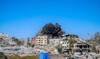
Pakistan’s president defends ongoing strikes in Afghanistan, urges Kabul to dismantle militants

Updated 02 March 2026
Follow

Pakistan’s president defends ongoing strikes in Afghanistan, urges Kabul to dismantle militants

  • Afghanistan on Thursday launched attacks in retaliation for Pakistani airstrikes the previous Sunday
  • Pakistan’s military says it is only targeting Afghan military installations to avoid civilian casualties

ISLAMABAD: Pakistan’s president on Monday defended his country’s ongoing military strikes in neighboring Afghanistan, saying Islamabad tried all forms of diplomacy before targeting militants operating from Afghan territory, and called on the Taliban government in Kabul to disarm groups responsible for attacks in Pakistan.

Pakistan earlier said it is in “open war” with Afghanistan, alarming the international community. The border area remains a stronghold for militant organizations including Al-Qaeda and the Daesh (Islamic State) group.

“(The Afghan Taliban) must choose to dismantle the terror groups that survive on conflict and its war economy,” Asif Ali Zardari said during a speech to lawmakers, adding that “no state accepts serial attacks on its soil.”

Afghanistan on Thursday launched attacks in retaliation for Pakistani airstrikes the previous Sunday. Since then, Pakistan has carried out operations along the border, with Information Minister Attaullah Tarar claiming the killing of 435 Afghan forces and the capture of 31 Afghan positions.

Kabul has denied such claims.

In Afghanistan, the deputy government spokesman Hamdullah Fitrat said Pakistan’s military fired mortar shells at a refugee camp in eastern Kunar province, killing three children and injuring three others.

Afghanistan’s defense ministry said Afghan forces carried out strikes targeting a Pakistani military facility near Paktia province, causing “substantial losses and heavy casualties.”

Pakistan’s military did not respond to questions. It has said Pakistan is only targeting Afghan military installations to avoid civilian casualties.

Pakistan has witnessed a surge of violence in recent months and blames it on the outlawed Pakistani Taliban, known as Tehreek-e-Taliban Pakistan or TTP. It operates both inside Pakistan and from Afghan territory.
Islamabad accuses Afghanistan’s Taliban government of providing safe havens for the TTP, which Kabul denies.

The latest cross-border fighting ended a ceasefire brokered by Qatar and Turkiye in October. The two sides failed to reach a permanent agreement during talks in Istanbul.

Zardari reiterated Pakistan’s call for talks, saying, “We have never walked away from dialogue.”

The Pakistani leader again accused Afghanistan of acting as a proxy for India by sheltering militant groups.

“Stop being used by another country as a battlefield for their ambitions,” he said.

Zardari cited a recent report from the United Nations Security Council’s monitoring team that described the presence of militant groups in Afghanistan as an extra-regional threat.