KHARTOUM: Sudan’s warring military factions agreed on Tuesday in principle to a seven-day cease-fire from Thursday, South Sudan announced, as more air strikes and shooting in the Khartoum region disrupted the latest short-term truce.
A statement released by the foreign ministry of South Sudan, which had offered to mediate in the conflict, said its President Salva Kiir stressed the importance of a longer truce and of naming envoys to peace talks, to which both sides had agreed.
The credibility of the reported May 4-11 deal cease-fire deal between Sudanese army chief General Abdel Fattah Al-Burhan and paramilitary Rapid Support forces (RSF) leader General Mohamed Hamdan Dagalo was unclear, given the rampant violations that undermined previous agreements running from 24 to 72 hours.
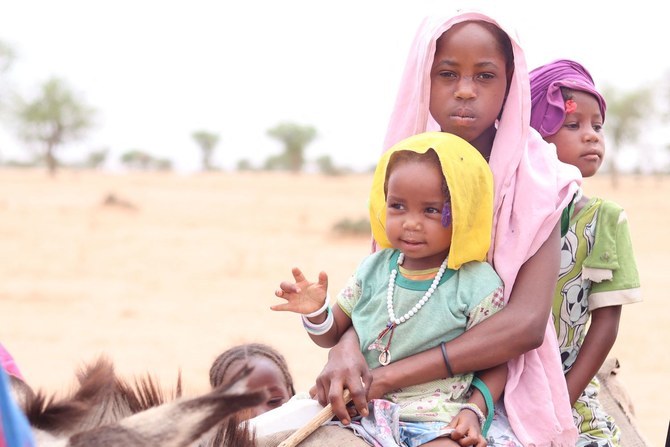
Sudan’s war has forced 100,000 people to flee over its borders and fighting now its third week is creating a humanitarian crisis, UN officials said earlier on Tuesday.
The conflict risks developing into a broader disaster as Sudan’s impoverished neighbors deal with a refugee crunch and fighting hampers aid deliveries in a nation where two-thirds of the people already rely on some outside assistance.
Egyptian President Abdel-Fattah El-Sisi said Cairo would provide support for dialogue in Sudan between the rival factions, but was also “being careful about not interfering in their domestic matters.”
“The entire region could be affected,” he said in an interview with a Japanese newspaper on Tuesday as an envoy from Sudan’s army chief, who leads one of the warring sides, met Egyptian officials in Cairo.
United Nations officials had said UN aid chief Martin Griffiths aimed to visit Sudan on Tuesday but the timing was still to be confirmed.
The UN World Food Programme said on Monday it was resuming work in the safer parts of the country after a pause earlier in the conflict, in which some WFP staff were killed.
“The risk is that this is not just going to be a Sudan crisis, it’s going to be a regional crisis,” said Michael Dunford, the WFP’s East Africa director.
The commanders of the army and RSF, who had shared power as part of an internationally backed transition toward free elections and civilian government, have shown no sign of backing down, yet neither seems able to secure a quick victory.
That has raised the spectre of a prolonged conflict that could draw in outside powers.

Sudan military faction chiefs agree May 4-11 truce in principle: South Sudan
Short Url
https://arab.news/252ph
Sudan military faction chiefs agree May 4-11 truce in principle: South Sudan
- President Salva Kiir stressed the importance of a longer truce and of naming envoys to peace talks
- Sudan’s war has forced 100,000 people to flee over its borders and fighting now its third week is creating a humanitarian crisis
Gaza health officials say strikes kill 21 after Israel says shots wounded officer
GAZA CITY: Gazan health officials said Israeli air strikes on Wednesday killed 21 people in the Palestinian territory, with Israel’s military saying it struck after gunfire targeting its troops wounded an officer.
Despite a US-brokered truce entering its second phase last month, violence has continued in the Gaza Strip, with Israel and Hamas accusing each other of breaching the agreement.
The latest bloodshed came days after Israel partly reopened the Rafah crossing between Gaza and Egypt, the only exit for Gazans that does not pass through Israel.
The health ministry, which operates under Hamas authority, said that 21 people were killed in a series of strikes, with at least 38 others wounded, updating an earlier figure given by the territory’s civil defense agency.
Among the dead were three children, said the agency, which operates as a rescue force under the Hamas authority.
“We were sleeping when suddenly shells and gunfire rained down on us,” said Abu Mohammed Haboush, whose son was killed.
“Young children were martyred, my son and my nephew were among the dead. We lost many young men,” he said, adding that he and his family were living far away from the so-called “Yellow Line,” where Israeli forces are stationed.
AFP images showed mourners offering prayers in the compound of Al-Shifa hospital in Gaza City, where several bodies wrapped in white shrouds were laid out.
An AFP photograph showed a relative holding a body of a child wrapped in a shroud at the hospital as relatives gathered around him.
Shortage of medical aid
Three bodies were brought to Nasser Hospital after Israeli strikes hit homes and tents housing displaced Palestinians in the southern Khan Yunis area, the civil defense agency said.
Fourteen more bodies were taken to Al-Shifa Hospital, its director Mohamed Abu Salmiya said in a statement.
“We also received dozens of wounded. The situation is extremely difficult in the hospitals of the Gaza Strip due to the severe shortage of medicines and medical supplies,” Abu Salmiya said.
Israel scrutinizes all aid into besieged Gaza, a tiny coastal territory surrounded by fences, walls and the Mediterranean Sea.
The Israeli military said it had launched strikes after “terrorists opened fire on troops” Wednesday, seriously wounding an officer, adding that it considers the incident a violation of the ceasefire.
It said the troops came under attack near the “Yellow Line,” without specifying which side of the line the troops were on.
The ceasefire took effect after two years of war in Gaza, sparked by Hamas’s October 2023 attack on Israel.
Following what was reportedly US pressure, Israel allowed the opening of the Rafah crossing, but limited passage to patients and their travel companions.
Sick and wounded Gazans have begun crossing into Egypt to seek medical treatment since Monday.
On Tuesday, 45 people crossed into Egypt and 42 entered the territory, a source at the Palestinian Red Crescent Society told AFP.
Shortly after midnight Wednesday, those meant to enter during the day on Tuesday arrived in Gaza through Rafah in a large bus, an AFP journalist reported.
‘My homeland’
Relatives of those returning from Egypt screamed in joy, hugging and crying.
“I am so happy to be back with my husband, my children, my family, my loved ones, and of course, my homeland,” Fariza Barabakh, who returned that day, told AFP.
“It’s an indescribable feeling, thank God. What can I say? My two young children didn’t recognize me, but thank God. I hope it will be alright,” Yusef Abu Fahma, another returnee, told AFP.
Gaza’s health ministry says at least 556 people have been killed in Israeli strikes since the ceasefire took effect on October 10, while the Israeli military says four of its soldiers have been killed over the same period.
Saturday was among the deadliest days, with the civil defense agency reporting at least 32 people killed in Israeli attacks, which the military said were in response to a Hamas ceasefire violation.
Media restrictions and limited access in Gaza have prevented AFP from independently verifying casualty figures or freely covering the fighting.
Despite a US-brokered truce entering its second phase last month, violence has continued in the Gaza Strip, with Israel and Hamas accusing each other of breaching the agreement.
The latest bloodshed came days after Israel partly reopened the Rafah crossing between Gaza and Egypt, the only exit for Gazans that does not pass through Israel.
The health ministry, which operates under Hamas authority, said that 21 people were killed in a series of strikes, with at least 38 others wounded, updating an earlier figure given by the territory’s civil defense agency.
Among the dead were three children, said the agency, which operates as a rescue force under the Hamas authority.
“We were sleeping when suddenly shells and gunfire rained down on us,” said Abu Mohammed Haboush, whose son was killed.
“Young children were martyred, my son and my nephew were among the dead. We lost many young men,” he said, adding that he and his family were living far away from the so-called “Yellow Line,” where Israeli forces are stationed.
AFP images showed mourners offering prayers in the compound of Al-Shifa hospital in Gaza City, where several bodies wrapped in white shrouds were laid out.
An AFP photograph showed a relative holding a body of a child wrapped in a shroud at the hospital as relatives gathered around him.
Shortage of medical aid
Three bodies were brought to Nasser Hospital after Israeli strikes hit homes and tents housing displaced Palestinians in the southern Khan Yunis area, the civil defense agency said.
Fourteen more bodies were taken to Al-Shifa Hospital, its director Mohamed Abu Salmiya said in a statement.
“We also received dozens of wounded. The situation is extremely difficult in the hospitals of the Gaza Strip due to the severe shortage of medicines and medical supplies,” Abu Salmiya said.
Israel scrutinizes all aid into besieged Gaza, a tiny coastal territory surrounded by fences, walls and the Mediterranean Sea.
The Israeli military said it had launched strikes after “terrorists opened fire on troops” Wednesday, seriously wounding an officer, adding that it considers the incident a violation of the ceasefire.
It said the troops came under attack near the “Yellow Line,” without specifying which side of the line the troops were on.
The ceasefire took effect after two years of war in Gaza, sparked by Hamas’s October 2023 attack on Israel.
Following what was reportedly US pressure, Israel allowed the opening of the Rafah crossing, but limited passage to patients and their travel companions.
Sick and wounded Gazans have begun crossing into Egypt to seek medical treatment since Monday.
On Tuesday, 45 people crossed into Egypt and 42 entered the territory, a source at the Palestinian Red Crescent Society told AFP.
Shortly after midnight Wednesday, those meant to enter during the day on Tuesday arrived in Gaza through Rafah in a large bus, an AFP journalist reported.
‘My homeland’
Relatives of those returning from Egypt screamed in joy, hugging and crying.
“I am so happy to be back with my husband, my children, my family, my loved ones, and of course, my homeland,” Fariza Barabakh, who returned that day, told AFP.
“It’s an indescribable feeling, thank God. What can I say? My two young children didn’t recognize me, but thank God. I hope it will be alright,” Yusef Abu Fahma, another returnee, told AFP.
Gaza’s health ministry says at least 556 people have been killed in Israeli strikes since the ceasefire took effect on October 10, while the Israeli military says four of its soldiers have been killed over the same period.
Saturday was among the deadliest days, with the civil defense agency reporting at least 32 people killed in Israeli attacks, which the military said were in response to a Hamas ceasefire violation.
Media restrictions and limited access in Gaza have prevented AFP from independently verifying casualty figures or freely covering the fighting.
© 2026 SAUDI RESEARCH & PUBLISHING COMPANY, All Rights Reserved And subject to Terms of Use Agreement.


