
KARACHI: The United Arab Emirates (UAE) has "shown interest" in launching a ferry service to Karachi to tap into the tourism potential of the South Asian country, Pakistan’s ambassador to the UAE said on Monday, adding that he hoped the service would “start soon.”
In 2020, Pakistan’s then federal cabinet approved a summary to launch a ferry service to link Pakistan with Iran, UAE and Saudi Arabia, mainly to provide cheap transportation to pilgrims and tourists. There was, however, no subsequent action to operationalize the service.
Now, according to Faisal Niaz Tirmizi, Pakistan’s ambassador to the UAE, the offer to launch the ferry has come from UAE government officials who met Pakistani officials at the Arabian Travel Market (ATM), a tourism event organized annually in Dubai to provide a platform for inbound and outbound tourism professionals in the Middle East.
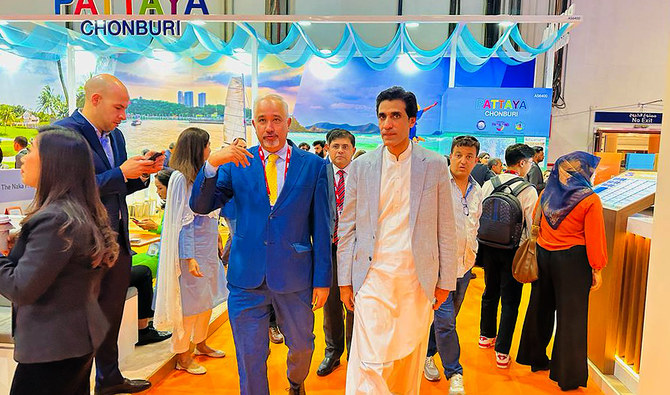
A 25-member Pakistani delegation led by the Pakistani prime minister’s special advisor on tourism, Awn Chaudhry, is participating in ATM 2023 being held from May 1-4.
“UAE government officials have shown interest to start ferry service to Karachi and we have asked them to share the details so that we could start work at our end,” Tirmizi told Arab News via telephone from Dubai.
“After receiving the details of the ferry service plan, then we will start work on it.”
The ambassador hoped the proposed service from the UAE to Karachi would “start soon.”
The UAE government or embassy in Pakistan have not yet commented on the development.
Over 2,000 exhibitors, including Emirates, Expedia Group, Hilton and Burj Al Arab, from more than 100 countries are at this year’s ATM, with over 100 first-time exhibitors. Around 12 companies from Pakistan are participating.
“UAE officials, including ministers, have said that lot of tourists are going to Kyrgyzstan, Uzbekistan and other countries and suggested that Pakistan should also promote its aviation and tourism sector,” Tirmizi said about discussions with UAE authorities at ATM.
To this end, he said, Pakistan needed to ease its visa policy for UAE nationals and residents and improve its hotels and airports.
“Some participants and tour operators have also suggested to start direct flights for Skardu, and making an international airport [there] because many tourists want to go there directly,” the ambassador said, referring to a major tourism, trekking and expedition hub in Pakistan’s northern Gilgit–Baltistan region.
In 2019, Pakistan loosened travel restrictions in the hope of reviving tourism by offering visas on arrival to visitors from 50 countries and electronic visas to 175 nationalities.
The reforms were aimed at opening up a new era for the tourism industry, which was devastated by militant violence after the Sept. 11, 2001, attacks in the United States.
Pakistan was last a prominent tourist destination in the 1970s when the “hippie trail” brought Western travelers through the apricot and walnut orchards of the Swat Valley and Kashmir on their way to India and Nepal.
Since then, deteriorating security chipped away at the number of visits but security improved in recent years and militant attacks declined, prompting governments to focus on improving the tourism industry.