DOHA: The Taliban will be absent from UN-led talks that open Monday in Qatar on how to handle Afghanistan’s rulers and press them to ease a ban on women working and girls going to school.
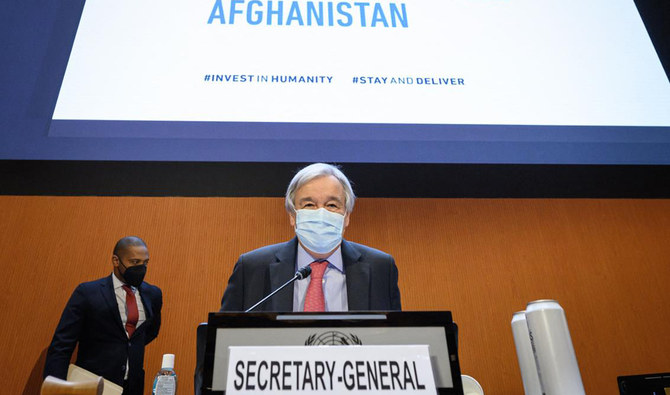
Envoys from the United States, China and Russia as well as major European aid donors and key neighbors such as Pakistan are among representatives from about 25 countries and groups called to the two days of talks by UN Secretary-General Antonio Guterres.
The Taliban government has not been invited, however, and ahead of the meeting the question of recognition of the administration has loomed large.
A small group of Afghan women staged a weekend protest march in Kabul to oppose any moves to recognize the rulers who returned to power in August 2021.
In an open letter to the Doha meeting released Sunday, a coalition of Afghan women’s groups said they were “outraged” that any country would consider formal ties because of the record of the government that says its handling of women’s rights is “an internal social issue.”
The United Nations and United States have insisted that recognition is not on the agenda.
Rights’ groups fears have been fueled by UN deputy secretary-general Amina Mohammed, who said last month that the Doha meeting could find “baby steps” that lead to a “principled recognition” of the Taliban government.
The UN said the comments were misinterpreted. No country has established formal ties with the Taliban administration and UN membership can only be decided by the UN General Assembly.
Ahead of his arrival in Doha, Guterres’ office said the meeting “is intended to achieve a common understanding within the international community on how to engage with the Taliban” on women’s and girls’ rights, inclusive governance, countering terrorism and drug trafficking.
“Any kind of recognition of the Taliban is completely off the table,” US State Department spokesman Vedant Patel said last week.
Since ousting a foreign-backed government in 2021, the Taliban authorities have imposed an austere version of sharia law that the United Nations has labelled “gender-based apartheid.”
Women have been barred from most secondary education and universities, and prevented from working in most government jobs as well as UN agencies and NGOs.
Though divided on many disputes, the UN Security Council powers united on Thursday to condemn the curbs on Afghan women and girls and urge all countries to seek “an urgent reversal” of the policies.
Diplomats and observers say, however, that the Doha meeting highlights the quandary faced by the international community in handling Afghanistan, which the UN considers its biggest humanitarian crisis with millions depending on food aid.
Amina Mohammed said it was “clear” that the Taliban authorities want recognition. Formal UN ties would help the government reclaim billions of dollars of desperately needed funds seized abroad after it took power.
But diplomats from several countries involved in the Doha talks said this would not be possible until there is a change on women’s rights. The Afghan foreign ministry said after last week’s UN vote that “diversity should be respected and not politicized.”
The UN chief is to give the Doha meeting an update on a review of the world body’s critical relief operation in Afghanistan, ordered in April after authorities had stopped Afghan women from working with UN agencies, diplomats said.
The UN has said it faces an “appalling choice” over whether to maintain its huge operation in the country of 38 million. The review is scheduled to be completed on Friday.


![]()

UN holds Afghanistan crisis talks in Qatar, without Taliban
Short Url
https://arab.news/bgxam
UN holds Afghanistan crisis talks in Qatar, without Taliban
- The UN and US have insisted that recognition is not on the agenda
- No country has established formal ties with the Taliban administration
Latest updates


© 2026 SAUDI RESEARCH & PUBLISHING COMPANY, All Rights Reserved And subject to Terms of Use Agreement.