MANSURAH, Sindh: Once the capital of Arab rulers, the ancient city of Mansurah, also referred to as Brahmanabad, is now a forgotten part of history, with its residents saying a town that had raised dynasties now does not even offer them the basic facilities of life.
Today, only a little over a hundred families live in Mansurah, which was the historic capital of the caliphal province of Sindh and a thriving commercial hub during the eighth century under the Umayyad Caliphate and then the Abbasid Caliphate from the year 750 AD to 1006 AD. Before that, the city was ruled by the Buddhist Lohana tribe in the middle of the seventh century.
Located on the bank of the Indus River, about 200 kilometers north of present-day Karachi, the city became a major destination for cargo and passenger ships arriving from the Arabian Sea under the new Umayyad rulers. However, later, the river that once connected Mansurah to the top business centers in the region through sea lanes changed its course over the centuries and now flows at a distance of about fifty kilometers from the town.
“The Arabs conquered Brahmanabad and named it Al Mansurah,” Professor Altaf Aseem, a famous archaeologist told Arab News.
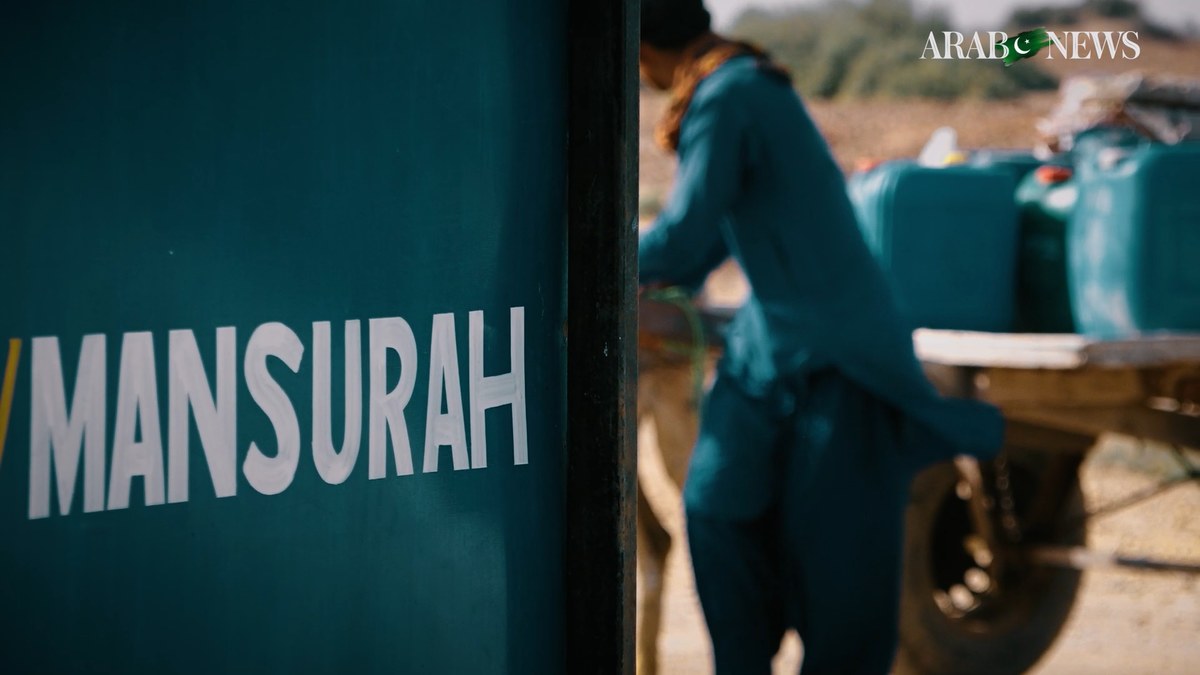
The still image taken from the video on April 26, 2023, shows the signboard bearing the name of the ancient city of Mansurah in Sindh, Pakistan. (AN photo)
The city had a great fort with more than 1,400 bastions around it even before the arrival of Muslim forces, Aseem said, adding that the Arab rulers followed “decent town planning” in reconstructing the city into a flourishing and wealthy one whose riches surpassed that of Multan, at the time one of the most prosperous trade centers in the region.
Piaro Khan, who supervises archaeological sites in the area, said the ruins of the old city were first discovered by John Bellasis in the 1850s. After Pakistan’s partition from British India in 1947, the government commissioned several excavation projects between 1966 and 1998. The latest one was carried out by the provincial administration of Sindh about three years ago in which several artifacts, including pots and coins, were discovered.
The archaeological evidence confirmed the multi-religious and pluralistic nature of the society under Arab rule, archaeologists say.
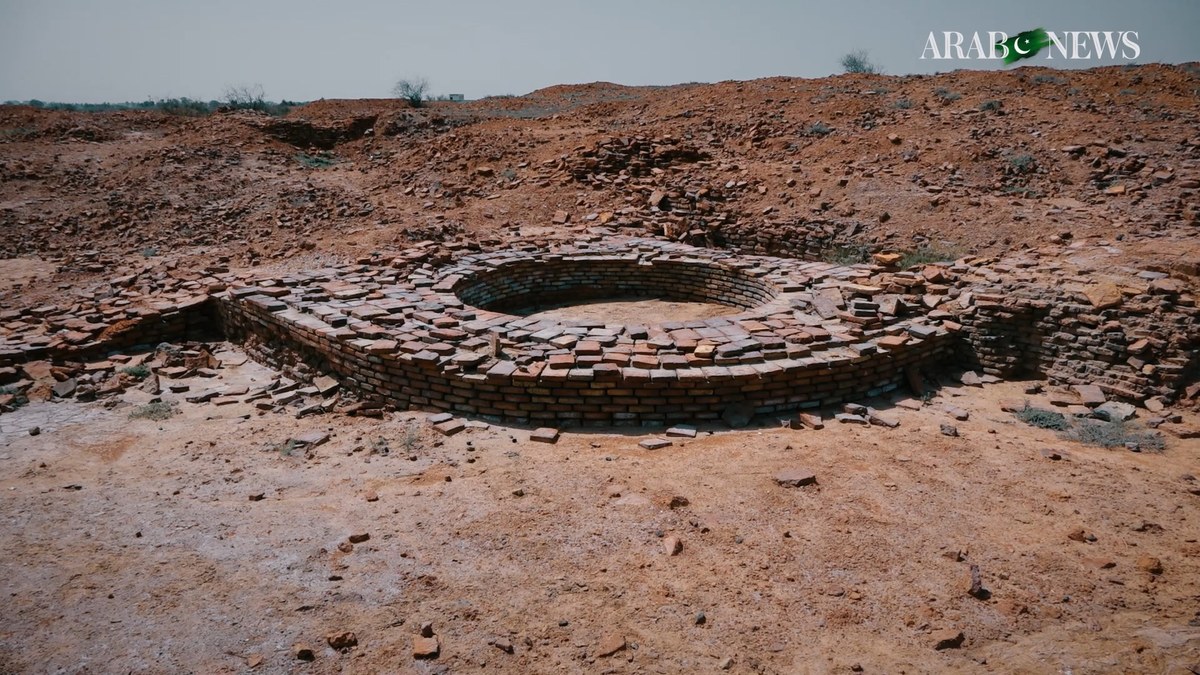
The still image taken from the video on April 26, 2023, shows the remains of a well in the ancient Mansurah city in Sindh, Pakistan. (AN photo)
“We found four door knockers … from the area which is now named Dar-ul-Umara, the secretariat of the city,” said Muhammad Shah Bukhari, the project coordinator at the Department of Antiquities and Archaeology.
“The inscription on them is in Kufic script [which is carved] in a very fine and exquisite style. It is up to the standard of inscriptions which was found in those days in Baghdad, Syria, and North Africa.”
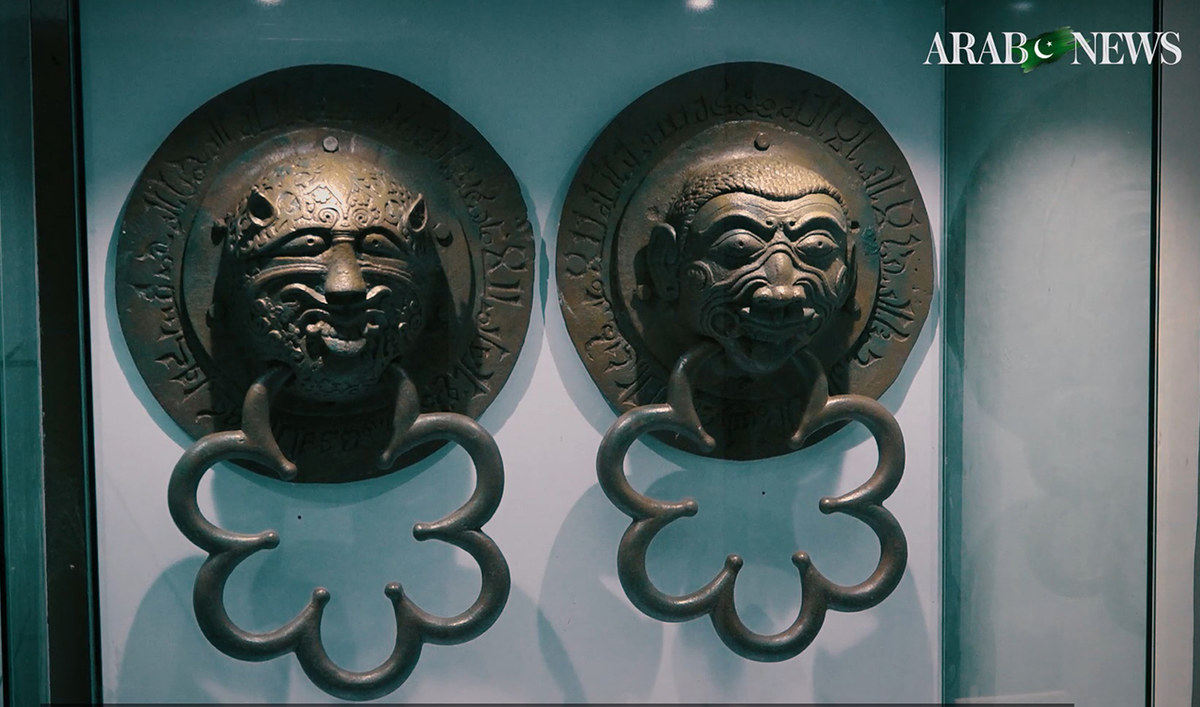
The still image taken from the video on April 26, 2023, shows door knockers displayed at a museum in the ancient Mansurah city in Sindh, Pakistan. (AN photo)
The Arabic inscription on the door knockers was accompanied by the image of a Hindu god, reflecting the religious harmony in the area under Arab rule, Bukhari said, adding that archaeologists had also found traces of Buddhist culture, along with several non-Islamic objects, among the ruins.
“This means [that the people] were allowed to continue their ritual practices [under the Arabs],” Aseem the archaeologist said, adding that the first translation of the Holy Qur’an into the Sindhi language was also completed in Mansurah.
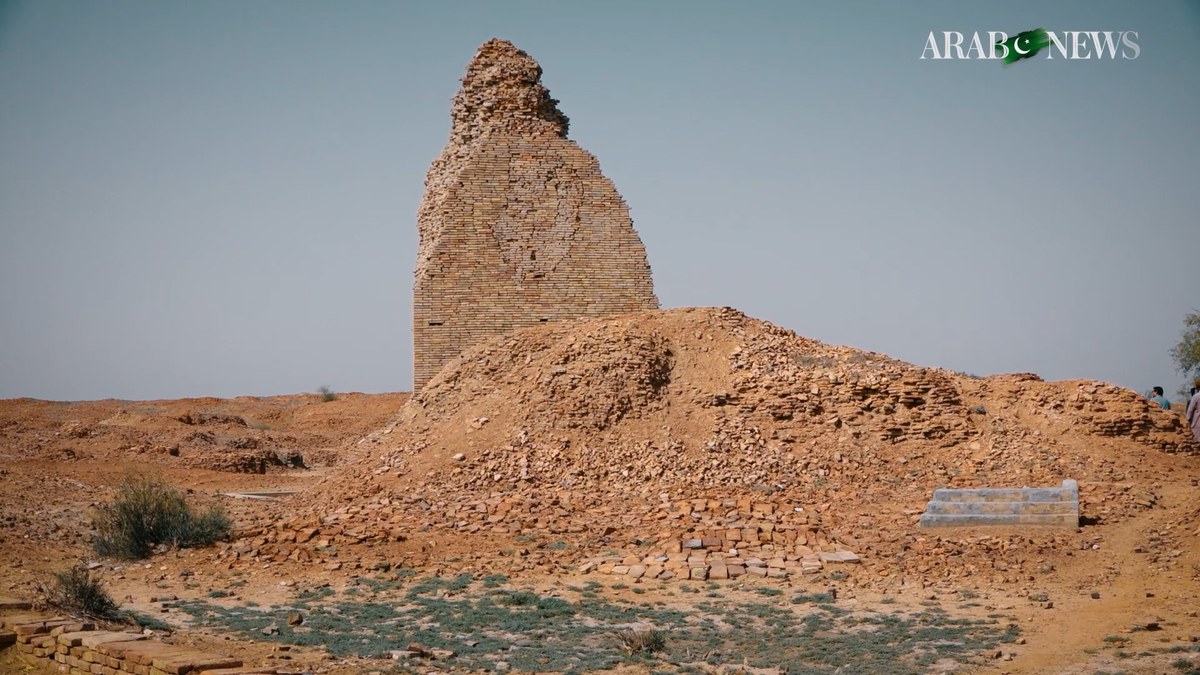
The screengrab taken from a video on April 26, 2023, shows the remains of a stupa in the ancient Mansurah city in Sindh, Pakistan. (AN Photo)
After the Arabs, Sindh’s Sumrah dynasty reigned over the city in 1011 before Mahmud of Ghazni destroyed it to punish its inhabitants for not cooperating with him during his famous military campaign against Somnath in 1025.
Aseem quoted Bellasis, who said there were dead bodies “in every street of Mansurah” in the wake of the attack. Archaeologists also believe Mahmud set the city on fire since burnt layers were discovered during the excavation process.
Mansurah, almost razed to the ground, later also a victim of nature, forgotten after the Indus River meandered away from the town. The river had not only been the source of survival for residents, helping with agriculture and providing drinking water but also served as a major communication source.
“It was the main connecting source for trade and commerce,” Aseem said.
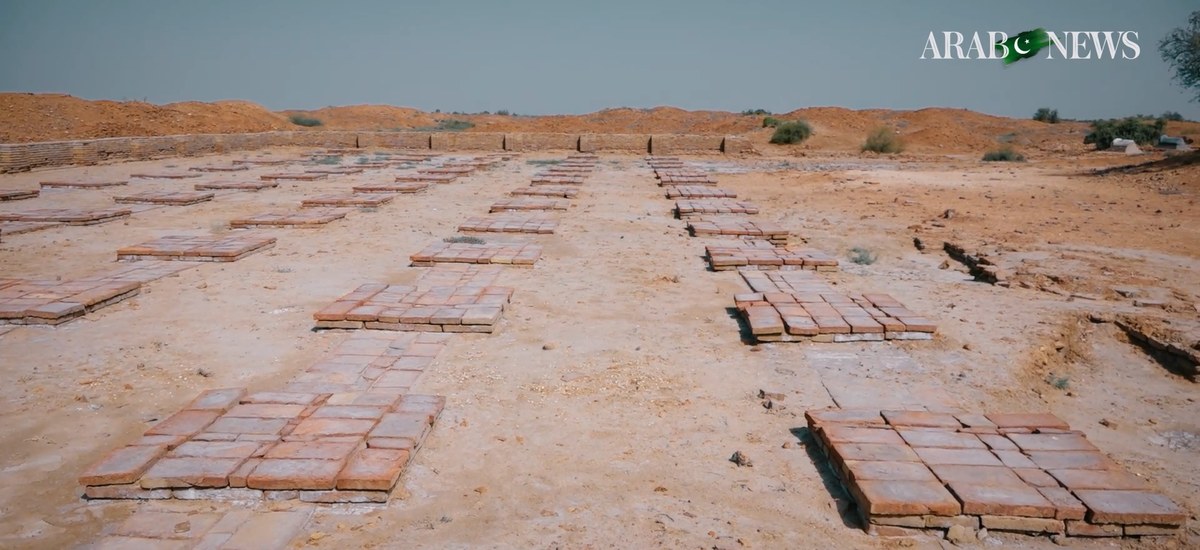
The still image taken from the video on April 26, 2023, shows the yard of an old mosque in the ancient Mansurah city in Sindh, Pakistan. (AN photo)
Today, Mansura dwellers say the city lacks the most necessary infrastructure.
“There were two schools here which are no longer operational since there are no teachers,” said Jamal Din Sehto, a retired teacher at the settlement. “There is no facility of water or electricity here. There is nothing.”
Bukhari said Mansurah had stood out in the world as a leading center of trade and cultural activities, and Arab countries should support its excavation and participate in research and preservation.
“The Arabs should pay attention,” he said, “and consider it as their own culture.”