

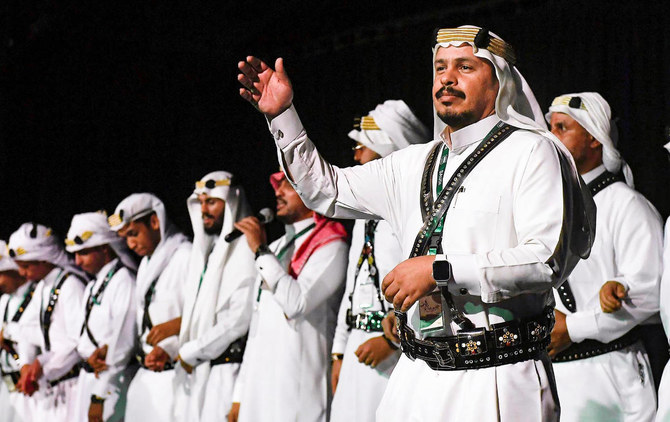

RIYADH: On Eid, the Kingdom offers several festivals across the regions, locals prepare a traditional feast of delicacies while some flock to malls for last-minute Eid shopping.
However, that was not the case about 60 years ago. Eid back then was more simple and different from today, which often leaves the elderly longing for the good old days.
During the 1950s and 1960s, Saudis had pre-Eid traditions, leaving them busy in the days leading up to Eid. “Two to three days before Eid, children gathered around an area called the Palm Wall, waiting for Al-Hawwamah, which is a basket filled with dried chickpeas and alsaew sweets,” said Ibrahim Al-Balood, a previous resident of Ash Shubramiyah, located near Ash Shu’ara, a heritage village in the Riyadh province.
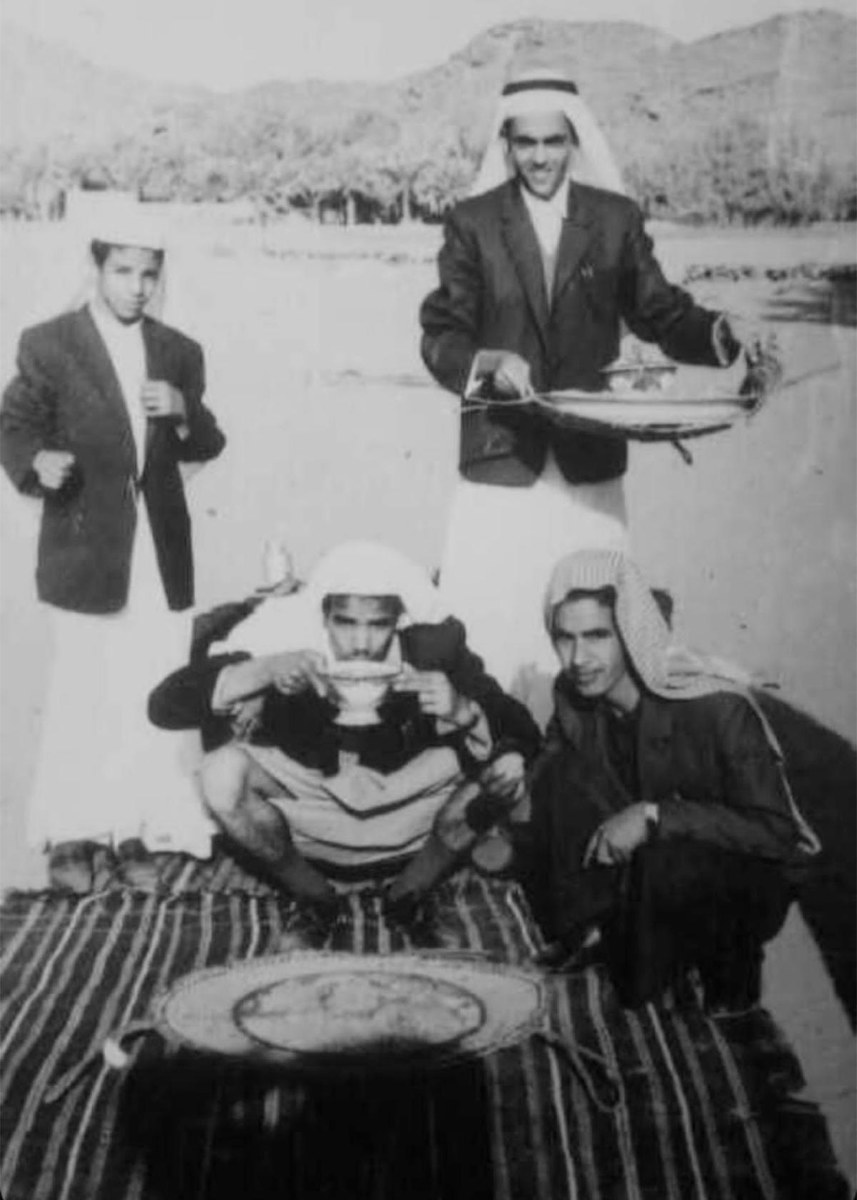
In these old photographs, young locals can be seen sharing traditional food at Eid gatherings in Shabremia, Ash Shu’ara. (Photo by Abdullah Albalood)
The Al-Hawwamah sweet basket is also called Hagag, and is part of the pre-Eid tradition in the Najd and Hejaz regions of the Kingdom. The sweet basket, prepared by housewives, includes important alsaew sweets — almonds coated with a thin layer of sugar in different colors.
“As a young girl, part of our pre-Eid tradition was our mothers sewing our Eid dresses in early Ramadan, combing and adding Al-Mashat aromatic herbs to our hair,” said another ex-resident of Ash Shu’ara, Sarah Al-Dowayan, who now lives in Dammam. The Mashat are red herbs, resembling henna. They are mixed with hair oil, and were used by women and young girls before Eid and other special occasions.
The social atmosphere then was dominated by love and familiarity, topped with smiles and laughter. The point of these gatherings was to partake in Eid celebrations, and it was not required of everyone to bring something to join the celebration.
Ibrahim Al-Balood, Former resident of Ash Shubramiyah
“We would go around knocking on every door asking for Eidiah, and we would say ‘give me my Eidiah, see how my new dress is sewn from iron’,” said Al-Dowayan. “The part of the traditional Eid carol where it says ‘my dress is sewn from iron’ is meant to show that our Eid dresses are well sewn and made from good fabrics that can never be ruined, and that for our mothers’ hard work, we deserve Eidiah,” she added.
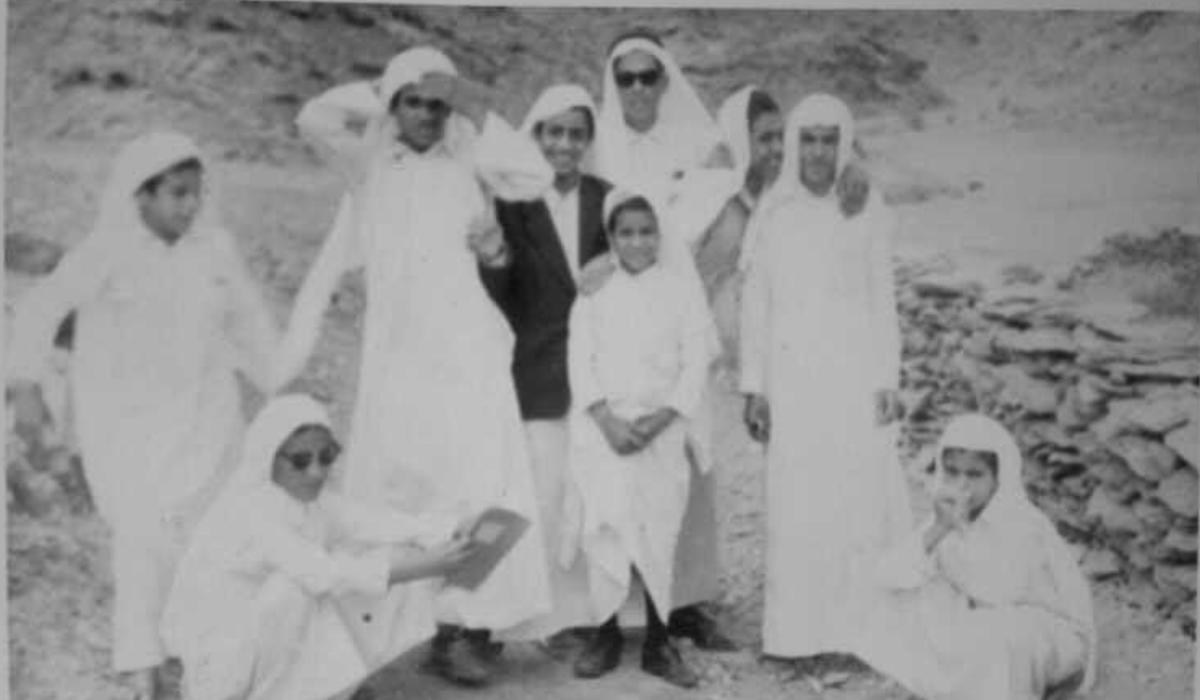
In these old photographs, young locals can be seen sharing traditional food at Eid gatherings in Shabremia, Ash Shu’ara. (Photo by Abdullah Albalood)
Eid is announced when the first sighting of the crescent moon is observed by local religious authorities in the Kingdom. The announcement reaches Muslims all over the world. In the 1950s and 1960s, portable radios were used for special announcements, including Eid, though the devices were rarely found in Saudi households.
“We had a portable radio then, but there was a time when it stopped working, and we were waiting for the Eid announcement,” said Battal Al-Mutairi, who lives in the Qassim region.
FASTFACT
Prior to the ease created by faster means of communication, it was common for camel riders to travel around the Kingdom to inform people of Eid timings, but due to travel distances, some towns ended up celebrating Eid on different days. In some areas, locals would sight the crescent themselves and celebrate Eid.
“Once, we decided to celebrate Eid after fasting the 30th day of Ramadan, and in the middle of our fast, a group of camel riders wearing clean, white thobes approached us, announcing that today is Eid.”
It was common then for camel riders to travel around the Kingdom to inform people of Eid timings, but due to travel distances, some towns ended up celebrating Eid on different days.
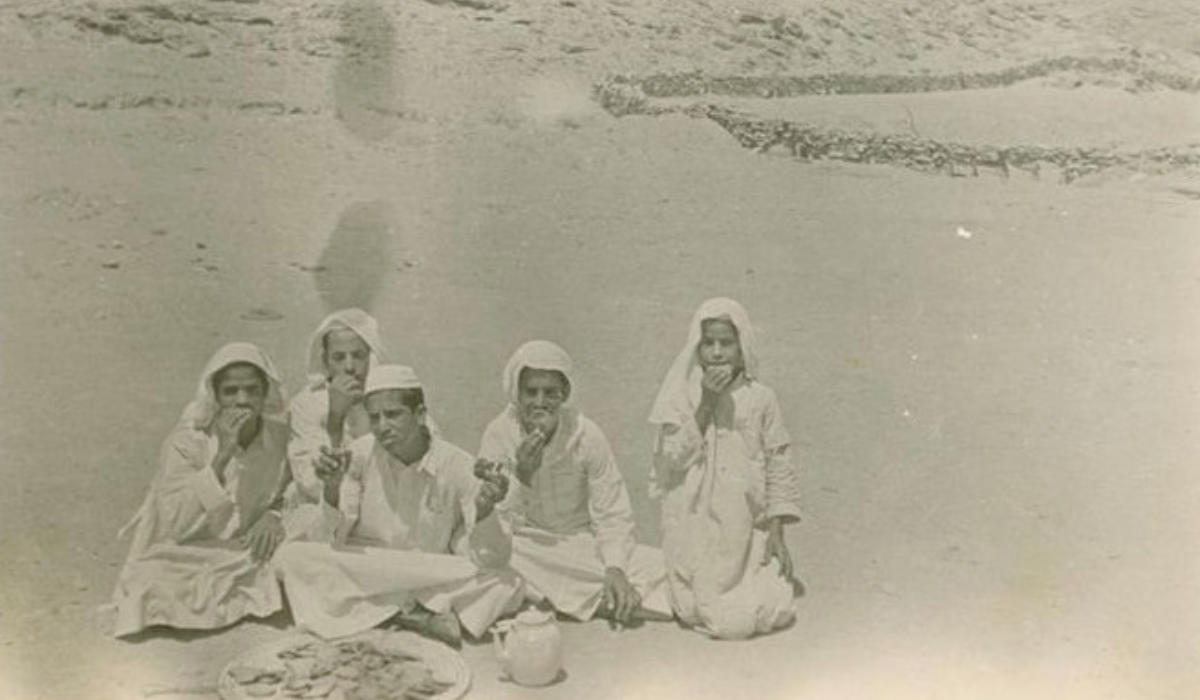
In these old photographs, young locals can be seen sharing traditional food at Eid gatherings in Shabremia, Ash Shu’ara. (Photo by Abdullah Albalood)
In some areas, locals would sight the crescent themselves and celebrate Eid. “Among the events I recall from my childhood is a time when we didn’t know today was Eid until the late afternoon. A day before, a woman from our town with sharp eyesight said she saw the crescent moon,” said Al-Balood. “But the imams of the town refused to take her testimony, and it turned out she was right, as locals from other towns came to inform us that today is Eid.”
After performing Eid prayer, local men would gather in a common area in their towns and bring together traditional Saudi dishes, some of which were made especially for the day.
“We would all put down the food we brought under the shade of the tamarix tree. Then everyone would start moving the dishes around to help others sitting by the edge to get a taste of everything,” said Al-Balood.
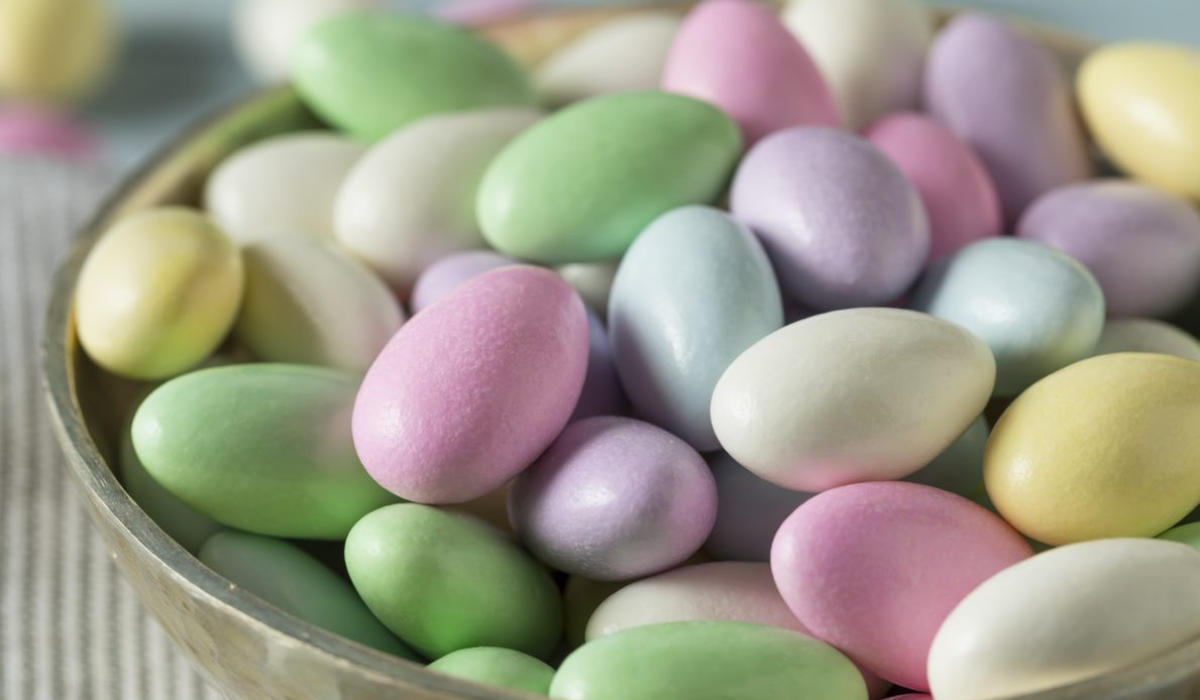
Alsaew sweet, commonly known today as Jordan almonds. (Shutterstock)
“The social atmosphere then was dominated by love and familiarity, topped with smiles and laughter. The point of these gatherings was to partake in Eid celebrations, and it was not required of everyone to bring something to join the celebration.”
Al-Balood’s nephew Abdullah told Arab News: “The Eid tradition of people gathering and bringing their food helped those who were in need who had limited means in life.”
He added: “And now we gather, bringing our food, and keeping the old tradition alive in the hope of emulating the past.”
Women had their own gatherings on Eid, where they would bring traditional Eid dishes including jareesh, a traditional meal made with crushed wheat and cooked with milk. Margoog, a traditional dish made of lamb and vegetable stew, and seasoned with various spices and dried limes, was another highlight.
“Women in Shu’ara would make manthora for Eid. The dish is made of white corn that is first fermented for a day, dried up, beaten, and then a few spices are added alongside whatever vegetables are available,” said Al-Dowayan.
Women would also reserve parts of a town street on Eid to freely dance, sing and show off their Eid dresses. “As we danced in celebration of Eid in the reserved streets for women, men would try to sneak a look at us, probably trying to find their future bride,” said Al-Dowayan.


