

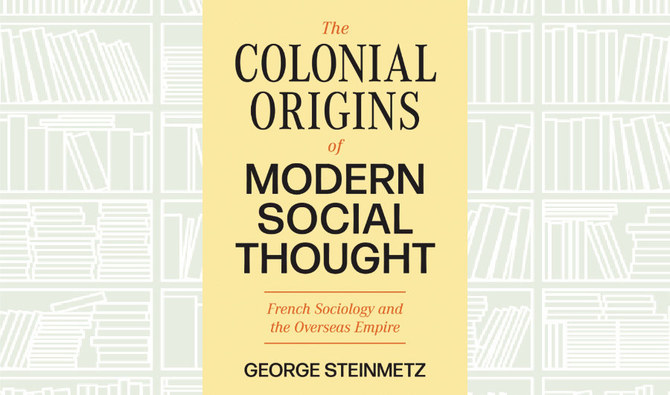
What We Are Reading Today: The Colonial Origins of Modern Social Thought by George Steinmetz

Short Url
Updated 22 April 2023
Follow

What We Are Reading Today: The Colonial Origins of Modern Social Thought by George Steinmetz

In this provocative and original retelling of the history of French social thought, George Steinmetz places the history and development of modern French sociology in the context of the French empire after World War II.

Connecting the rise of all the social sciences with efforts by France and other imperial powers to consolidate control over their crisis-ridden colonies, Steinmetz argues that colonial research represented a crucial core of the renascent academic discipline of sociology, especially between the late 1930s and the 1960s.

Sociologists, who became favored partners of colonial governments, were asked to apply their expertise to such “social problems” as detribalization, urbanization, poverty, and labor migration.

This colonial orientation permeated all the major subfields of sociological research, Steinmetz contends, and is at the center of the work of four influential scholars: Raymond Aron, Jacques Berque, Georges Balandier, and Pierre Bourdieu.

In retelling this history, Steinmetz develops and deploys a new methodological approach that combines attention to broadly contextual factors, dynamics within the intellectual development of the social sciences and sociology in particular, and close readings of sociological texts.


What We Are Reading Today: Three Roads Back by Robert D. Richardson

Updated 06 March 2026
Follow

What We Are Reading Today: Three Roads Back by Robert D. Richardson

In “Three Roads Back,” Robert Richardson, the author of magisterial biographies of Ralph Waldo Emerson, Henry David Thoreau, and William James, tells the connected stories of how these foundational American writers and thinkers dealt with personal tragedies early in their careers. 
For Emerson, it was the death of his young wife and, 11 years later, his five-year-old son; for Thoreau, it was the death of his brother; and for James, it was the death of his beloved cousin Minnie Temple. 

Filled with rich biographical detail and unforgettable passages from the journals and letters of Emerson, Thoreau, and James, these vivid and moving stories of loss and hard-fought resilience show how the writers’ responses to these deaths helped spur them on to their greatest work, influencing the birth and course of American literature and philosophy.
As Richardson shows, all three emerged from their grief with a new way of seeing, one shaped by a belief in what Emerson called “the deep remedial force that underlies all facts.”