PARIS: A Paris court on Friday sentenced Lebanese-Canadian citizen Hassan Diab to life in prison in absentia for the 1980 bombing of a synagogue in which four people died.
The court followed prosecutors’ request for the maximum possible punishment against Diab, now 69 and a university professor in Canada.
Prosecutors had said in their summing-up that there was “no possible doubt” that Diab, the only suspect, was behind the attack.
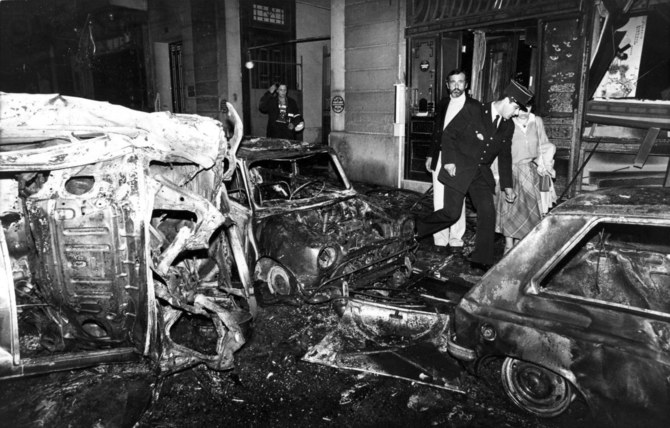
In the early evening of October 3, 1980, explosives placed on a motorcycle detonated close to a synagogue in Rue Copernic in Paris’s chic 16th district, killing a student passing by on a motorbike, a driver, an Israeli journalist and a caretaker.
Forty-six were injured in the blast.
The bombing was the first deadly attack against a Jewish target on French soil since World War II.
No organization ever claimed responsibility but police suspected a splinter group of the Popular Front for the Liberation of Palestine.
French intelligence in 1999 accused Diab, a sociology professor, of having made the 10-kilogramme (22-pound) bomb.
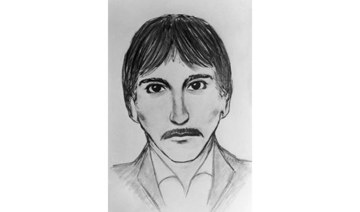
They pointed to Diab’s likeness with police sketches drawn at the time and handwriting analyzes that they said confirmed him as a suspect.
They also produced a key item of evidence against him — a passport in his name, seized in Rome in 1981, with entry and exit stamps from Spain, where the attack plan was believed to have originated.
In 2014, Canada extradited Diab at the request of the French authorities.
However, investigating judges were unable to prove his guilt conclusively during the investigation and Diab was released, leaving France for Canada a free man in 2018.
Three years later, a French court overturned the earlier decision and ordered that Diab should stand trial after all, on charges of murder, attempted murder and destruction of property in connection with a terrorist enterprise.
French authorities stopped short of issuing a new international arrest warrant for Diab, effectively leaving it up to him to attend his trial or not.
His conviction means Diab is now again the subject of an arrest warrant, which risks stoking diplomatic tensions between France and Canada after his first extradition took six years.
David Pere, a lawyer for some of the Jewish worshippers present in the synagogue at the time of the bombing, said his clients were “not motivated by vengence nor looking for a guilty person’s head to stick on a pike... they want justice to be done.”


![]()

Paris court gives man life term for 1980 synagogue bombing
Short Url
https://arab.news/p39xk
Paris court gives man life term for 1980 synagogue bombing
- The court followed prosecutors' request for the maximum possible punishment against Diab, now 69 and a university professor in Canada
- Prosecutors had said in their summing-up that there was "no possible doubt" that Diab, the only suspect, was behind the attack

Latest updates


© 2026 SAUDI RESEARCH & PUBLISHING COMPANY, All Rights Reserved And subject to Terms of Use Agreement.