

Ramadan recipes: A pistachio mafroukeh recipe to satisfy your sweet cravings 

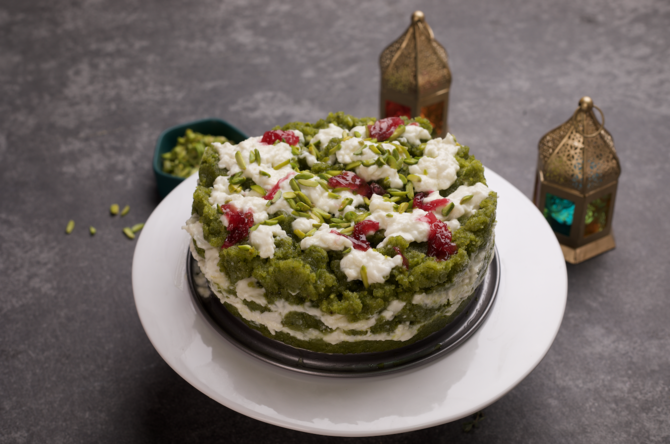
Aboujaber shared her recipe for delicious pistachio mafroukeh. (Supplied)
Short Url
Updated 20 April 2023
Follow

Ramadan recipes: A pistachio mafroukeh recipe to satisfy your sweet cravings 

DUBAI: Jordanian TV chef Daad Aboujaber is known for her passionate cooking — here, she shares her recipe for delicious pistachio mafroukeh with Arab News so you can end Ramadan on a sweet note. 


Aboujaber previously hosted “Teslam El-Ayadi,” “Ahla Jamaa” and “Sweet Memories” on Fatafeat. (Supplied)

The chef was part of 18 regional chefs to take part in TV channel Fatafeat’s cooking show “Khaymat Ramadan.” 

She previously hosted “Teslam El-Ayadi,” “Ahla Jamaa” and “Sweet Memories” on Fatafeat. 

Ingredients: 

· 1 cup course semolina 

· 1/2 cup butter 

· 1 cup sugar 

· 2 1/3 cups milk 

· 3 cups ground pistachio 

· 2 tbsp orange blossom water 

Homemade Ashta: (could be replaced with fresh Ashta baladi) 

· 1 cup milk 

· 1cup whipping cream 

· 1 cup toast bread slices cut into pieces 

· 1 tbsp corn flour 

To serve: 

· Simple syrup 

To garnish: 

· Red lemon blossom 

Method: 

1. Melt butter, add semolina and toast on medium heat until light golden 

2. Add milk and sugar, stir until absorbed, take off the heat and add rose and orange blossom waters, stir well, cover and leave to cook then refrigerate 

3. To make the homemade ashta, mix corn starch with the milk then add remaining ingredients, cook on low heat until set, transfer to a plate, cover with plastic wrap, cook then refrigerate 

4. To assemble, spread the pistachio , spread the ashta, sprinkle with extra pistachio and garnish with the red lemon blossom, serve with sugar syrup 


Review: ‘Sorry, Baby’ by Eva Victor

Eva Victor appears in Sorry, Baby by Eva Victor, an official selection of the 2025 Sundance Film Festival. (Supplied)
Updated 27 December 2025
Follow

Review: ‘Sorry, Baby’ by Eva Victor

  • Victor makes a deliberate narrative choice; we never witness the violence of what happens to her character

There is a bravery in “Sorry, Baby” that comes not from what the film shows, but from what it withholds. 

Written, directed by, and starring Eva Victor, it is one of the most talked-about indie films of the year, winning the Waldo Salt Screenwriting Award at Sundance and gathering momentum with nominations, including nods at the Golden Globes and Gotham Awards. 

The film is both incisive and tender in its exploration of trauma, friendship, and the long, winding road toward healing. It follows Agnes, a young professor of literature trying to pick up the pieces after a disturbing incident in grad school. 

Victor makes a deliberate narrative choice; we never witness the violence of what happens to her character. The story centers on Agnes’ perspective in her own words, even as she struggles to name it at various points in the film. 

There is a generosity to Victor’s storytelling and a refusal to reduce the narrative to trauma alone. Instead we witness the breadth of human experience, from heartbreak and loneliness to joy and the sustaining power of friendship. These themes are supported by dialogue and camerawork that incorporates silences and stillness as much as the power of words and movement. 

The film captures the messy, beautiful ways people care for one another. Supporting performances — particularly by “Mickey 17” actor Naomi Ackie who plays the best friend Lydia — and encounters with strangers and a kitten, reinforce the story’s celebration of solidarity and community. 

“Sorry, Baby” reminds us that human resilience is rarely entirely solitary; it is nurtured through acts of care, intimacy and tenderness.

A pivotal scene between Agnes and her friend’s newborn inspires the film’s title. A single, reassuring line gently speaks a pure and simple truth: “I know you’re scared … but you’re OK.” 

It is a reminder that in the end, no matter how dark life gets, it goes on, and so does the human capacity to love.