



QUETTA: Muhammad Sachal, a 52-year-old cook, is garnishing Lebanese dishes for customers who have come to the Quetta Club, a historic building surrounded by scenic landscape, to relish the sunset iftar meal during the Muslim fasting month of Ramadan.
Situated at the heart of the cantonment area, the club was built by the British back in 1891 along the Zarghoon Road, though the building collapsed after the deadly 1935 earthquake which destroyed much of the city and killed about 35,000 of its residents.
The facility was reconstructed in 1937 over 10 acres of land and has since been providing food, sports, and entertainment facilities to the people of Balochistan province. According to its management, the club is also the only place in the city that offers Pakistani, Chinese, Continental, and Lebanese food amid the picturesque view of Koh-e-Mehardar that stretches along the eastern edge of the city.
It has been about five years since Sachal has been working as the top chef at the facility. While the club introduced Lebanese cuisine, comprising 15 different food items, for the first time around three years ago, several other Middle Eastern dishes have now become a regular feature.
“The special Arabic food items are very juicy without a mixture of local spice,” Sachal said while speaking to Arab News. “We cook Lebanese cuisine with black pepper, lemon juice, and olive oil and receive good public response in Ramadan.”
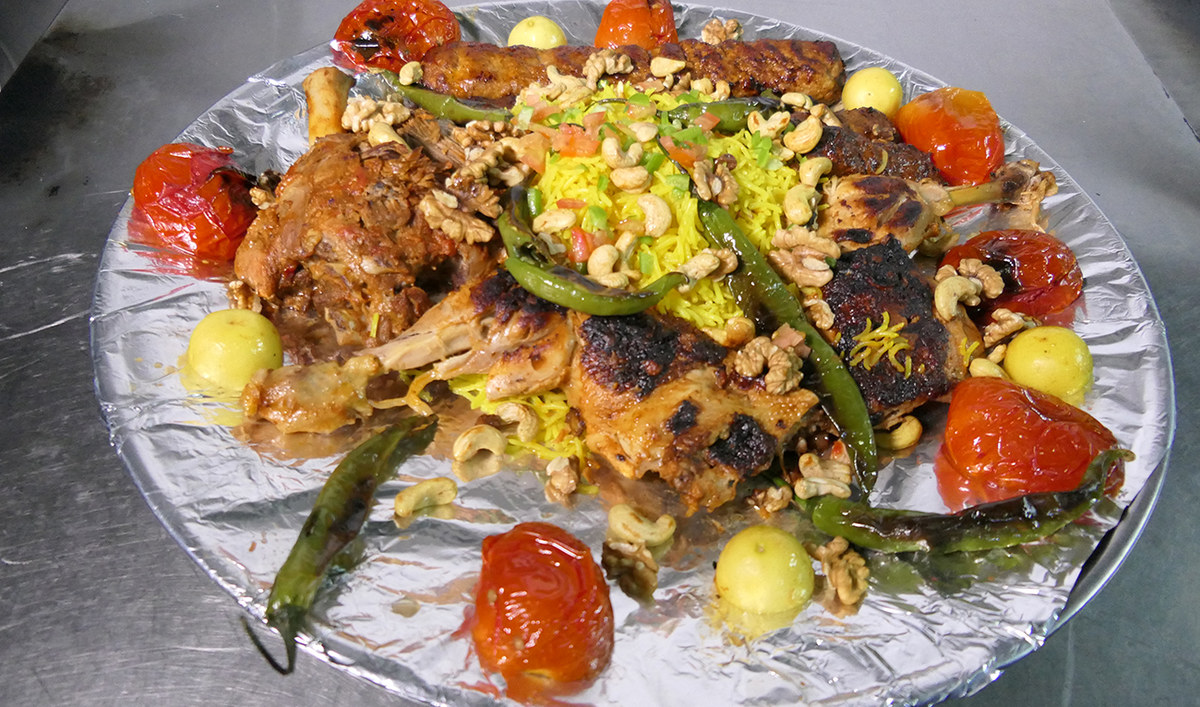
A Lebanese dish, Mezze Platter, is about to be served to customers in Quetta, Pakistan, on April 18, 2023. (AN Photo)
The club’s most popular Lebanese food items include Mezze Platter, Hummus, Lebanese Special, and Fattoush since they attract a large people who come here to break their fast.
“We received a positive response from the customers in the holy month of Ramadan who come here to enjoy a different taste after fasting for the whole day,” Muhammad Amjad Siddiqui, who is part of the club’s management committee, told Arab News.
He added that the facility had been planning to start serving more Middle Eastern cuisines like Mandi and several barbecue items in Balochistan.
The Lebanese Mezze Platter, covered with Hummus, Shish Tawook, and Fattoush Salad, is prepared with rice barbecue and a giant piece of slow-cooked lamb that can be served to more than five people.
Khuda-e-Dost Khan, 50, who belongs to Zhob district but frequently visits the club to eat the Arabic food with his family, lauded the management of the facility for introducing Lebanese cuisine.
“It is still a new cuisine for us because we have otherwise been eating traditional food items in Quetta,” he told Arab News. “But we can’t find quality Lebanese cuisines in any other restaurant.”
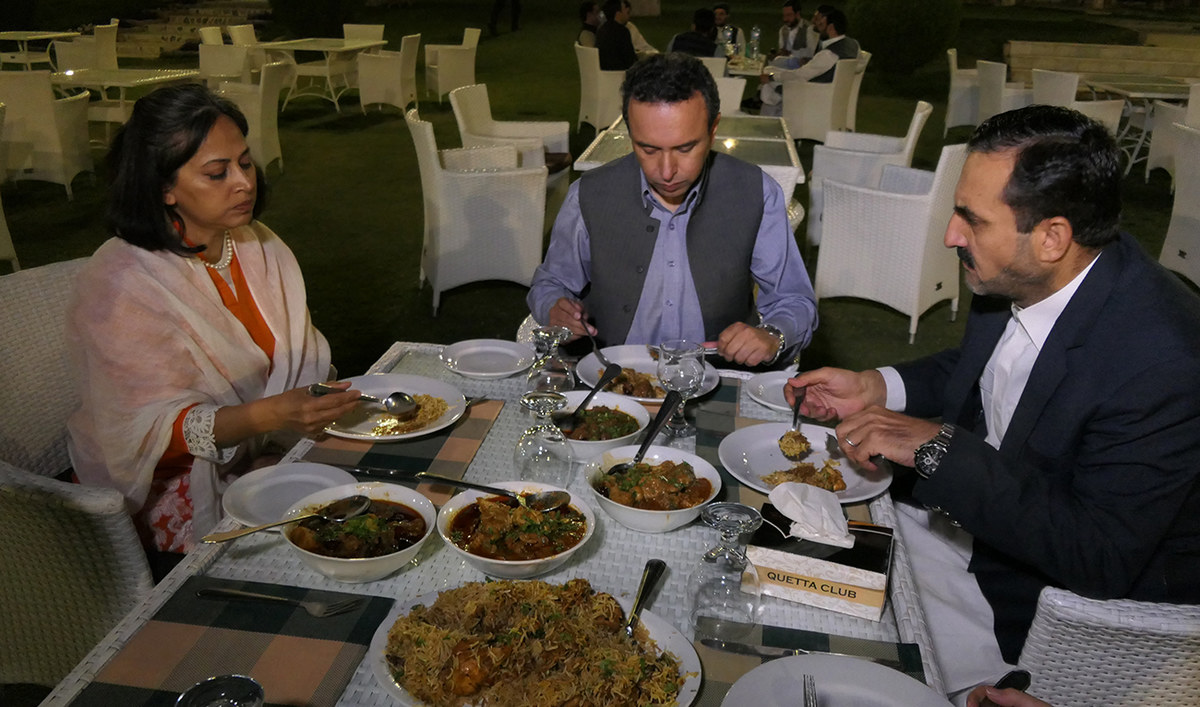
Muhammad Amjad Siddiqui, who is part of the Quetta Club management committee, is in the middle while two customers, Khuda-e-Dost Khan (right) and Dr. Sadia Babar (left), enjoy their sunset iftar meal in Quetta, Pakistan, on April 18, 2023. (AN Photo)
Dr. Sadia Babar, 52, who has been a member of the club for the last 12 years, said the management of the facility had improved food quality and introduced international cuisines over the last few years. Prior to that, she added, it was primarily focusing on beautifying the building.
“The Arabic cuisine is very delicious for people who have a milder taste,” she continued. “The Lebanese food is always considered very nutritious by people who don’t like [too many spices] and are health conscious. They can come here for special Middle Eastern food.”
Rodar Khan, 16, who came from Kuchlak, a small neighborhood situated on the outskirts of Quetta, to taste the Lebanese cuisine, said people mostly had a craving for a wide variety of food items in Ramadan. This was also the reason he came out of his way to the club to taste Lebanese cuisine for iftar.
“People of Balochistan [haven’t tasted too many] international dishes,” he said while speaking to Arab News. “Therefore, Saudi, Emirati and Palestinian food should also be introduced here.”
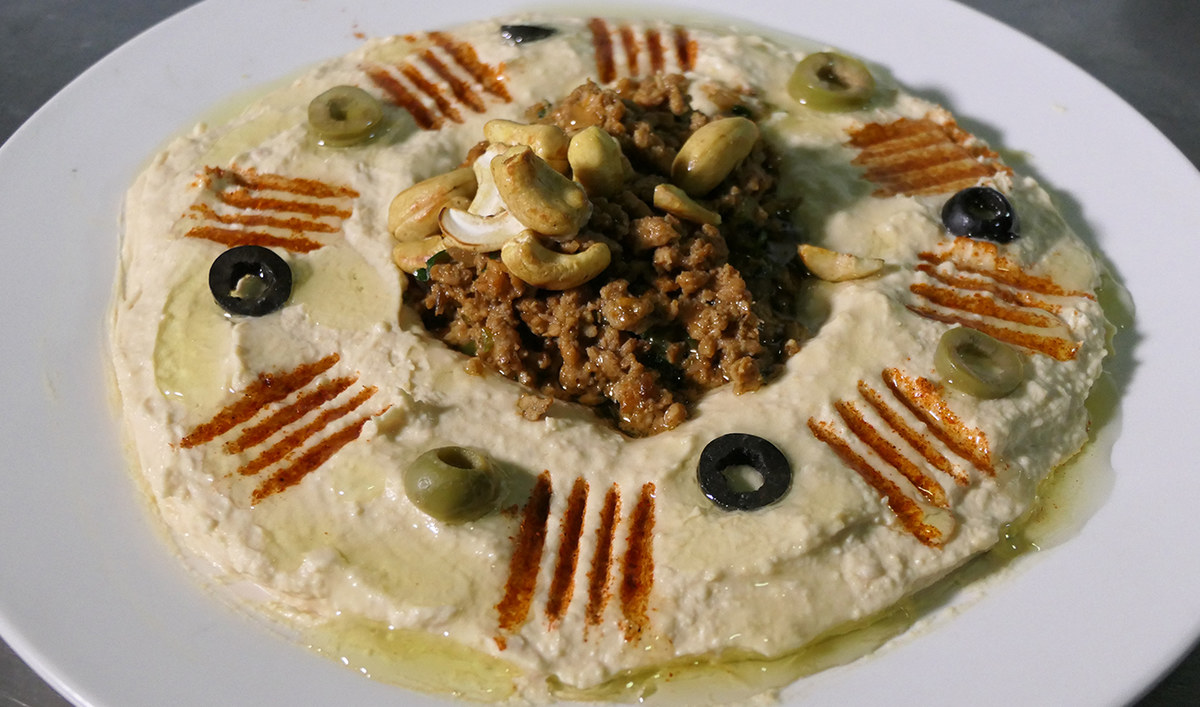
A Lebanese dish Hummus is ready to be served to customers in Quetta, Pakistan, on April 18, 2023. (AN Photo)
Back in the kitchen, Sachal was topping the Lebanese Mezze Platter with roasted dried fruits. He said that his people had mainly been offering four Lebanese dishes for Ramadan buffet, though they were planning to add more Arabic dishes to their menu.
Asked about how he learned to cook Arabic cuisine, he said that he belonged to the neighboring Sindh province and had trained to make these dishes with his teacher who had lived in Lebanon.
“We have different food varieties here and have been serving children as well with Lebanese Falafel, Lebanese Kaba and Juja Kabab in our Arabic food corner during Ramadan,” he added.


